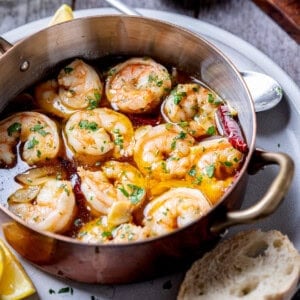
Spicy Spanish Garlic Shrimp (Easy Gambas al Ajillo)
Make spicy Spanish garlic shrimp (Gambas al Ajillo) with olive oil, garlic, and dried chillies in no time! This easy Spanish tapas recipe is perfect for entertaining.
Equipment
- Large frying pan or cast iron skillet
- Mixing Bowl
- Paper towels
Ingredients
- 1 pound shrimp peeled and deveined (U10-U18 preferably)
- ½ teaspoon baking soda
- 1 Tablespoon kosher salt
- 6 ounces extra virgin olive oil
- 8 cloves garlic thinly sliced
- 2-3 dried chile de arbol broken in half
- 1 teaspoon sweet paprika
- 1 ounce dry sherry
- 1 ounce dry white wine
- Zest of 1 lemon
- 1 Tablespoon lemon juice
- 2 Tablespoons fresh parsley chopped
- Kosher salt to taste

Instructions
Brine the Shrimp
- Dissolve the baking soda and kosher salt in 2 cups of very cold water. Add the shrimp and let sit for 20 minutes. Remove the shrimp from the water bath and pat dry with paper towels.1 pound shrimp, ½ teaspoon baking soda, 1 Tablespoon kosher salt
Start the Garlic and Oil
- In a large frying pan, add the olive oil, sliced garlic and broken chiles. Then turn the heat on medium-low to low and carefully and gently cook until the garlic gets just a little golden color (about 3 minutes). You DO NOT want to brown the garlic. Once the garlic just starts to get a light golden color, add the paprika and stir.6 ounces extra virgin olive oil, 8 cloves garlic, 2-3 dried chile de arbol, 1 teaspoon sweet paprika
Cook the Shrimp
- Turn up the heat to medium and immediately add the shrimp. Cook the shrimp until opaque (around 2-3 minutes per side). Add the sherry and wine and cook until the alcohol has mostly cooked away (about a minute).1 ounce dry sherry, 1 ounce dry white wine
Finish with Lemon and Parsley and Serve
- Remove from the heat and stir in the lemon zest, juice, and parsley.Zest of 1 lemon, 1 Tablespoon lemon juice, 2 Tablespoons fresh parsley
- Taste the sauce and season with kosher salt if needed. Serve immediately while everything is hot with some nice crusty bread for dipping and sopping up all of the spicy garlicky olive oil sauce.Kosher salt to taste
Notes
Substitutions and Variations:
- Swap the protein. Use scallops, chunks of firm white fish like cod or halibut, or even mushrooms if you want a vegetarian version. Adjust the cooking time based on what you're using.
- Change the heat level. Want it spicier? Add more chiles or toss in a pinch of red pepper flakes. Want it milder? Use just one chile or leave it out entirely and rely on the paprika for color and warmth.
- Add more vegetables. Thinly sliced red bell pepper, cherry tomatoes, or even spinach can be stirred in at the end for extra color and texture. Just don't overload the pan or it'll lose its elegant simplicity.
- Make it smoky. Swap the sweet paprika for smoked paprika (pimentón de la Vera) and you'll get a deeper, more complex flavor with a hint of campfire.
- Go regional. In some parts of Spain, they add a splash of brandy instead of sherry. In others, they finish it with a handful of chopped roasted red peppers. Both are delicious and worth trying.
- How to store leftover gambas al ajillo:
- Gambas al ajillo is best eaten fresh, right out of the pan while the oil is still bubbling and the shrimp are tender.
- That said, leftovers can be stored in an airtight container in the fridge for up to two days. The shrimp will firm up and lose some of their juiciness, and the garlic flavor will intensify, but it's still tasty.
- How to reheat leftover gambas al ajillo:
- To reheat, use a skillet over low heat. Add a bit of olive oil to the pan, heat gently, and warm the shrimp just until they're heated through. Don't overcook them a second time or they'll turn tough.
- The garlic oil can be saved on its own and used to dress pasta, drizzle over roasted vegetables, or toss with potatoes. It keeps in the fridge for about a week and adds instant flavor to just about anything.
- Can you freeze leftover gambas al ajillo? Freezing isn't recommended. Shrimp get mushy when frozen after cooking.
- Start with cold oil. Adding garlic to already-hot oil is a one-way ticket to burnt, bitter garlic. Start cold, heat gradually, and you'll have control over the whole process.
- Dry your shrimp obsessively. Moisture is the enemy of a good sear. Pat them dry, then pat them again. Wet shrimp steam instead of searing, and they'll make the oil pop and splatter all over your stove.
- Don't crowd the pan. If your shrimp are stacked on top of each other, they won't cook evenly. Use a big enough pan or work in batches. It's worth the extra step.
- Taste the oil before serving. If it needs more salt, add it now. If it tastes flat, a tiny squeeze of lemon juice will bring it back to life.
- Use the best olive oil you can afford. This isn't the time for the cheap stuff. The oil is half the dish, and you'll taste every drop of it soaked into your bread.
Nutrition
Calories: 497kcalCarbohydrates: 3gProtein: 23gFat: 43gSaturated Fat: 6gPolyunsaturated Fat: 5gMonounsaturated Fat: 31gTrans Fat: 0.01gCholesterol: 183mgSodium: 2020mgPotassium: 366mgFiber: 1gSugar: 0.5gVitamin A: 482IUVitamin C: 7mgCalcium: 91mgIron: 1mg
Tried this recipe?Let us know how it was!
