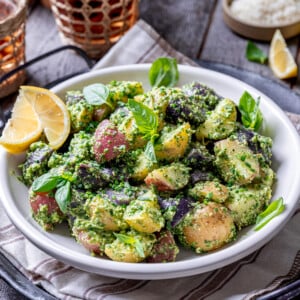
Lemony Basil Pesto Potato Salad (Easy Summer Side)
This lemony basil pesto potato salad is fresh, creamy, and packed with herbs. An easy summer side dish perfect for cookouts, picnics, and entertaining.
Equipment
- Large pot to boil the potatoes
- Small skillet to toast the pine nuts
- Food processor to make the pesto
- Large bowl to combine the pesto and potatoes
- Wooden toothpick or skewer to test the potato doneness
Ingredients
- 1 ½ pounds baby potatoes
For the Lemony Pesto:
- ¼ cup + 2 tablespoon pine nuts
- 2 ounces fresh basil leaves
- 3 Tablespoons lemon juice
- 4 Tablespoons extra virgin olive oil
- ½ cup fresh grated parmesan cheese
- 1 teaspoon kosher salt
- ¼ teaspoon black pepper
- ¼ teaspoon garlic powder
Garnish
- 1 tablespoon Fresh chives finely chopped
- Fresh basil leaves for garnish

Instructions
Start the Potatoes
- Start by placing the whole baby potatoes in a pot of cold water on the stovetop. Bring to a boil on high heat and start checking for doneness 10-15 minutes later. The potatoes are done when they feel tender but firm when pierced with a wooden skewer or toothpick. Remove the potatoes and place on a cutting board to cool.1 ½ pounds baby potatoes
Toast the Pine Nuts
- While the potatoes are boiling, you can toast the pine nuts. Add them to a skillet over medium heat and toast the pine nuts for a few minutes until there is a little color on them, they start to exude oil, and become fragrant. Remove to a small plate immediately when done. Set some aside (about 2 tablespoons) to add into the potato salad whole for a lovely crunch.¼ cup + 2 tablespoon pine nuts
Make the Pesto Sauce
- To make the pesto, add the basil, lemon juice, olive oil, parmesan cheese, kosher salt, black pepper, garlic powder, and ¼ cup of the cooled pine nuts to a food processor. Process until broken down and cohesive. A food processor won’t make the pesto too smooth like a blender would.2 ounces fresh basil leaves, 3 Tablespoons lemon juice, 4 Tablespoons extra virgin olive oil, ½ cup fresh grated parmesan cheese, 1 teaspoon kosher salt, ¼ teaspoon black pepper, ¼ teaspoon garlic powder
Finish the Dish
- Cut the potatoes into halves or quarters, depending on the size of the baby potatoes and your personal preference. Put into a large bowl and add the pesto (or as much of the pesto as you would like) and the 2 tablespoons of whole toasted pine nuts that you set aside. Gently mix to completely coat the potatoes. Serve in individual bowls or a large family-style serving bowl, garnished with chives and basil leaves.1 tbsp Fresh chives, Fresh basil leaves
Notes
Variations and Substitutions:
- Arugula Pesto Potato Salad: Swap half the basil for arugula to add a peppery, slightly bitter edge that works beautifully with grilled meats.
- Vegan Version: Replace the parmesan with nutritional yeast or a vegan parmesan alternative to make a vegan pesto. Add an extra tablespoon of olive oil to compensate for the lost richness.
- Sun-Dried Tomato Pesto Potato Salad: Blend in ¼ cup of oil-packed sun-dried tomatoes with the pesto for a sweet, tangy, umami-packed variation. Or throw a few chopped sun-dried tomatoes into the potato salad.
- Pine Nuts: While we love pine nuts, we have noticed they are now extremely expensive. We have made delicious pesto without them. Most notably, we have used with great success pepitas, walnuts, almonds, pecans, and even hazelnuts. We toast them as well and they’re all incredibly delicious.
- Add Protein: Toss in shredded rotisserie chicken, crumbled feta, diced salami, or crispy pancetta to turn this side dish into a light main course.
- How to store leftover pesto potato salad:
- Transfer any leftovers to an airtight container and refrigerate for up to 3 days. The pesto will darken slightly as it oxidizes, but the flavor will remain strong. In fact, the flavors often meld and deepen after a day in the fridge.
- How to prepare leftover potato salad:
- Before serving again, let the salad sit at room temperature for 15 to 20 minutes to take the chill off. Cold potatoes taste muted and starchy, and bringing them to room temperature will bring the flavors back to life. If the salad looks dry, stir in a tablespoon of olive oil or a squeeze of fresh lemon juice to refresh it.
- Can you freeze leftover pesto potato salad?
- Do not freeze this salad because the potatoes will become grainy and waterlogged when thawed, and the pesto will lose its vibrant color and fresh flavor.
- Do not over-process the pesto: Stop pulsing as soon as the mixture comes together. Over-blending will turn the basil bitter and make the pesto look dull and brown instead of vibrant green.
- Taste and adjust before serving: Pesto flavors mellow as they sit, so add an extra squeeze of lemon juice or pinch of salt right before serving if the salad tastes flat.
- Use a mix of potato sizes: If your baby potatoes vary in size, cut the larger ones and leave the smallest ones whole. This creates textural variety and makes the dish more visually interesting.
Nutrition
Calories: 245kcalCarbohydrates: 22gProtein: 6gFat: 16gSaturated Fat: 3gPolyunsaturated Fat: 3gMonounsaturated Fat: 9gCholesterol: 6mgSodium: 529mgPotassium: 559mgFiber: 3gSugar: 1gVitamin A: 590IUVitamin C: 27mgCalcium: 132mgIron: 2mg
Tried this recipe?Let us know how it was!
