
This Lemony Basil Pesto Potato Salad is fresh, creamy, and packed with herbs. An easy summer side dish perfect for cookouts, picnics, and entertaining.
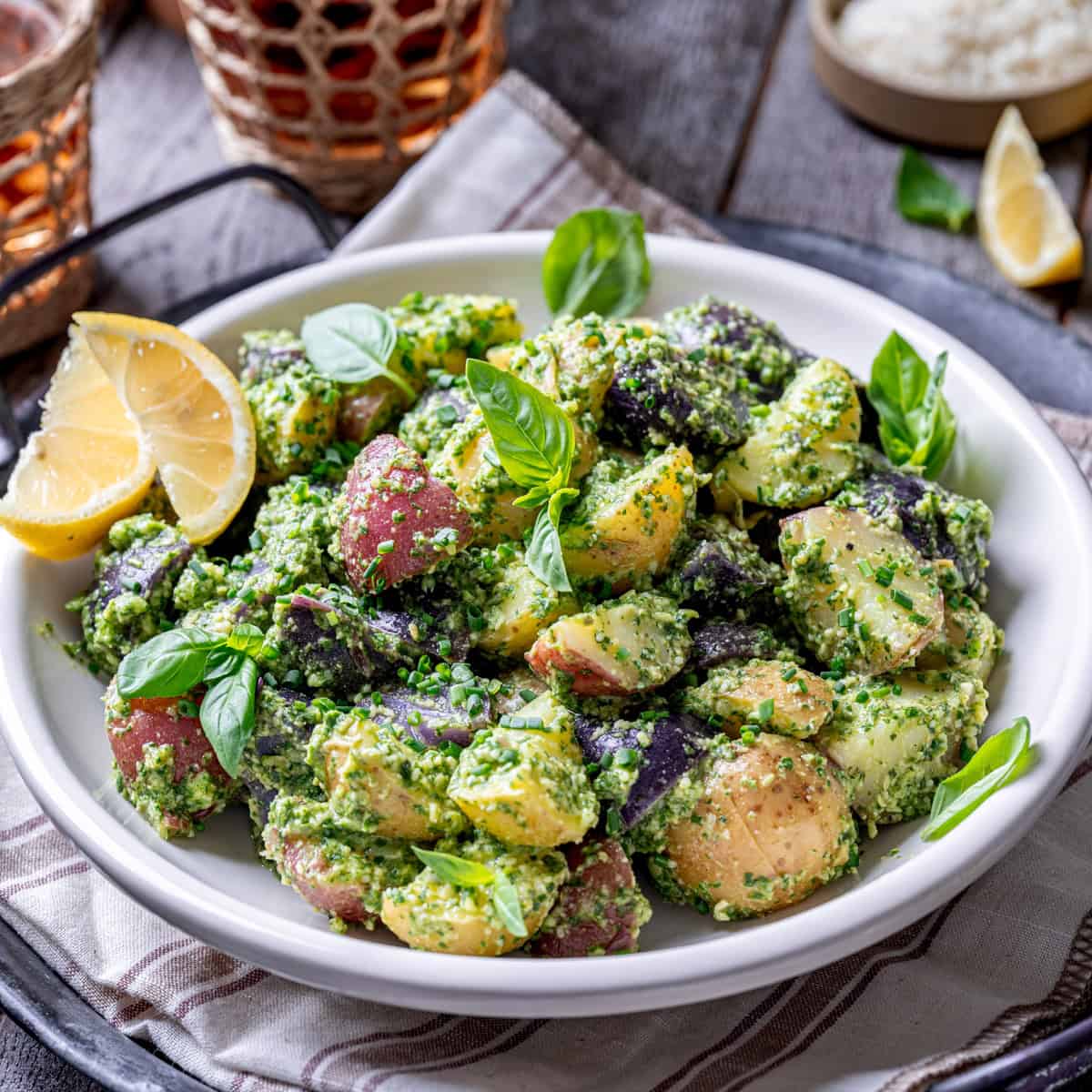
Have you ever heard an argument over what potato salad is better between mayo based or mustard based? Ditch them both and try this one made with a lemony pesto. Everyone will be coming back for seconds for this fun but insanely delicious take on potato salad.
This is the potato salad that makes people ask for the recipe twice. One bite changes everything. The bright lemon cuts through rich pesto while tender potatoes soak up every drop. And it takes under 45 minutes to put it together. It looks like summer in a bowl, tastes incredible, and is absurdly easy. And for the best part… if you're having an outdoor party, no mayo sweating in the sun.
Looking for more summer side dishes like this? Try out our Zesty Italian Pasta Salad with Homemade Dressing.
Jump to:
- Why You'll Love this Recipe
- History and Evolution of Pesto Potato Salad
- Why This Recipe Works
- How to Make Pesto Potato Salad
- Ingredients
- Equipment
- Step-by-Step Instructions
- How to Know When It's Done
- Variations and Substitutions
- Storage
- Leftover Transformations
- Top Tips from the Pros
- What to serve with Pesto Potato Salad
- What Wines To Drink with Pesto Potato Salad
- FAQ
- Related
- Pairing
- 📖 Recipe
Why You'll Love this Recipe
- Great application for pesto, which is a delicious thing on its own!
- Very simple preparation that you can make for 2 or 20 people!
- Great stability for outdoor parties, picnics, summer cookouts or pot-lucks
- This pairs with almost any protein, from seafood to steak!
- Delicious warmed up, room temperature, or cold!
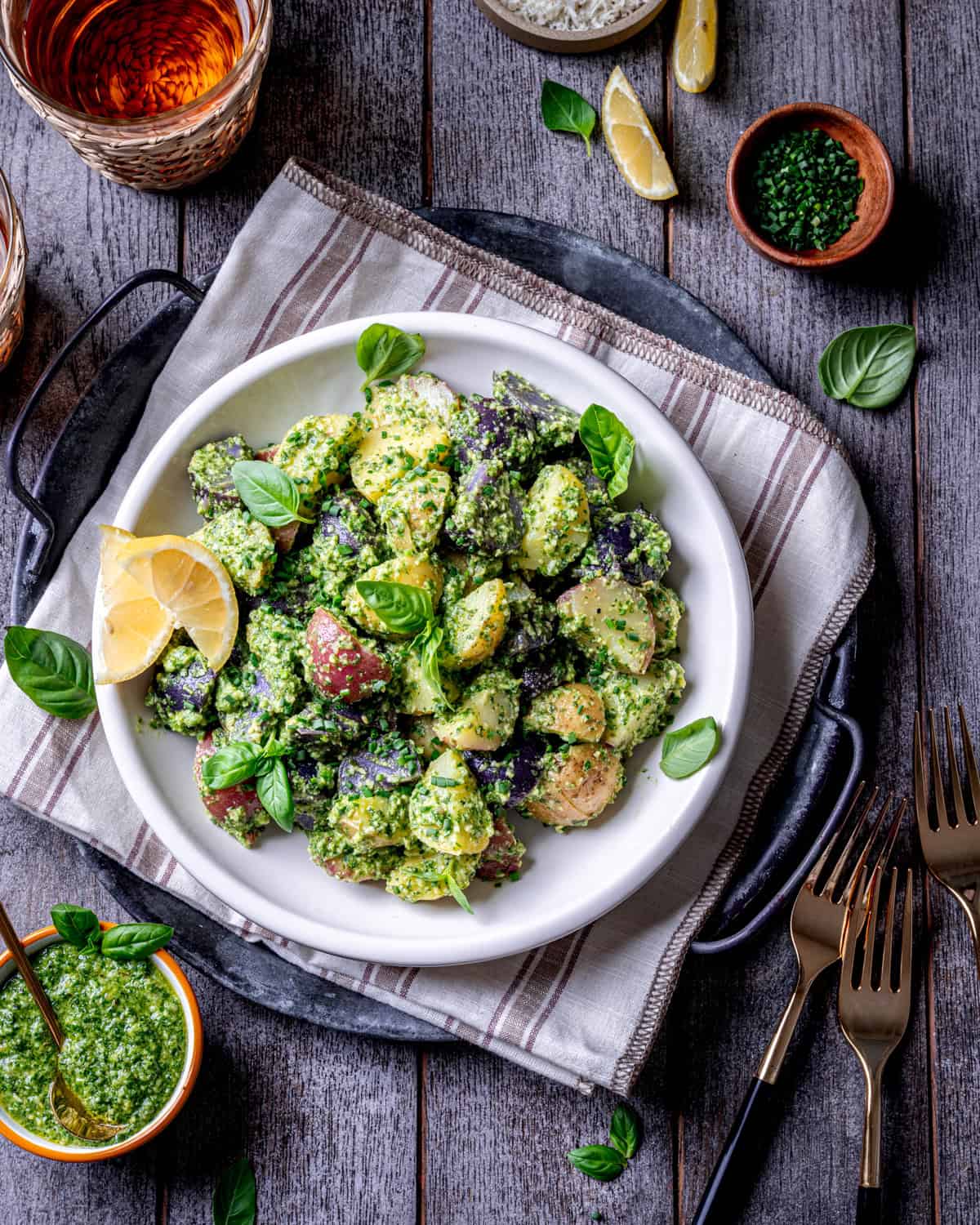
History and Evolution of Pesto Potato Salad
Pesto and potatoes have been flirting in Italy in Ligurian kitchens for decades, most famously in pasta dishes like trofie al pesto.
But tossing boiled potatoes directly in basil pesto instead of mayo-heavy American classic potato salad is a more recent hybrid, born from the same instinct that finds pesto on pizza and in grain bowls. It bridges Italian tradition with backyard barbecue practicality.
The dish gained traction in the early 2000s as home cooks started swapping heavy dressings for lighter, herb-forward alternatives. Now it is a summer staple for anyone who wants bold flavor without the weight of traditional potato salad.
Why This Recipe Works
The magic starts with using baby potatoes, which have a creamy, waxy texture that holds its shape when tossed and provides more surface area per bite for the pesto to cling to.
Starting the potatoes whole in cold water then bringing them to a boil ensures even cooking and prevents that chalky center you get from starting in hot water.
Toasting the pine nuts before blending releases their oils and deepens their flavor, which makes the pesto taste richer and more complex without adding extra fat.
The lemon juice is not just for brightness, it also cuts through the richness of the olive oil and cheese, creating balance so the dish does not feel heavy. And using a food processor instead of a blender keeps the pesto slightly chunky, which gives the salad better texture and a more rustic, homemade feel.
Every step is designed to maximize flavor while keeping the prep simple enough to do on a weeknight.
How to Make Pesto Potato Salad
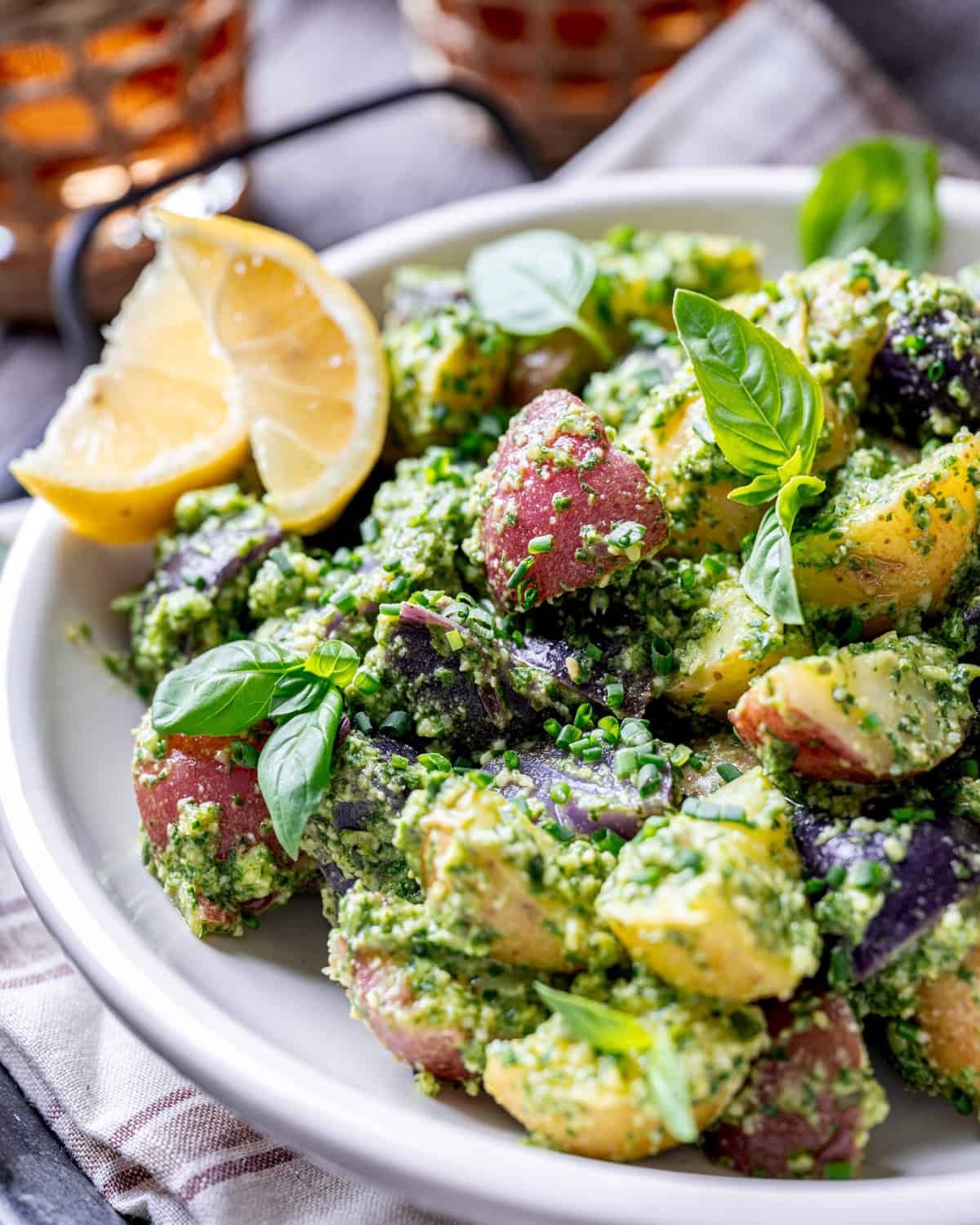
This is a fairly simple pesto potato salad recipe. Make a quality homemade pesto, add boiled and quartered potatoes, and let it sit for a few minutes. That's it!
Ingredients
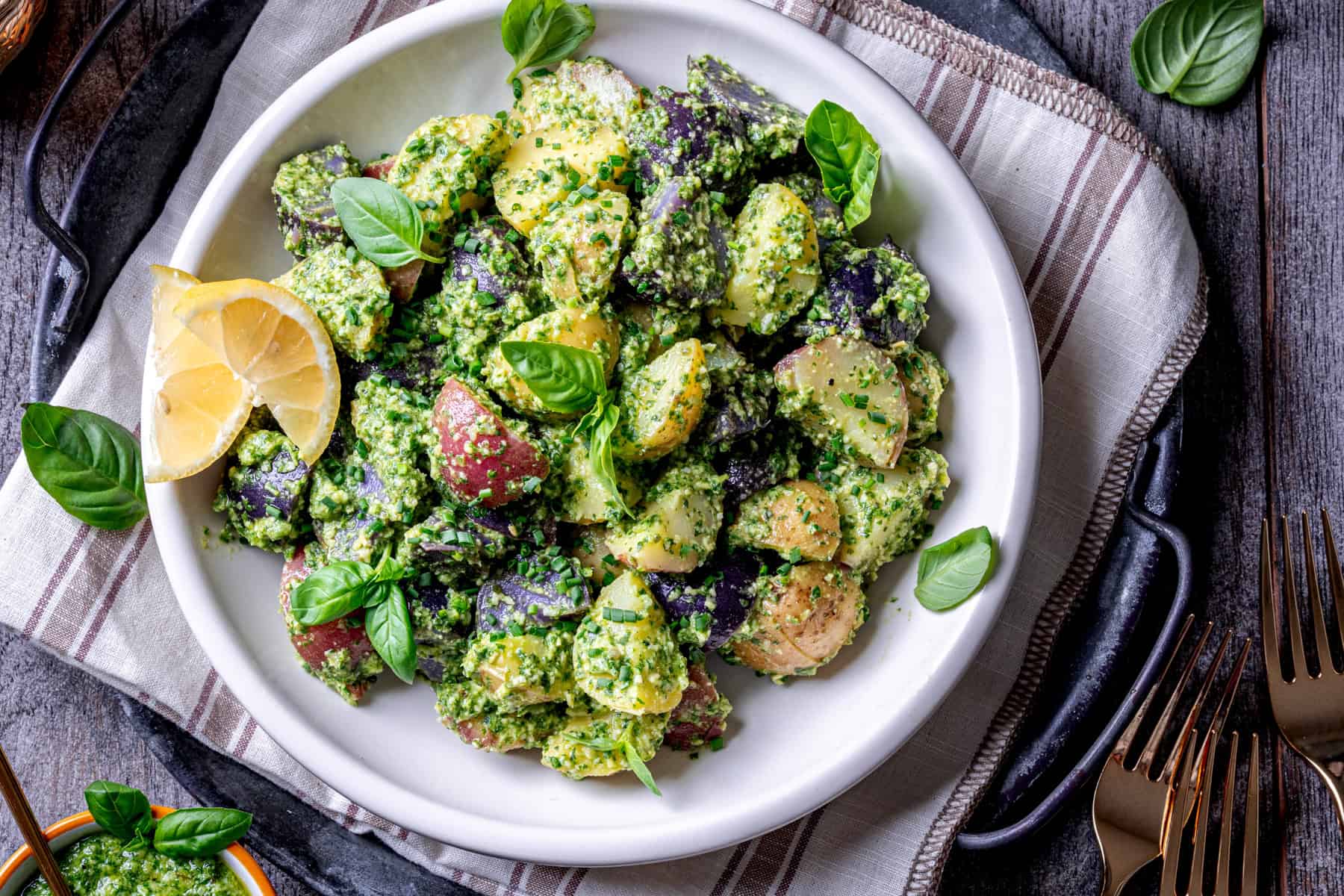
- Baby Potatoes/New Potatoes: Waxy varieties like fingerlings, purple or red potatoes, or Yukon golds work best because they hold their shape after boiling and have a creamy texture that soaks up the pesto. If you can find all of them together, you'll have a beautiful presentation of multi-colored and slightly different flavored potatoes!
- Pine Nuts: These add richness, a buttery flavor, and a slight crunch to the pesto. Toasting pine nuts is a major upgrade, so don't skip that step. If desired, make a few extras to set aside and sprinkle into the potato salad whole for a nice texture addition.
- Fresh Basil Leaves: The backbone of the pesto. You want bright green, unblemished leaves with no dark spots or wilting. Basil loses flavor quickly, so use it within a day or two of buying. If you grow your own, pick it right before making the pesto for maximum aromatics.
- Lemon Juice: The acidity brightens the pesto, balances the richness of the olive oil and cheese, and keeps the basil from oxidizing and turning brown.
- Extra Virgin Olive Oil: Use a fruity, peppery extra virgin olive oil that you would drizzle on bread. The oil emulsifies with the other ingredients to create a cohesive pesto and adds its own grassy, herbaceous notes.
- Parmesan Cheese: This is the expensive but best part of pesto. Use the good stuff from Italy. Buy a wedge of Parmigiano-Reggiano and grate it yourself on a microplane or box grater.
- Kosher Salt: Seasons the pesto and brings all the flavors into focus.
- Black Pepper: Adds a subtle heat and complexity.
- Garlic Powder: Provides mellow, background garlic flavor without the sharpness or bite of raw garlic.
- Fresh chives and Basil for Garnish: Optional but highly recommended. They add a pop of color and a fresh, oniony brightness that makes the dish feel polished and intentional.
Equipment
You do not need specialty gear, but a few key tools make this recipe faster and better.
- Large pot: Big enough to hold the potatoes in a single layer so they cook evenly. A 4-quart pot works perfectly for 1.5 pounds of baby potatoes.
- Skillet: For toasting the pine nuts. A small nonstick or stainless steel skillet over medium heat gives you control and prevents scorching.
- Food processor: Essential for making pesto with the right texture. A blender will puree it too smooth and turn it into a sauce instead of a chunky, clinging dressing (although a blender will work).
- Large mixing bowl: You need room to toss the potatoes without smashing them. A wide, shallow bowl works perfectly.
- Wooden skewer or toothpick: The best tool for testing potato doneness. A fork can split them open.
Step-by-Step Instructions
Start the Potatoes
- Start by placing the whole baby potatoes in a pot of cold water on the stovetop. Bring to a boil on high heat and start checking for doneness 10-15 minutes later. The potatoes are done when they feel tender but firm when pierced with a wooden skewer or toothpick. Remove the potatoes and place on a cutting board to cool.
Toast the Pine Nuts
- While the potatoes are boiling, you can toast the pine nuts. Add them to a skillet over medium heat and toast the pine nuts for a few minutes until there is a little color on them, they start to exude oil, and become fragrant. Remove to a small plate immediately when done. Set some aside (about 2 tablespoons) to add into the potato salad whole for a lovely crunch.
Make the Pesto Sauce
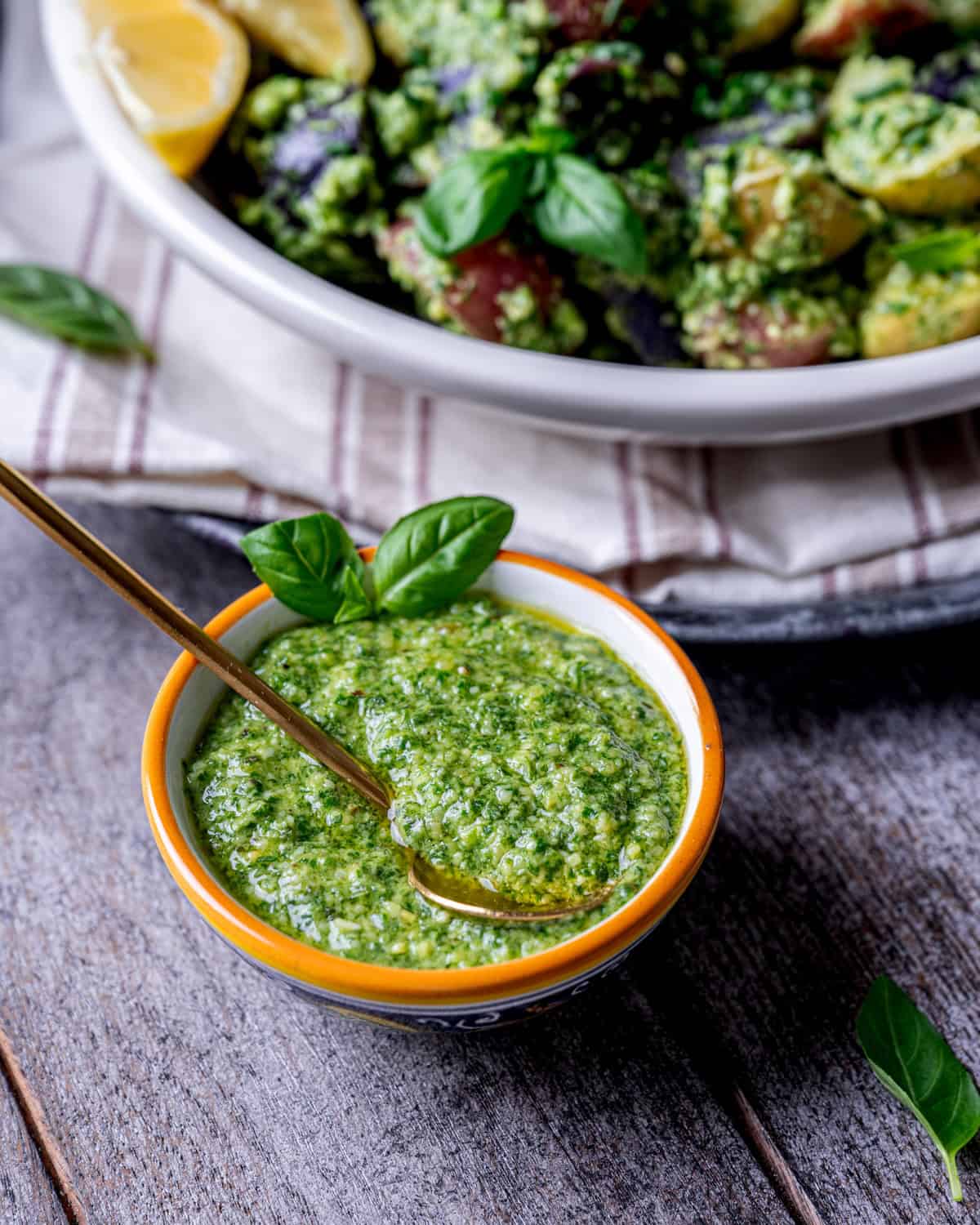
- To make the pesto, add the basil, lemon juice, olive oil, parmesan cheese, kosher salt, black pepper, garlic powder, and ¼ cup of the cooled pine nuts to a food processor. Process until broken down and cohesive. A food processor won't make the pesto too smooth like a blender would.
Finish the Dish
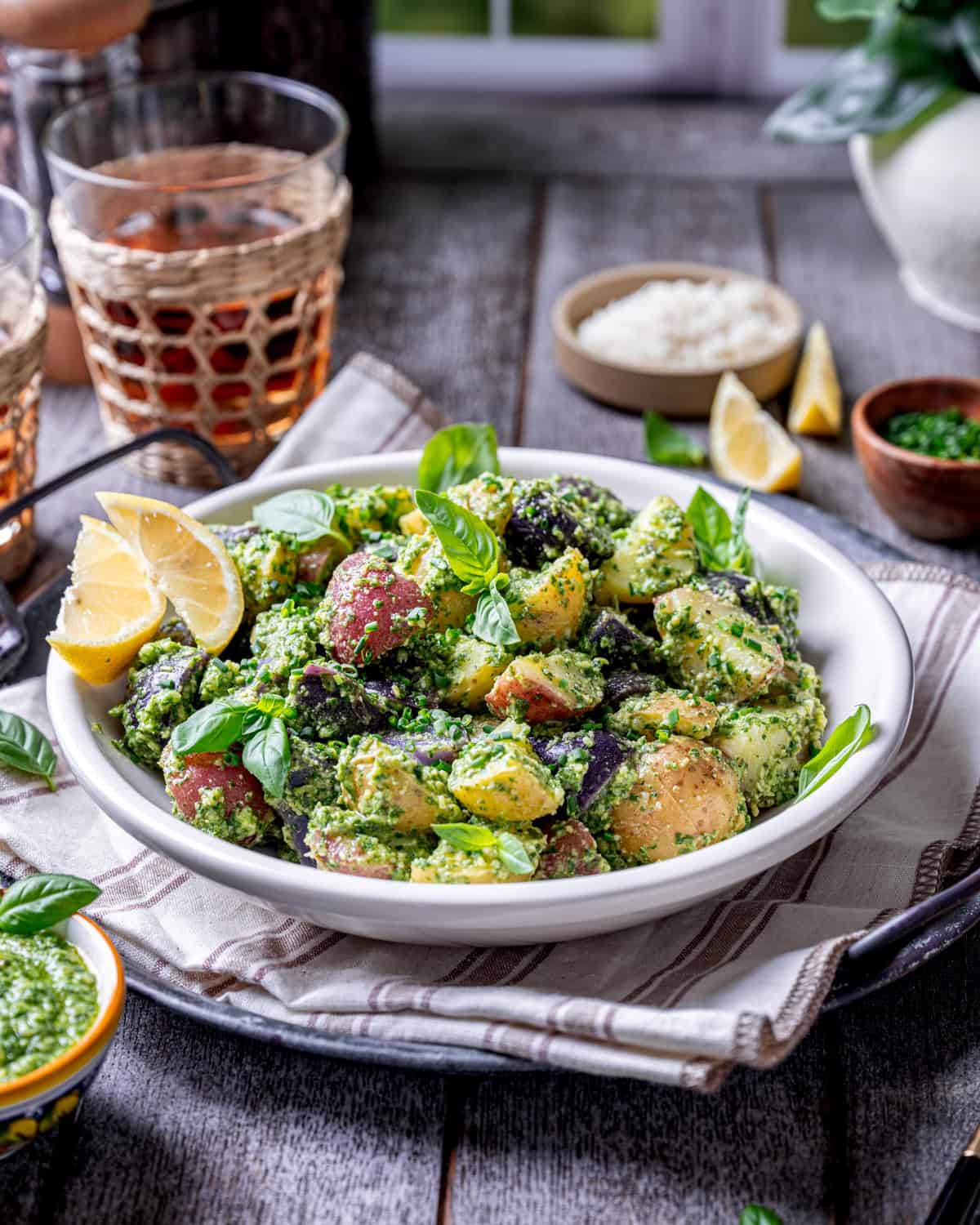
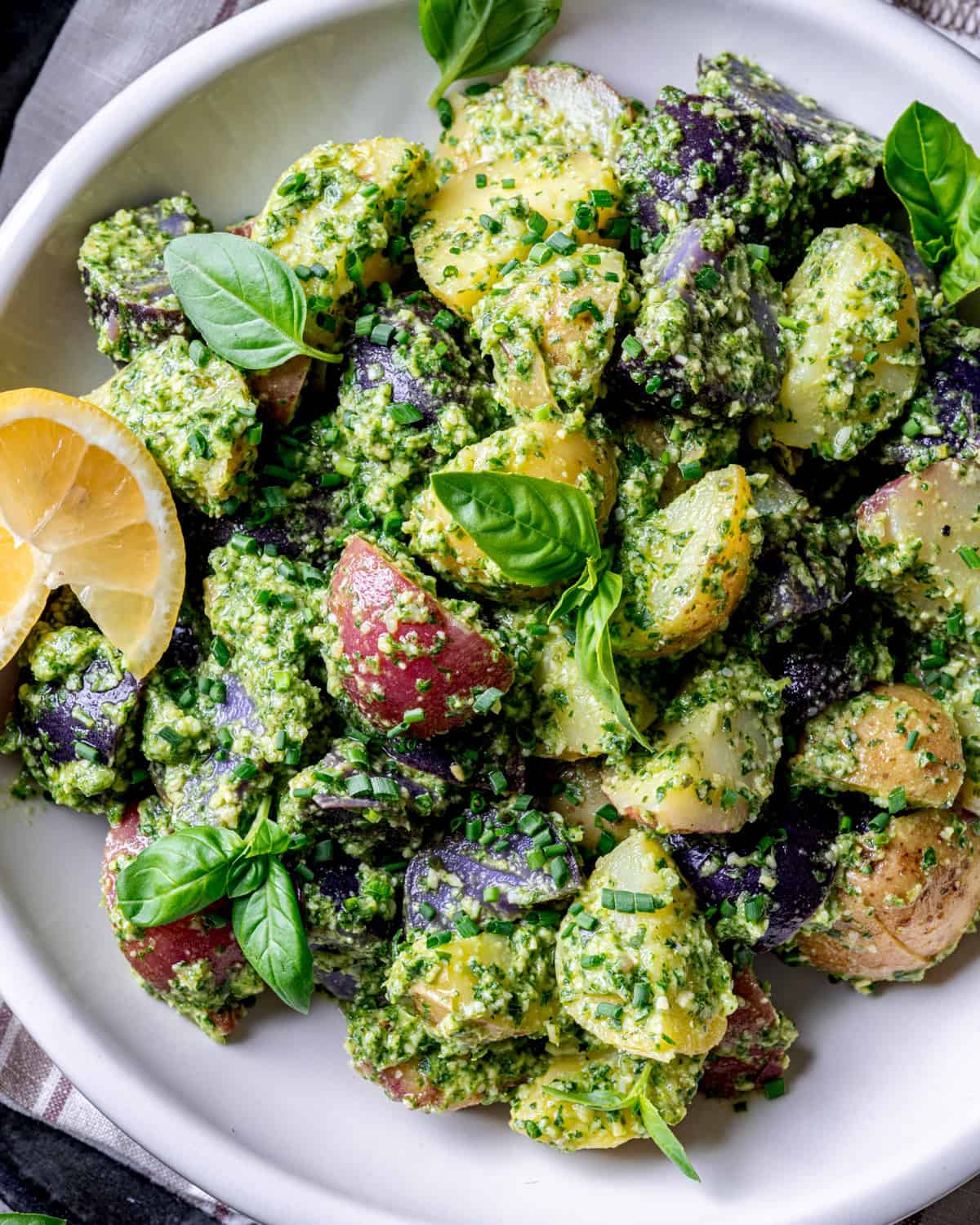
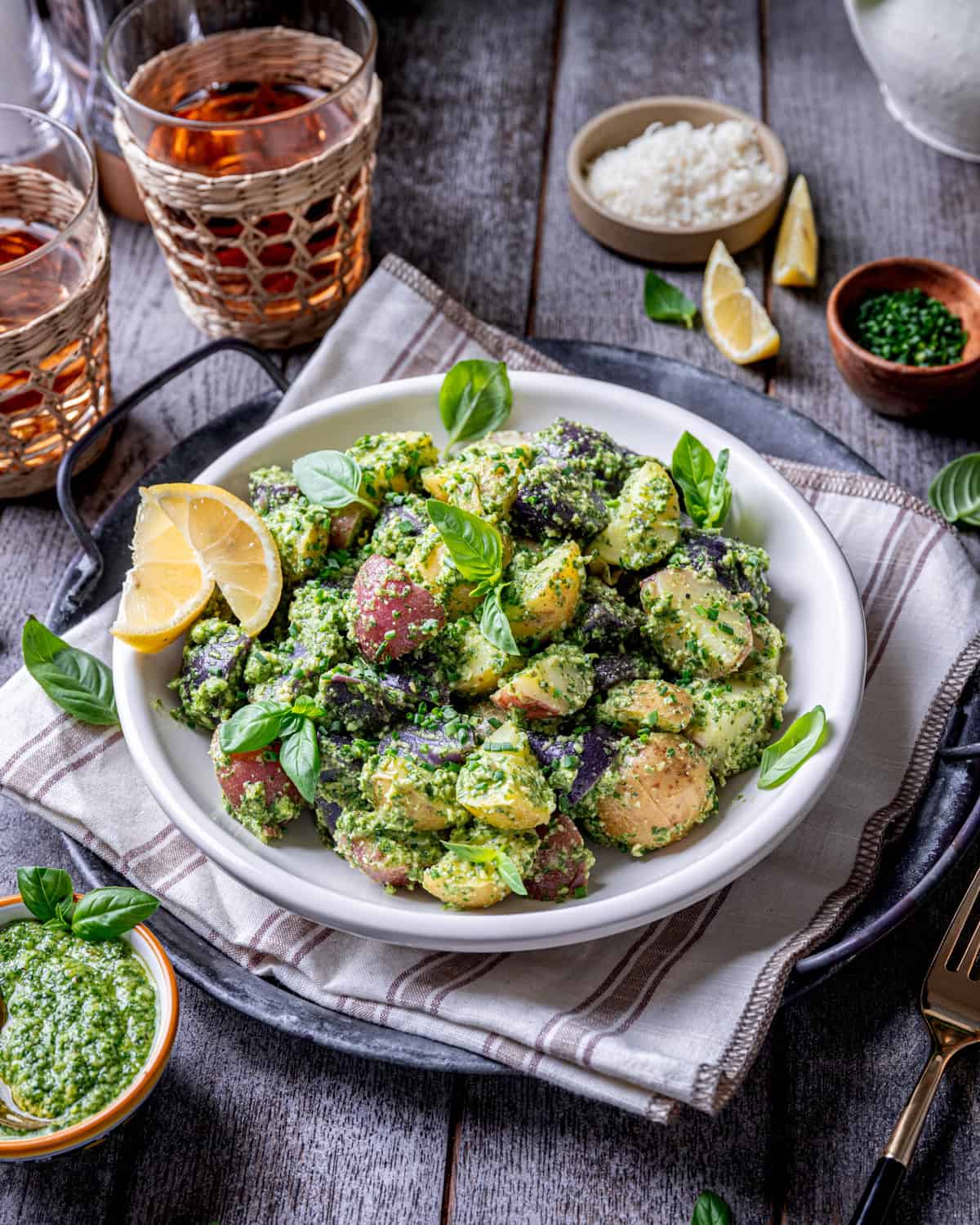
- Cut the potatoes into halves or quarters, depending on the size of the baby potatoes and your personal preference. Put into a large bowl and add the pesto (or as much of the pesto as you would like) and the 2 tablespoons of whole toasted pine nuts that you set aside. Gently mix to completely coat the potatoes. Serve in individual bowls or a large family-style serving bowl, garnished with chives and basil leaves.
How to Know When It's Done
For potatoes, you need to use your senses. The wooden skewer test is the most reliable method because it gives you a tactile sense of the potato's interior. When you pierce a potato, the skewer should slide through the center with just slight resistance. If it glides in with zero resistance, the potato is overcooked and will start to fall apart when you toss it. If you feel firm resistance, give it another 2 to 3 minutes and test again. Visually, the potato skins should look slightly wrinkled.
For the pine nuts, you are looking for a light golden color on most of the nuts, a glossy sheen from the oils releasing, and a warm, toasted aroma that fills the kitchen. They will go from perfect to burned somewhat quickly, so remove them from the heat and put them in a bowl or plate to stop cooking.
Variations and Substitutions
Once you nail the base recipe, it is easy to make variations.
- Arugula Pesto Potato Salad: Swap half the basil for arugula to add a peppery, slightly bitter edge that works beautifully with grilled meats.
- Vegan Version: Replace the parmesan with nutritional yeast or a vegan parmesan alternative to make a vegan pesto. Add an extra tablespoon of olive oil to compensate for the lost richness.
- Sun-Dried Tomato Pesto Potato Salad: Blend in ¼ cup of oil-packed sun-dried tomatoes with the pesto for a sweet, tangy, umami-packed variation. Or throw a few chopped sun-dried tomatoes into the potato salad.
- Pine Nuts: While we love pine nuts, we have noticed they are now extremely expensive. We have made delicious pesto without them. Most notably, we have used with great success pepitas, walnuts, almonds, pecans, and even hazelnuts. We toast them as well and they're all incredibly delicious.
- Add Protein: Toss in shredded rotisserie chicken, crumbled feta, diced salami, or crispy pancetta to turn this side dish into a light main course.
Storage
Pesto potato salad is best served fresh, but it stores surprisingly well if you handle it correctly. This is a make-ahead-friendly dish, but it is not a make-way-ahead dish.
How to store leftover pesto potato salad:
- Transfer any leftovers to an airtight container and refrigerate for up to 3 days. The pesto will darken slightly as it oxidizes, but the flavor will remain strong. In fact, the flavors often meld and deepen after a day in the fridge.
How to prepare leftover potato salad:
- Before serving again, let the salad sit at room temperature for 15 to 20 minutes to take the chill off. Cold potatoes taste muted and starchy, and bringing them to room temperature will bring the flavors back to life. If the salad looks dry, stir in a tablespoon of olive oil or a squeeze of fresh lemon juice to refresh it.
Can you freeze leftover pesto potato salad?
- Do not freeze this salad because the potatoes will become grainy and waterlogged when thawed, and the pesto will lose its vibrant color and fresh flavor.
Leftover Transformations
Smash the potatoes roughly with a fork, form them into patties, and pan-fry them in a little olive oil until crispy on both sides for pesto potato cakes. Serve them topped with a fried egg for breakfast or as a side to grilled fish.
You can also chop the potatoes into smaller pieces and toss them into a frittata with eggs, cheese, and any vegetables you have on hand.
Another move is to fold the leftovers into a grain bowl with arugula, cherry tomatoes, cucumbers, and a drizzle of balsamic glaze.
Or, spread the potato salad on toasted sourdough, top with burrata or fresh mozzarella, and finish with a drizzle of olive oil and flaky salt for an elevated open-faced sandwich.
Top Tips from the Pros
Little tricks separate a good pesto potato salad from one that gets scraped clean at the table.
- Do not over-process the pesto: Stop pulsing as soon as the mixture comes together. Over-blending will turn the basil bitter and make the pesto look dull and brown instead of vibrant green.
- Taste and adjust before serving: Pesto flavors mellow as they sit, so add an extra squeeze of lemon juice or pinch of salt right before serving if the salad tastes flat.
- Use a mix of potato sizes: If your baby potatoes vary in size, cut the larger ones and leave the smallest ones whole. This creates textural variety and makes the dish more visually interesting.
What to serve with Pesto Potato Salad
This potato salad is rich, herbaceous, and bright, so it pairs best with foods and drinks that complement those qualities without competing.
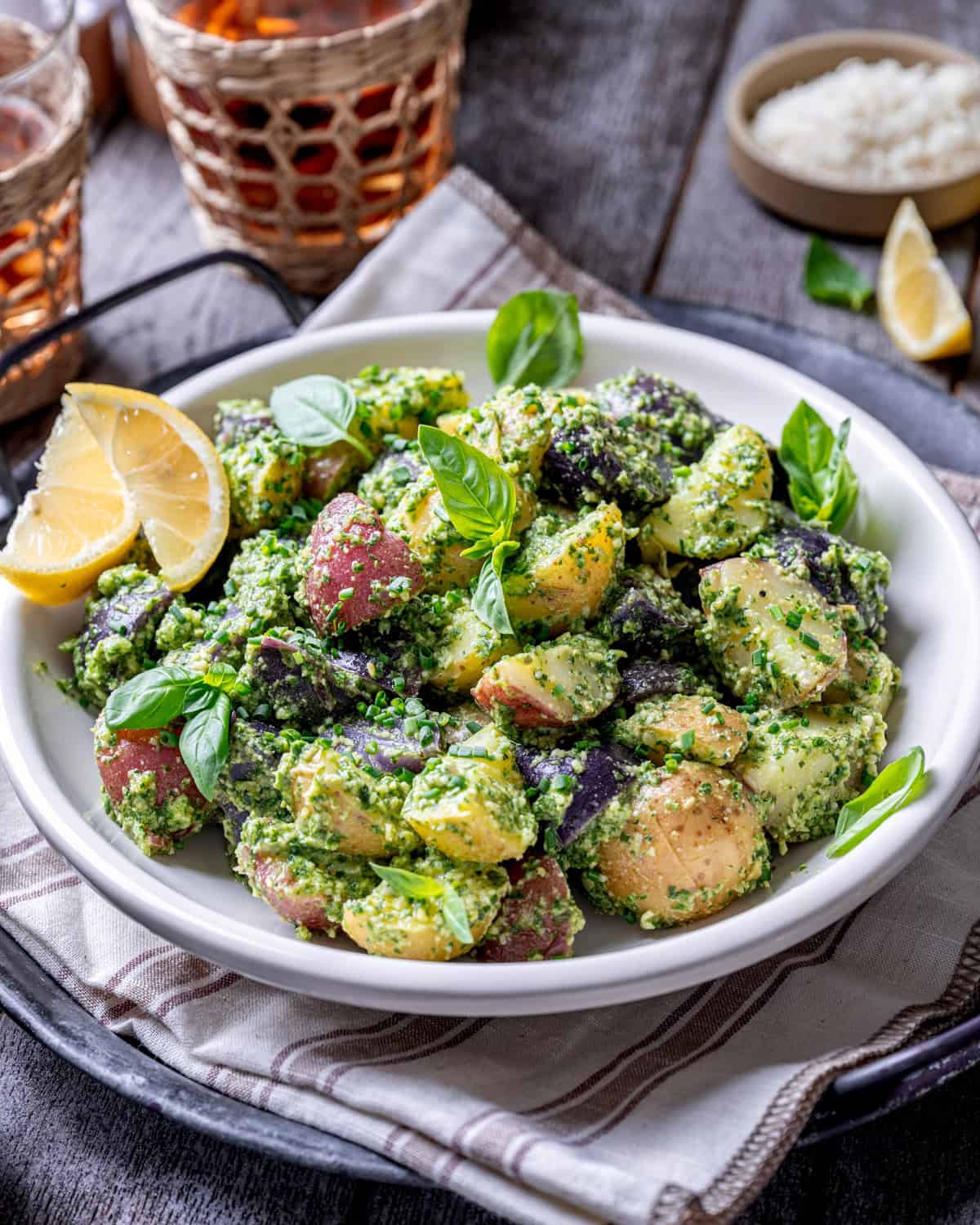
On the food side, this salad shines alongside grilled chicken, seared salmon, lamb chops, or tri tip steak. It is also perfect next to other summer sides like grilled vegetables, caprese salad, or a big green salad with a sharp vinaigrette. If there is food that belongs at a backyard cookout, this potato salad is it.
What Wines To Drink with Pesto Potato Salad
For white wine, reach for something crisp and acidic. A Vermentino from Liguria echoes the Italian roots of the pesto and has enough citrus brightness to match the lemon. Sauvignon Blanc from New Zealand or France works beautifully with the herbaceousness of the basil. If you prefer something with a bit more body, try a lightly oaked Chardonnay or a dry rosé with good acidity.
For red wine drinkers, a chilled Pinot Noir or a light Gamay will not overpower the dish.
Beer drinkers: If you are serving this at a casual barbecue, an ice-cold lager, wheat beer, or citrus-forward IPA cuts through the richness and refreshes the palate.
Cocktail-wise, a gin and tonic with lots of fresh herbs, a vodka tonic with lemon, or a classic margarita all work.
FAQ
It's fantastic! Just try this recipe and you'll see!
Oxidization is a very common issue that turns your beautiful green pesto into a dark mess. Once your pesto is made, it should be covered with plastic wrap (right on the pesto) and refrigerated. A thin layer of added olive oil on top helps also. Another mistake is not using a hard, salty, aged cheese. Using a creamy or processed fake parmesan can be disappointing to tragic. Pecorino, Parmesan, and Grana Padano are all perfect choices.
Yes it is good to make in advance - the day before is perfectly fine!
Related
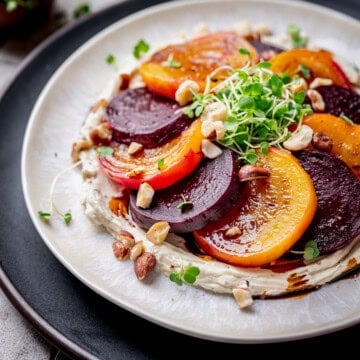
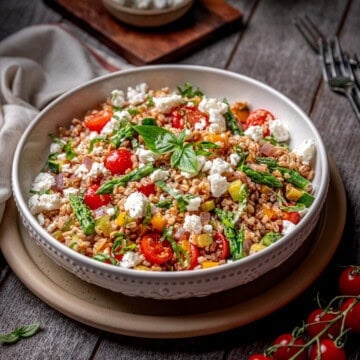
Looking for other side dishes like this? Try these:


Pairing
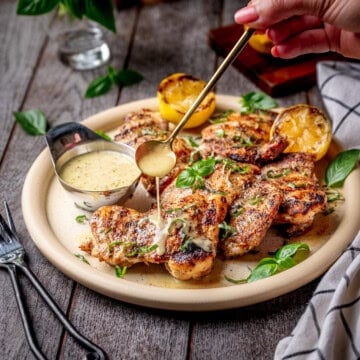
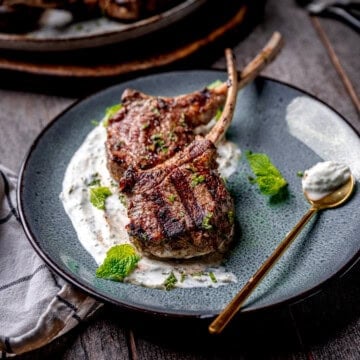
These are our favorite bbq main dishes to serve with pesto potato salad:


📖 Recipe
Lemony Basil Pesto Potato Salad (Easy Summer Side)
Equipment
- Large pot to boil the potatoes
- Small skillet to toast the pine nuts
- Food processor to make the pesto
- Large bowl to combine the pesto and potatoes
- Wooden toothpick or skewer to test the potato doneness
Ingredients
- 1 ½ pounds baby potatoes
For the Lemony Pesto:
- ¼ cup + 2 tablespoon pine nuts
- 2 ounces fresh basil leaves
- 3 Tablespoons lemon juice
- 4 Tablespoons extra virgin olive oil
- ½ cup fresh grated parmesan cheese
- 1 teaspoon kosher salt
- ¼ teaspoon black pepper
- ¼ teaspoon garlic powder
Garnish
- 1 tablespoon Fresh chives finely chopped
- Fresh basil leaves for garnish

Instructions
Start the Potatoes
- Start by placing the whole baby potatoes in a pot of cold water on the stovetop. Bring to a boil on high heat and start checking for doneness 10-15 minutes later. The potatoes are done when they feel tender but firm when pierced with a wooden skewer or toothpick. Remove the potatoes and place on a cutting board to cool.1 ½ pounds baby potatoes
Toast the Pine Nuts
- While the potatoes are boiling, you can toast the pine nuts. Add them to a skillet over medium heat and toast the pine nuts for a few minutes until there is a little color on them, they start to exude oil, and become fragrant. Remove to a small plate immediately when done. Set some aside (about 2 tablespoons) to add into the potato salad whole for a lovely crunch.¼ cup + 2 tablespoon pine nuts
Make the Pesto Sauce
- To make the pesto, add the basil, lemon juice, olive oil, parmesan cheese, kosher salt, black pepper, garlic powder, and ¼ cup of the cooled pine nuts to a food processor. Process until broken down and cohesive. A food processor won't make the pesto too smooth like a blender would.2 ounces fresh basil leaves, 3 Tablespoons lemon juice, 4 Tablespoons extra virgin olive oil, ½ cup fresh grated parmesan cheese, 1 teaspoon kosher salt, ¼ teaspoon black pepper, ¼ teaspoon garlic powder
Finish the Dish
- Cut the potatoes into halves or quarters, depending on the size of the baby potatoes and your personal preference. Put into a large bowl and add the pesto (or as much of the pesto as you would like) and the 2 tablespoons of whole toasted pine nuts that you set aside. Gently mix to completely coat the potatoes. Serve in individual bowls or a large family-style serving bowl, garnished with chives and basil leaves.1 tbsp Fresh chives, Fresh basil leaves
Notes
- Arugula Pesto Potato Salad: Swap half the basil for arugula to add a peppery, slightly bitter edge that works beautifully with grilled meats.
- Vegan Version: Replace the parmesan with nutritional yeast or a vegan parmesan alternative to make a vegan pesto. Add an extra tablespoon of olive oil to compensate for the lost richness.
- Sun-Dried Tomato Pesto Potato Salad: Blend in ¼ cup of oil-packed sun-dried tomatoes with the pesto for a sweet, tangy, umami-packed variation. Or throw a few chopped sun-dried tomatoes into the potato salad.
- Pine Nuts: While we love pine nuts, we have noticed they are now extremely expensive. We have made delicious pesto without them. Most notably, we have used with great success pepitas, walnuts, almonds, pecans, and even hazelnuts. We toast them as well and they're all incredibly delicious.
- Add Protein: Toss in shredded rotisserie chicken, crumbled feta, diced salami, or crispy pancetta to turn this side dish into a light main course.
- How to store leftover pesto potato salad:
- Transfer any leftovers to an airtight container and refrigerate for up to 3 days. The pesto will darken slightly as it oxidizes, but the flavor will remain strong. In fact, the flavors often meld and deepen after a day in the fridge.
- How to prepare leftover potato salad:
- Before serving again, let the salad sit at room temperature for 15 to 20 minutes to take the chill off. Cold potatoes taste muted and starchy, and bringing them to room temperature will bring the flavors back to life. If the salad looks dry, stir in a tablespoon of olive oil or a squeeze of fresh lemon juice to refresh it.
- Can you freeze leftover pesto potato salad?
- Do not freeze this salad because the potatoes will become grainy and waterlogged when thawed, and the pesto will lose its vibrant color and fresh flavor.
- Do not over-process the pesto: Stop pulsing as soon as the mixture comes together. Over-blending will turn the basil bitter and make the pesto look dull and brown instead of vibrant green.
- Taste and adjust before serving: Pesto flavors mellow as they sit, so add an extra squeeze of lemon juice or pinch of salt right before serving if the salad tastes flat.
- Use a mix of potato sizes: If your baby potatoes vary in size, cut the larger ones and leave the smallest ones whole. This creates textural variety and makes the dish more visually interesting.
Nutrition


Leave a Reply