
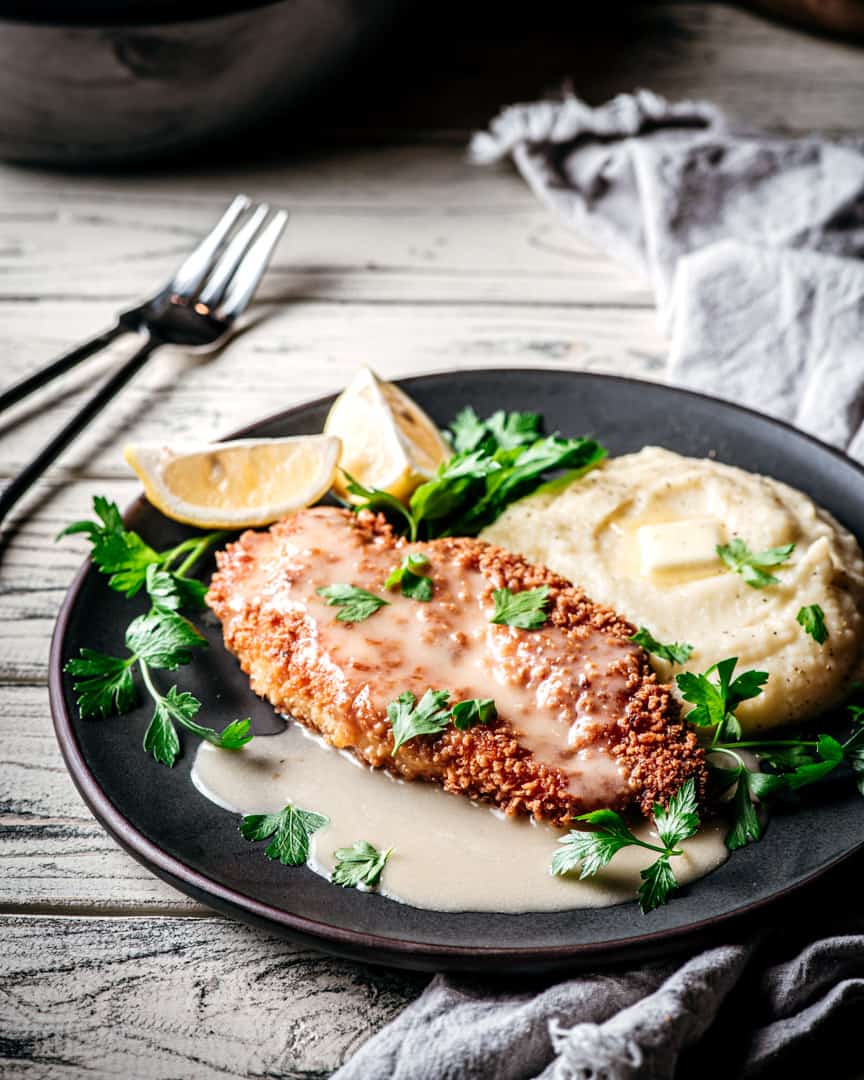
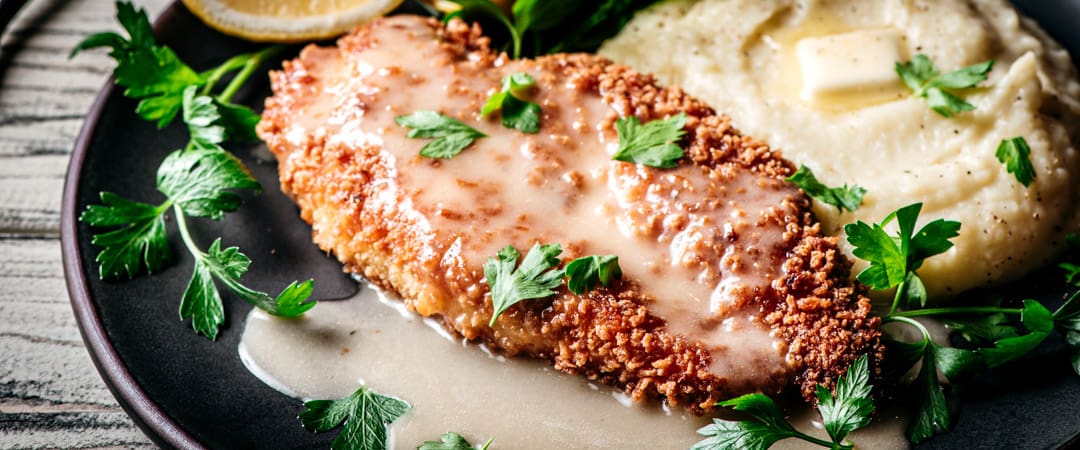
A crunchy chicken cutlet that has stunning flavor? Does that exist? Sure does. We're talking about panko-crusted perfection that stays perfectly crisp from the first bite to the last, paired with a decadent white wine lemon butter sauce that will leave you wanting it tomorrow as well!

This is the kind of dish that makes people think you went to culinary school. But if you didn't, you just need to understand three things: how to set up a proper breading station, how to control your pan heat, and how to build a sauce that tastes like it took an hour but actually took under 10 minutes. The whole family will love this easy weeknight dinner!
Looking for more chicken dishes like this? Try out our Italian Herb Grilled Chicken Thighs with Lemon Vinaigrette or Cheesy Pistachio Pesto Chicken with Roasted Cherry Tomatoes.
Jump to:
- Why You'll Love this Recipe
- What is Panko Chicken?
- Why This Recipe Works
- Substitutions
- How to Make Crunchy Panko Chicken with White Wine Lemon Butter Sauce
- Equipment
- Step-by-Step Instructions
- Variations
- Storage
- Leftover Transformation: How to Make a Brand New Dish from Leftover Panko Chicken
- Top Tips from the Pros
- Troubleshooting
- What to serve with Panko Chicken
- What Wines To Drink with Panko Chicken
- FAQ
- Related
- Pairing
- 📖 Recipe
Why You'll Love this Recipe
- You can make extra cutlets and freeze it for an even quicker weeknight meal down the road.
- It's exceptionally delicious and keeps it's texture.
- The leftovers are awesome as well in so many ways.
- The sauce is not only delicious and easy to make, it goes with so many things!
What is Panko Chicken?
Pank Chicken is simply chicken cutlets coated in those large-format, crunchy Japanese-style breadcrumbs and fried up for a crispy crust. Panko breadcrumbs fry up lighter and crispier than any other and maintain their texture once fried for longer than traditional breadcrumb coatings. They're generally easy to find and have become a grocery store staple.
This dish is not traditional in any strict sense, but it borrows the best parts of two very different culinary traditions (Japanese and French) and makes them work on the same plate.
The Perfect Match: Crunchy Panko Chicken and Beurre Blanc
The beurre blanc is of pure French pedigree. It is a classic emulsified butter sauce that was traditionally served with fish but now served in many more ways. The name literally means "white butter," and it is built on a foundation of reduced wine, shallots, and acid, then finished with cold butter whisked in off the heat. It is one of our favorite sauces and we have modified the ingredients while keeping the technique in hundreds of ways.
Pairing crispy Panko chicken cutlets and a luscious beurre blanc is a perfect pairing that works because contrasts make food interesting. The crunch against the smooth, silky sauce. The richness of butter gets cut by lemon and wine. The result feels fancy but once you get the hang of it, making a beurre blanc is a snap.

Why This Recipe Works
- First, panko breadcrumbs are structurally different from regular breadcrumbs. They're made from crustless bread that's been processed into large, jagged flakes instead of fine crumbs. That irregular shape creates more surface area and more gaps, which means more places for moisture to escape and more edges to get golden and crunchy. Regular breadcrumbs turn dense and heavy when fried. Panko stays light.
- Second, the three-step breading process creates a coating that actually sticks. Flour holds onto the dried protein and gives the egg something to grab onto. Egg gives the panko something to stick to. Follow those three steps in that order and it always works.
- Third, shallow frying in a stainless steel or cast iron skillet gives you better control that deep frying or baking doesn't. You can see exactly how fast the crust is browning, adjust your heat in real time, and get that perfect color without overcooking the chicken. Baking gives you a dry, pale crust. Deep frying can be a bit much and can make everything taste like oil instead of chicken.
- Fourth, the sauce is an emulsion, which means fat and liquid are being held together temporarily by heat, motion, and a little bit of acid. White wine reduces and concentrates flavor. Lemon juice brightens everything, brings a gentle citrus flavor, and cuts through the butter. Butter adds richness and body.
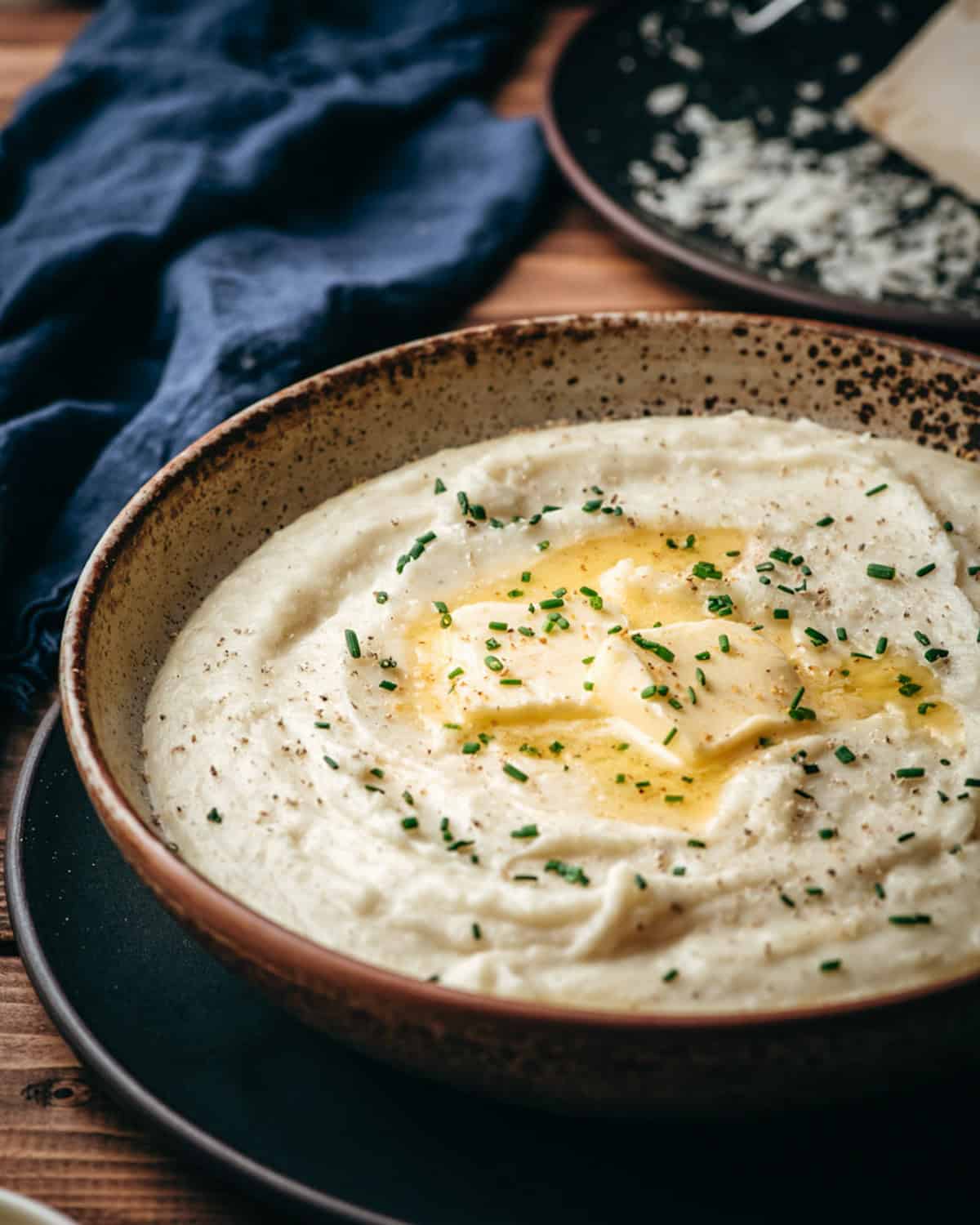
And, the fact that Crunchy Chicken will accompany about 100 side dishes or more as well, you really can't go wrong! We love this crispy chicken with creamy mashed potatoes, such as THESE, and some green beans, but really anything you like will work well with this.
Ingredients
For the Panko-Breaded Chicken:
- Chicken breasts, halved lengthwise: Two large boneless skinless chicken breasts are sliced horizontally into four thinner cutlets. Thin is the whole point. If your chicken is thick, it will not cook through before the panko burns. Look for breasts that are relatively even in size so your cutlets cook at the same rate.
- Kosher salt: This seasons the meat itself and you definitely want a bit of seasoning on the meat. Kosher salt has a more consistent saltiness compared to table salt and is easier to control.
- Lemon pepper: If you only have black pepper and lemon zest, use that, but good quality bottled lemon pepper works well also.
- Panko breadcrumbs: Japanese-style breadcrumbs with a coarse, airy texture. They fry up way crispier than regular breadcrumbs because of how they are made.
- Eggs and water: The water thins out the egg just slightly so it coats more evenly. If your egg wash is too thick, you can create uneven breading.
- All-purpose flour: This is your first layer. It dries out any surface moisture on the chicken and gives the egg something to stick to. You can use a zip-top bag and shake the chicken in it if you want to keep your hands cleaner.
- Ghee or olive oil: Ghee is a type of flavorful clarified butter with a high smoke point, so it does not burn as fast as regular butter. Olive oil works too. You need enough fat in the pan to come halfway up the sides of the chicken for even browning.
For the Lemon Beurre Blanc:
- Dry white wine: Sauvignon Blanc and Pinot Grigio both have enough acidity to balance the butter without adding sweetness. Just make sure whatever white wine you are using is crisp and not aged in wood.
- Black peppercorns: These add a subtle spice to the reduction and are classic in beurre blanc.
- Shallot: Milder and sweeter than onion, shallots are the classic choice for French butter sauces. One small shallot is all you need.
- Lemon juice: Freshly squeezed lemon juice brightens the butter and keeps the sauce from feeling heavy.
- Unsalted butter: The butter needs to be cold and cut into pieces. Cold butter emulsifies into the reduction and creates that glossy, thick texture. If the butter is warm or melted, the sauce will break and turn greasy. Unsalted gives you control over the seasoning.
- Fresh parsley: For garnish, it adds color and a little herbal freshness that cuts through the richness
See recipe card below for quantities.

Substitutions
Here are a couple of common substitutions for the ingredients in this recipe:
Panko Breadcrumps: We have found gluten free panko breadcrumbs in the store recently and on one occasion had to use them because they were our only option. They are fantastic and taste the same as the regular version! So if you need a GF option, don't hesitate to use these
Chicken: We often make this exact recipe with thin pork chops or pork cutlets and they're just as amazing! If you want to be a bit fancier, veal cutlets are fantastic here.
Lemon: Wherever there is lemon, you can successfully substitute meyer lemon, lime, bergamot, orange, or grapefruit and you'll love it!
How to Make Crunchy Panko Chicken with White Wine Lemon Butter Sauce
This panko chicken recipe is a simple make, but the first time may seem clunky. And once you have made it a couple of times, the whole thing comes together in less than an hour.
Just bread the chicken, and while you cook it up you can get the sauce going as well. When the chicken is done, keep it warm while you finish the sauce. Once you eat this you'll forget any effort you put into it! Make it once and you will keep coming back to it.
Equipment
You do not need much to pull this off, but a few specific tools will make your life easier and your results more consistent.
- Two large skillets: You need one for the chicken and one for the sauce. You could do it all in one pan, but running them simultaneously keeps dinner moving and the chicken stays warm while you finish the beurre blanc.
- A meat mallet or heavy pan: To pound out the chicken. If your chicken breasts are a bit uneven or too thick gently pound them out a bit before you slice them lengthwise. Even thickness means even cooking.
- A fine mesh strainer or sieve: Essential for straining out the peppercorns and shallot from your reduced wine. The sauce should be silky, not chunky.
- A whisk: A whisk is a must and emulsifies the butter properly and keeps the sauce from splitting.
- Regular spatula or (better yet) a fish spatula: For flipping the chicken without tearing up that beautiful crust.
If you do not have ghee, just use olive oil or a mix of butter and neutral oil.
Step-by-Step Instructions
This is where everything comes together. The process is not complicated, but the order matters.
Prepare Your Chicken
- Preheat your oven to 180°F or the lowest setting you have. This is your holding zone for finished chicken while you cook the rest and finish the sauce.
- Season the chicken cutlets on both sides with kosher salt and lemon pepper. Do not be shy. The seasoning needs to penetrate the meat, not just sit on the crust.
Set Up Your Breading Station
- Whisk the eggs and water together in one bowl. Put the flour in another bowl or a gallon-size zip-top bag. Spread the panko on a large plate or sheet pan. Line them up in order: flour, egg, panko.
- Bread the chicken. Try to keep one hand dry and one hand can get messy. Dredge each cutlet in flour and shake off the excess. Dip it in the egg wash and let the extra drip off. Press it into the panko on both sides, really pressing the crumbs into the meat so they stick. Set the breaded cutlets aside on a clean plate.
Cook the Chicken
- Add the ghee or olive oil to a large skillet over medium heat. You want the oil hot enough that a pinch of panko sizzles immediately when you drop it in. If the oil is not hot enough, your crust will be greasy. If it is too hot, the outside will burn before the chicken cooks through.
- Once the oil is hot, add two cutlets to the pan, making sure not to crowd them. Cook for 4 to 5 minutes per side until the crust is deep golden brown and the chicken is cooked through. Move them to a plate or sheet pan and keep them warm, uncovered, in the preheated oven. Repeat with the remaining cutlets, adding more oil to the pan if it looks dry.
Make the Sauce
- Start the beurre blanc while the chicken cooks. In a separate small skillet, combine the wine, peppercorns, and chopped shallot. Bring it to a gentle boil over medium heat and let it reduce by half. This should take about 5 minutes. You are concentrating the flavors here.
- Once the wine is reduced by half, pour it through a fine mesh strainer into a bowl, discarding the solids. Return the strained liquid to the pan and reduce for another minute.
- Add the lemon juice and reduce again until you have about 2 tablespoons of liquid left in the pan. This is your flavor base. It should taste sharp, acidic, and concentrated.
- Finish the sauce off the heat. Remove the pan from the burner completely and let it cool for a minute or two. The pan should be warm, not hot. Add the cold butter one piece at a time, whisking constantly. Each piece should emulsify into the liquid before you add the next. If the sauce starts to look greasy or separated, your pan is too hot. If it is not coming together, put the pan back on low heat for 20 to 30 seconds while whisking, then pull it off again. Once all the butter is in and the sauce is glossy and thick, you are done.
Plate and Serve
- Put the chicken on plates, drizzle the beurre blanc over the top, and sprinkle with chopped parsley. Serve extra sauce on the side if you made enough. Eat it immediately while the crust is still crispy and the sauce is still warm.
How to Know It Is Done
Timing is helpful, but your senses are way more reliable than a clock when it comes to knowing if this dish is ready.
For the chicken, you are looking for a crust that is deeply golden brown, almost amber in spots, with a texture that looks dry and crispy, not pale or soft. When you press on the cutlet with tongs, it should feel firm, not squishy. If you have a meat thermometer, the internal temperature should hit 165°F, but honestly, thin cutlets cooked for 5 to 6 minutes per side in hot oil are going to be done. If you cut into one and the juices run clear, not pink, you are good.
For the beurre blanc reduction, you will know the wine is reduced by half when the liquid in the pan looks thicker, darker, and more syrupy, and the volume has visibly dropped. After you add the lemon juice and reduce again, you should have just a couple of tablespoons of concentrated liquid left. It will smell intensely of wine and lemon, and it should coat the back of a spoon.
Variations
- Swap the protein. This same breading and sauce method works beautifully with pork cutlets, turkey cutlets, or even firm white fish like halibut or cod. Just adjust the cooking time. Fish will cook faster, pork might take a minute or two longer.
- Add herbs. Add a tablespoon of fresh thyme, tarragon, or chives to the beurre blanc right before you serve it. Tarragon is especially classic with French butter sauces and adds a subtle anise note that is really nice with lemon.
- Make it spicy. Add a pinch of cayenne pepper to the panko before you bread the chicken, or stir a tiny bit of Calabrian chili paste into the finished sauce for a gentle kick.
- Go Italian. Swap the beurre blanc for a quick pan sauce made with chicken stock, capers, and butter. Finish with lemon and parsley. Suddenly you have a cousin of chicken piccata.
- Add cheese. Toss a handful of grated Parmesan into the panko before breading. It adds a nutty, salty depth to the crust that is really good, especially if you are skipping the butter sauce and going with something lighter.
- Make it gluten-free. Use gluten-free panko and a gluten-free flour blend for dredging. The texture will not be exactly the same, but it will still be crispy and delicious.
Storage
How to store leftover panko chicken:
- Let the cutlets cool completely, then store them in an airtight container in the fridge for up to 3 days. Do not stack them directly on top of each other or the crust will steam and get soggy. Layer parchment paper between each piece if you need to stack to maintain that crispy texture.
- The beurre blanc does not love the fridge, but it will hold for a day or two in an airtight container. When you reheat it, do it gently in a small saucepan over very low heat, whisking constantly. If it breaks, whisk in a teaspoon of cold cream or a tiny splash of cold water to bring it back together. It will not be as perfect as it was fresh, but it will still taste good.
How to reheat leftover panko chicken:
- Reheat the cutlets in a 350°F oven on a wire rack set over a baking sheet for about 10 minutes. The wire rack lets air circulate and keeps the bottom from steaming. You will not get the same level of crispness as fresh, but it will be close. Do not microwave it.
Can you freeze leftover panko chicken?
- You can freeze the breaded, uncooked cutlets for up to a month. Lay them flat on a baking sheet in a single layer, freeze until solid, then transfer to a freezer bag. Cook them straight from frozen, adding a couple extra minutes per side. We do not recommend freezing the cooked chicken or the sauce.

Leftover Transformation: How to Make a Brand New Dish from Leftover Panko Chicken
Chicken sandwich: Slice the panko crusted chicken cutlet and pile it on a crusty roll with arugula, thinly sliced red onion, and a smear of lemon aioli, homemade pesto or Dijon mustard/mayo. The crust holds up surprisingly well in sandwich form.
Chopped salad: Dice the chicken and toss it into a big salad with mixed greens, cherry tomatoes, cucumber, shaved Parmesan, and a lemon vinaigrette. The crispy bits add texture and the lemon theme carries through.
Chicken and pasta: Slice the cutlet thin and toss it with hot pasta, olive oil, lemon zest, garlic, and a handful of fresh herbs. Top with grated Parmesan. It is fast, light, and uses the chicken without making it the star again.
Chicken Parmesan: Heat the chicken in the oven with some provolone or mozzarella and a generous amount of parmesan. Serve with your favorite pasta and marinara sauce or pasta sauce.
Top Tips from the Pros
- Pound your chicken even if you are slicing it. Even after you halve the breasts, some parts might still be thicker than others. A few whacks with a meat mallet evens things out and prevents dry edges and raw centers.
- Press the panko like you mean it. Do not just sprinkle it on. Press the breadcrumbs into the chicken with your palms so they really stick. This is what gives you that shatteringly crisp crust instead of breading that flakes off in the pan.
- Do not flip the chicken more than once. Let it cook undisturbed for the full 5 to 6 minutes before you flip. If you move it around too much, the crust will not set properly and you will end up with pale, soggy breading.
- Keep your butter cold. This is the single most important thing for the sauce. If the butter is even slightly soft, it will not emulsify correctly. Cut it into pieces straight from the fridge and add it one piece at a time.
Troubleshooting
If you were impatient and added the butter to a pan that was too hot, your sauce may break and get oily. Immediately add an ice cube or a splash of cold water and whisk off heat. Keep doing this until it comes back, then warm the pan gently while adding more butter.
What to serve with Panko Chicken
For sides, we absolutely love mashed potatoes. The sauce can accompany them perfectly.
You can also go with some rice or risotto as well.
Something green, like some sautéed asparagus, sautéed green beans, or a crisp green salad with a lemony vinaigrette are good options as well.
What Wines To Drink with Panko Chicken
Since you are cooking with a crisp, dry white wine like Sauvignon Blanc or Pinot Grigio, those are perfect options for pairing. Both have enough acidity to cut through the richness of the butter and enough brightness to complement the lemon without clashing.
A Pinot Grigio from northern Italy will be a little more mineral-driven and lean, which is a nice pairing for the beurre blanc.
A Sauvignon Blanc from New Zealand or the Loire Valley will have that zippy citrus and green herb character that mirrors what is already happening on the plate.
FAQ
The egg wash will hold the panko, but applying a little pressure when breading helps a lot.
That is not necessary and not recommended either. Store panko in an airtight container in your pantry.
The best way to know is with a meat thermometer, but that can be tricky on a thin cutlet. As long as you have cooked the chicken for as long as it takes for the panko to become a deep golden brown, the chicken will be done as it is quite thin.
Related
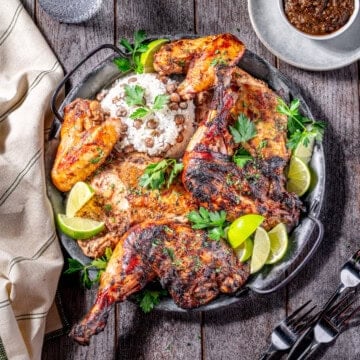
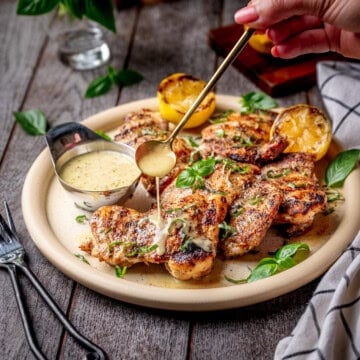
Looking for other chicken recipes like this? Try these:
Pairing
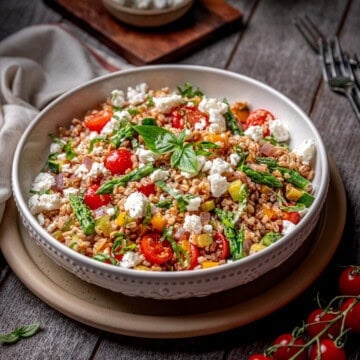
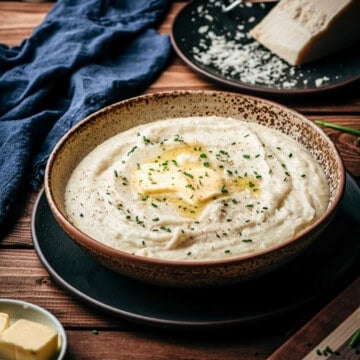
These are our favorite side dishes to serve with crunchy panko chicken:


📖 Recipe

Crunchy Panko Chicken with White Wine Lemon Butter Sauce
Ingredients
- 2 large chicken breasts, cut in half lengthwise
- 1 teaspoon salt
- 2 tablespoon lemon pepper
- 3 cups panko bread crumbs
- 2 eggs + 1 tablespoon water, whisked
- ⅔ cup all purpose flour
- 6 tbs ghee or olive oil
Lemon Beurre Blanc
- ½ cup dry white wine (Sauvignon Blanc or Pinot Grigio work well)
- 6 black peppercorns
- 1 small shallot, chopped
- 2 tablespoon lemon juice
- 8 tbs (¼lb) cold unsalted butter - cut in 8-10 pieces
Garnish
- Chopped Parsley for garnish

Instructions
Prepare Your Chicken
- Preheat your oven to 180°F or the lowest setting you have. This is your holding zone for finished chicken while you cook the rest and finish the sauce.
- Season the chicken cutlets on both sides with kosher salt and lemon pepper. Do not be shy. The seasoning needs to penetrate the meat, not just sit on the crust.2 large chicken breasts, cut in half lengthwise, 1 tsp salt, 2 tbsp lemon pepper
Set Up Your Breading Station
- Whisk the eggs and water together in one bowl. Put the flour in another bowl or a gallon-size zip-top bag. Spread the panko on a large plate or sheet pan. Line them up in order: flour, egg, panko.2 eggs + 1 tablespoon water, whisked, ⅔ cup all purpose flour, 3 cups panko bread crumbs
- Bread the chicken. Try to keep one hand dry and one hand can get messy. Dredge each cutlet in flour and shake off the excess. Dip it in the egg wash and let the extra drip off. Press it into the panko on both sides, really pressing the crumbs into the meat so they stick. Set the breaded cutlets aside on a clean plate.
Cook the Chicken
- Add the ghee or olive oil to a large skillet over medium heat. You want the oil hot enough that a pinch of panko sizzles immediately when you drop it in. If the oil is not hot enough, your crust will be greasy. If it is too hot, the outside will burn before the chicken cooks through.6 tbs ghee or olive oil
- Once the oil is hot, add two cutlets to the pan, making sure not to crowd them. Cook for 4 to 5 minutes per side until the crust is deep golden brown and the chicken is cooked through. Move them to a plate or sheet pan and keep them warm, uncovered, in the preheated oven. Repeat with the remaining cutlets, adding more oil to the pan if it looks dry.
Make the Sauce
- Start the beurre blanc while the chicken cooks. In a separate small skillet, combine the wine, peppercorns, and chopped shallot. Bring it to a gentle boil over medium heat and let it reduce by half. This should take about 5 minutes. You are concentrating the flavors here.½ cup dry white wine (Sauvignon Blanc or Pinot Grigio work well), 6 black peppercorns, 1 small shallot, chopped
- Once the wine is reduced by half, pour it through a fine mesh strainer into a bowl, discarding the solids. Return the strained liquid to the pan and reduce for another minute.
- Add the lemon juice and reduce again until you have about 2 tablespoons of liquid left in the pan. This is your flavor base. It should taste sharp, acidic, and concentrated.2 tbsp lemon juice
- Finish the sauce off the heat. Remove the pan from the burner completely and let it cool for a minute or two. The pan should be warm, not hot. Add the cold butter one piece at a time, whisking constantly. Each piece should emulsify into the liquid before you add the next. If the sauce starts to look greasy or separated, your pan is too hot. If it is not coming together, put the pan back on low heat for 20 to 30 seconds while whisking, then pull it off again. Once all the butter is in and the sauce is glossy and thick, you are done.8 tbs (¼lb) cold unsalted butter - cut in 8-10 pieces
Plate and Serve
- Put the chicken on plates, drizzle the beurre blanc over the top, and sprinkle with chopped parsley. Serve extra sauce on the side if you made enough. Eat it immediately while the crust is still crispy and the sauce is still warm.Chopped Parsley for garnish
Notes
- Chicken: We often make this exact recipe with thin pork chops or pork cutlets and they're just as amazing! If you want to be a bit fancier, veal cutlets are fantastic here.
- Lemon: Wherever there is lemon, you can successfully substitute meyer lemon, lime, bergamot, orange, or grapefruit and you'll love it!
- Panko Breadcrumps: We have found gluten free panko breadcrumbs in the store recently and on one occasion had to use them because they were our only option. They are fantastic and taste the same as the regular version! So if you need a GF option, don't hesitate to use these
- How to store leftover panko chicken:
- Let the cutlets cool completely, then store them in an airtight container in the fridge for up to 3 days. Do not stack them directly on top of each other or the crust will steam and get soggy. Layer parchment paper between each piece if you need to stack to maintain that crispy texture.
- The beurre blanc does not love the fridge, but it will hold for a day or two in an airtight container. When you reheat it, do it gently in a small saucepan over very low heat, whisking constantly. If it breaks, whisk in a teaspoon of cold cream or a tiny splash of cold water to bring it back together. It will not be as perfect as it was fresh, but it will still taste good.
- How to reheat leftover panko chicken: Reheat the cutlets in a 350°F oven on a wire rack set over a baking sheet for about 10 minutes. The wire rack lets air circulate and keeps the bottom from steaming. You will not get the same level of crispness as fresh, but it will be close. Do not microwave it.
- Can you freeze leftover panko chicken? You can freeze the breaded, uncooked cutlets for up to a month. Lay them flat on a baking sheet in a single layer, freeze until solid, then transfer to a freezer bag. Cook them straight from frozen, adding a couple extra minutes per side. We do not recommend freezing the cooked chicken or the sauce.
- Pound your chicken even if you are slicing it. Even after you halve the breasts, some parts might still be thicker than others. A few whacks with a meat mallet evens things out and prevents dry edges and raw centers.
- Press the panko like you mean it. Do not just sprinkle it on. Press the breadcrumbs into the chicken with your palms so they really stick. This is what gives you that shatteringly crisp crust instead of breading that flakes off in the pan.
- Do not flip the chicken more than once. Let it cook undisturbed for the full 5 to 6 minutes before you flip. If you move it around too much, the crust will not set properly and you will end up with pale, soggy breading.
- Keep your butter cold. This is the single most important thing for the sauce. If the butter is even slightly soft, it will not emulsify correctly. Cut it into pieces straight from the fridge and add it one piece at a time.
Nutrition
Ann Davis-Rowe says
Ok, so the one thing Flat 493 is v. bad at is frying. This was such an easy and accessible way to try. Hampton added capers to the beurre blanc Bc capers and we served it with roasted asparagus and basmati rice cooked with the end of some miso French dip au jus. So looking forward to leftovers for breakfast this coming week.
Angela and Mark says
So glad you liked it!
Madeline says
Absolutely delicious! New favorite recipe
Angela and Mark says
So glad you liked it! This is one of our all time favorites as well!
Ethel says
The best tasty chicken ever
Angela and Mark says
Thanks, Ethel! This is a family favorite!
Angela says
Definitely one of our favorite to make! The sauce is so delicious with the nice crunch of the chicken