
We love ravioli! Or we should say, we ABSOLUTELY LOVE ravioli. And not only eating it but making ravioli from scratch. Making homemade pasta is almost therapeutic once you get the hang of it. These butternut squash ravioli are delicious and satisfying and can be paired with so many different sauces to transform them into something different every time you prepare them! Making homemade ravioli from scratch may sound daunting, but give it a try and you just might get hooked!

Looking for more dishes like this? Try out our Mushroom Prosciutto Ravioli with Garlic Rosemary Brown Butter or Four Cheese Ravioli with Fresh Cherry Tomato Sauce.
Jump to:
- Origins of Ravioli in Italy
- Ingredients
- Substitutions
- How to Make Homemade Butternut Squash Ravioli
- Equipment
- Step-by-Step Instructions
- Variations
- Storage
- Top Tips
- Troubleshooting
- What sauce pairs with Butternut Squash Ravioli?
- Recipe highlight
- What Wines To Drink with Butternut Squash Ravioli?
- Mangiamo Cookbook
- FAQ
- Related
- Pairing
- 📖 Recipe
Origins of Ravioli in Italy
The famous stuffed pasta has been around Italy in one form or another for over 700 years. There are so many variations of ravioli throughout Italy and you will find nearly any filling inside this stuffed pasta worldwide.
The most common shapes for ravioli are square, rectangle, round, and half moon, and common fillings can range from meat, vegetable, cheese, or a combination of items.
Butternut squash is easy to find where we live, and some form of ravioli with butternut squash, pumpkin or some winter squash can be found all over Italy.
Ingredients
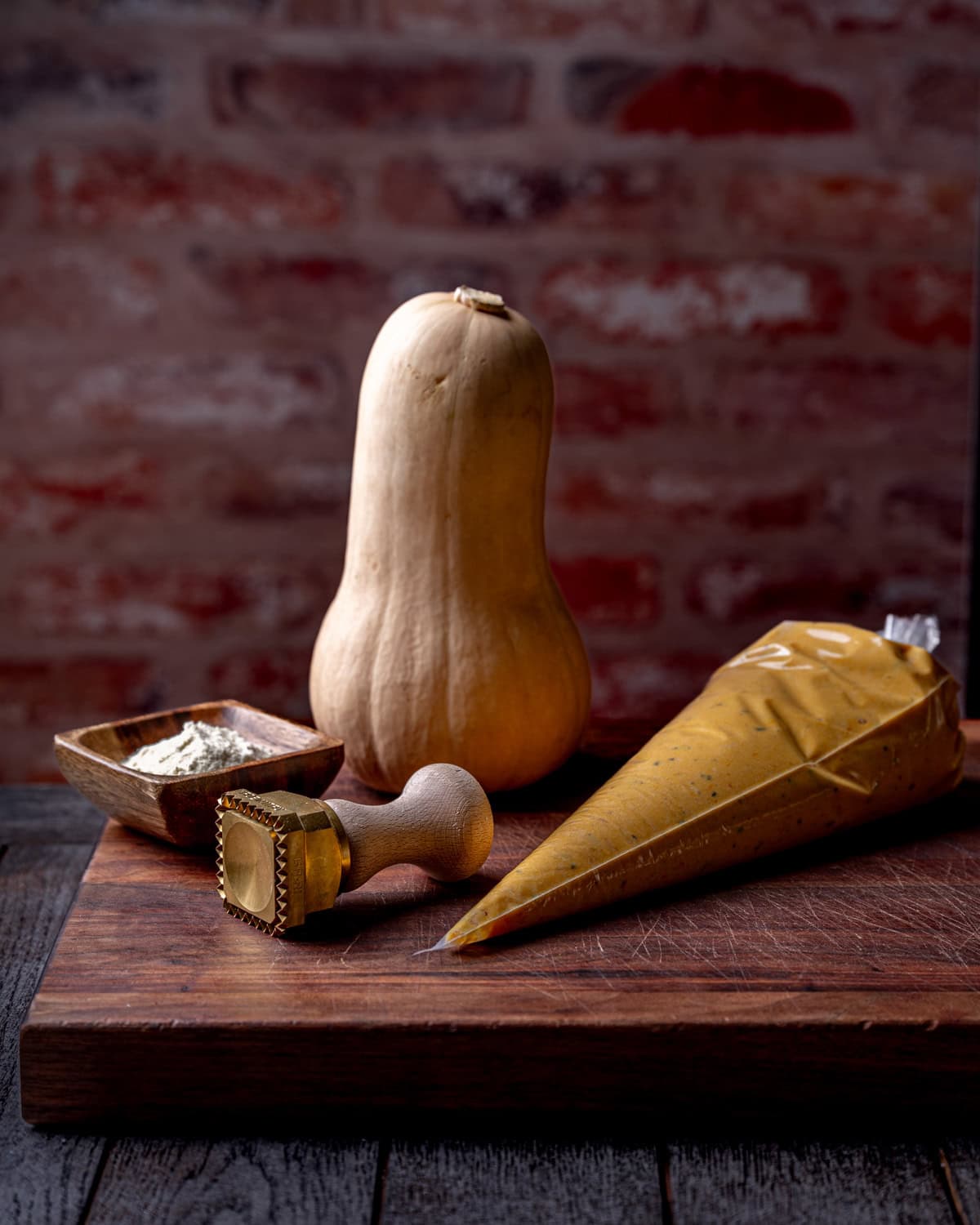
Here is what you need to make this homemade butternut squash ravioli recipe:
- MultiPurpose Pasta Dough: Make two recipes of our homemade egg pasta dough for these ravioli. Or use one of your favorite pasta recipes for homemade dough.
- Semolina Flour: Just a little for the work surface of the ravioli makes it easy to manage, move and prevents them from sticking.
- Butternut Squash: Roasted butternut squash is the main ingredient for the filling. We buy a whole butternut squash and roast it, then purée with the other ingredients for the base of the filling.
- Olive Oil: Extra virgin olive oil is part of the filling and also used to coat the squash for roasting.
- Ricotta Cheese: This beautiful fresh cheese adds some body and flavor to the filling.
- Shallot: This brings a nice savory flavor to the filling while being very subtle.
- Garlic cloves: Just a little fresh garlic perfumes the filling without being overpowering.
- Rosemary: Fresh rosemary is hard to beat and it complements the squash perfectly.
- White Wine: Yes! A little acidity and flavor comes from just a touch of dry white wine in the filling. Italian Pinot Grigio is the way to go here!
- Egg Yolk: A little richness is added by an egg yolk in the filling.
- Kosher Salt and Black Pepper
- Nutmeg: A pinch of ground fresh nutmeg goes perfectly with the squash and harmonizes the filling without being pronounced.
See recipe card below for quantities.
Substitutions
Here are a couple of common substitutions for the ingredients in this recipe:
- Semolina flour: If you don't have semolina flour, it's not the end of the world, although it does make the pasta dough easier to work with and prevents it from sticking. You can use regular all purpose flour or tipo 00 flour to dust the surface if needed.
- Shallot: Onion can be substituted for the shallot if desired.
- Rosemary: Although we think rosemary is the perfect herb here, sage is a very close second and even a combination of the two can be substituted.
How to Make Homemade Butternut Squash Ravioli
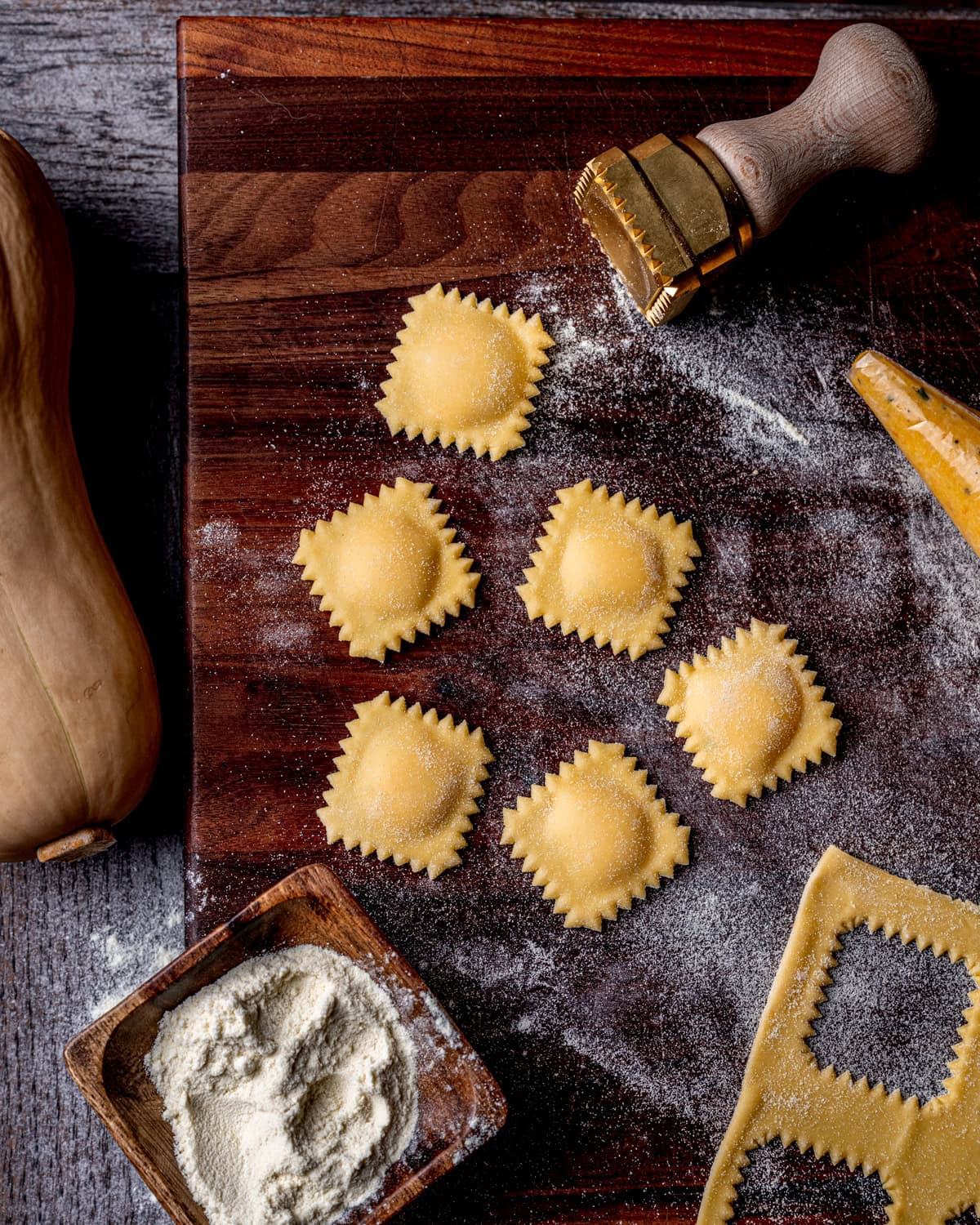
Making this ravioli can be a fun family event that will leave you with plenty of leftover ravioli to freeze and use later. The squash needs to be roasted first and can be done in advance and kept in the fridge until ready to use. But in the meantime while the squash roasts, you can make the pasta dough and the timing works out almost perfectly. Once the squash is done and cooled, it is puréed with the rest of the ingredients in a food processor. Then the pasta is rolled into sheets and stuffed with the beautiful filling!
Equipment
Here is what you need to make this dish
- 2 Parchment Paper lined Sheet Trays to roast the butternut squash and to easily transfer the ravioli
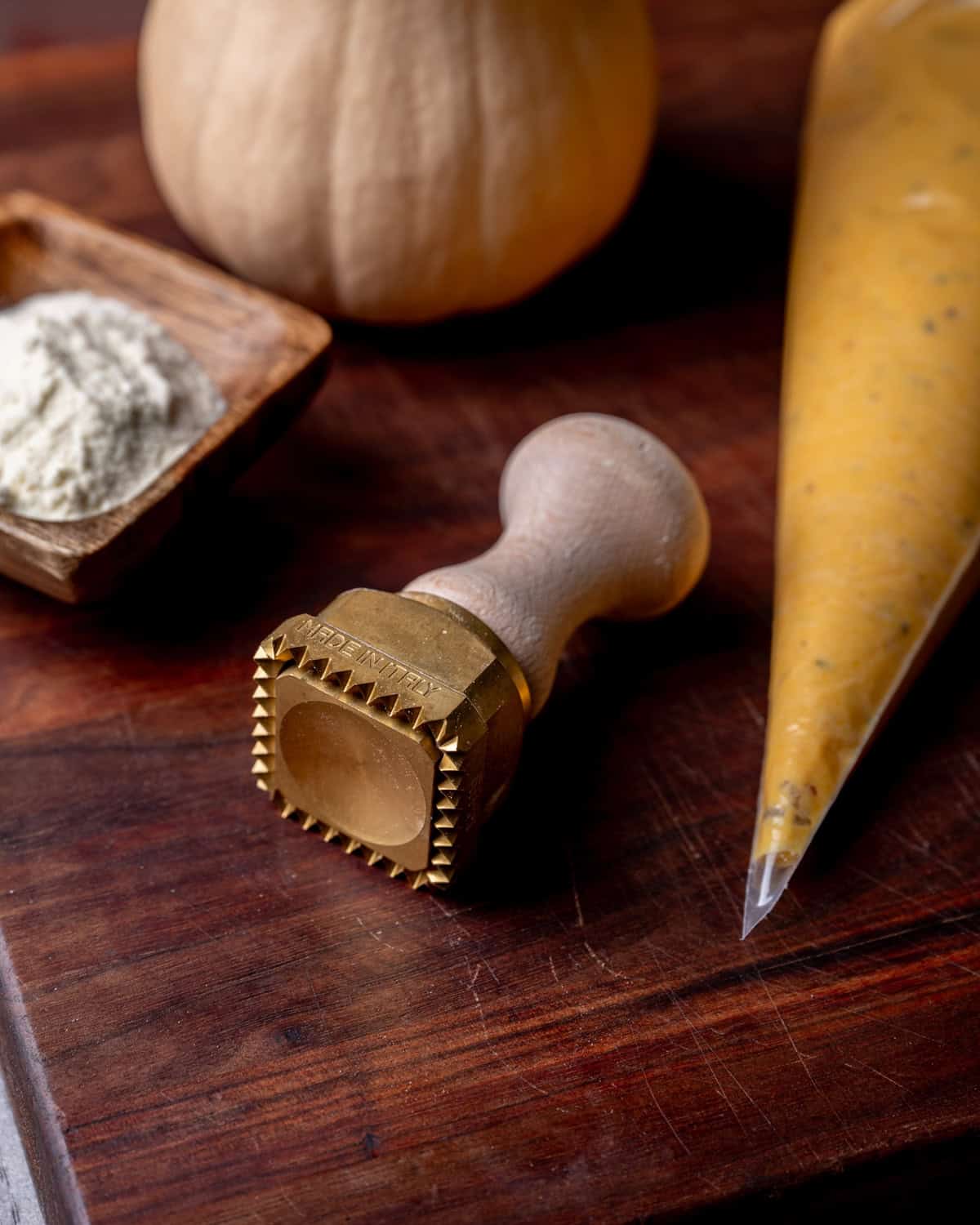
- Ravioli stamp, ravioli cutter/ravioli mold or some other tool to cut the ravioli (like a small biscuit cutter, pizza cutter, or shot glass). We use a 2 inch square ravioli stamp for small ravioli, but use the size you prefer.
- Pasta roller attachment for stand mixer or manual/electric pasta roller to make the ravioli sheets
- Food processor or blender to make the filling
- Piping bag (optional)
Step-by-Step Instructions
Roast the Butternut Squash
- Preheat the oven to 400°F. Cut your butternut squash lengthwise into two pieces. Scoop the seeds and fibrous parts of the squash out and discard. Use a tablespoon of olive oil to rub on the flesh side of the squash. Place the halves skin side up (cut side down) on the parchment paper lined baking sheet tray and place in the oven until it is very tender. You should be able to slide a toothpick or skewer into the squash without resistance. This should take 60-90 minutes. Remove the squash from the oven and let cool. Once you can handle the squash, scoop out the flesh and discard the skin.
Make the Fresh Pasta Dough
- While the squash roasts, make the pasta dough. Homemade pasta dough is simple to make. Follow our instructions to make a double recipe of our Multipurpose Pasta Dough. While the dough is resting and when your squash is done, make your ravioli filling.
Make the Butternut Squash Ravioli Filling
- To make the filling, put 1 cup of the roasted butternut squash flesh into your food processor. Add the remaining ingredients and process until smooth, scraping the sides of your processor bowl as needed. Remove the filling from the food processor bowl and transfer the mixture to a piping bag (easiest) or a bowl if you'd prefer. Refrigerate the filling until ready to use.
Roll out the Pasta Sheets
- Remove the pasta dough from the refrigerator and let it sit at room temperature for 10 minutes inside the plastic wrap. Unwrap, and knead on a lightly floured surface for a few minutes by hand.
- Cut the dough into manageable pieces about the size of the palm of your hand (approx 85-100g per piece), then press each piece on a flat surface with your hands to flatten it to about ¼ inch (6 mm) thick. Run each piece through a pasta machine roller starting with the widest setting. Alternatively, you can roll the pasta dough out with a rolling pin, but be prepared to really put some muscle into it. You want to roll the sheet out until you can see the light through it when you hold it up.
- Fold and run through on the widest setting a total of 3 times. If it gets too wide you can fold the sides in to make it thinner. If it rips or tears, simply fold it over and start again. Run it through the next setting 2 more times folding in between.
- Then run the sheet through once at the next lowest setting, and continue until desired thickness is achieved. Every roller is different, so you may need to try out a few thicknesses to find what you prefer but for this dish we like to go very thin.
- Lay your pasta sheet flat on a lightly floured (semolina flour is best) work surface. We prefer to roll out one sheet at a time and fill the ravioli from each sheet before rolling out the next to prevent the dough from drying out too much - if your dough gets too dry, lay a damp paper towel over the top of each sheet, or lightly mist with water so that the edges stick to each other.
Fill and Cut the Ravioli
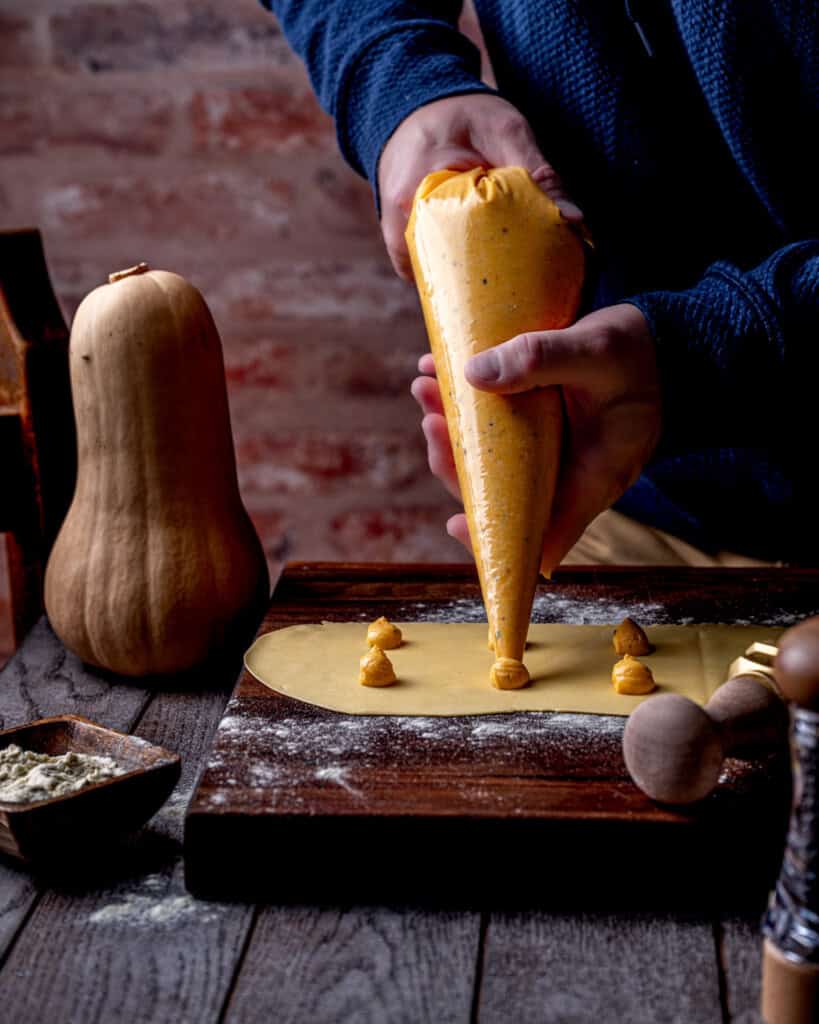
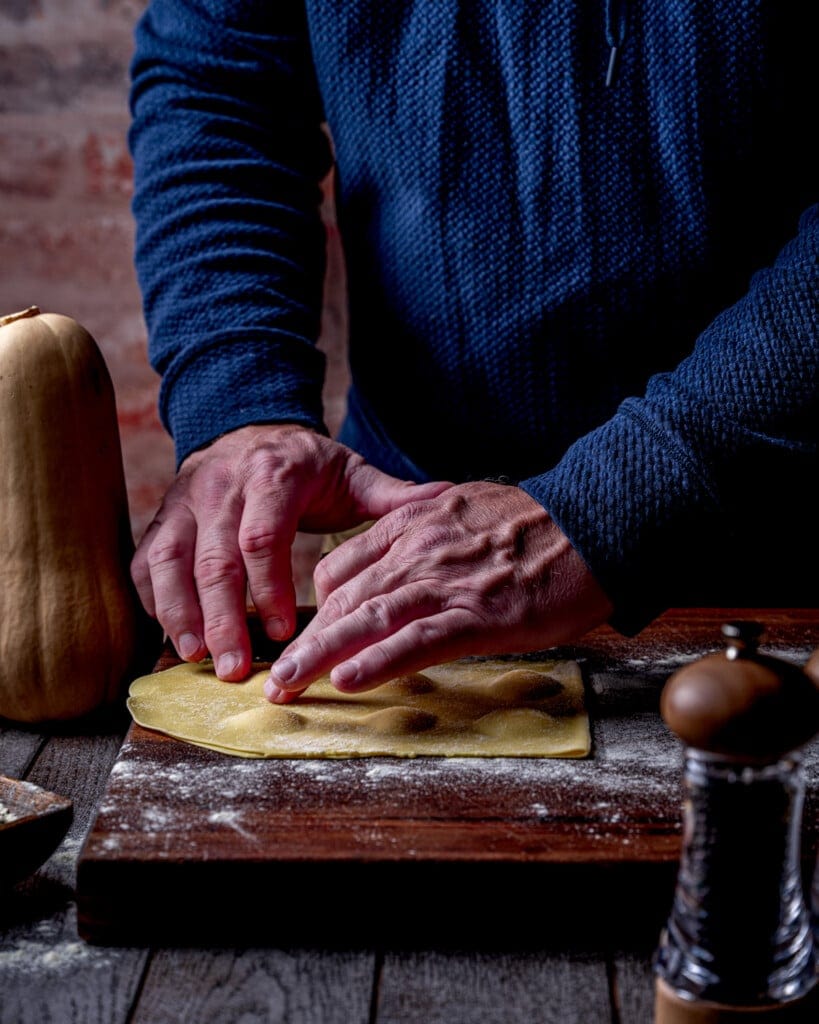
- Add about 1 teaspoon of the filling about 1 ½ inches apart on half of the sheet (making small 2 inch square ravioli). If using a piping bag, this is quite easy, or you can use a spoon. Fold the sheet in half onto your filling scoops, bringing the two short edges together. If your dough seems dry and doesn't easily stick together, dip your finger in a little water and run your wet finger around each scoop of filling. Carefully press the sheets together around each scoop of filing. Press out as much air as possible.
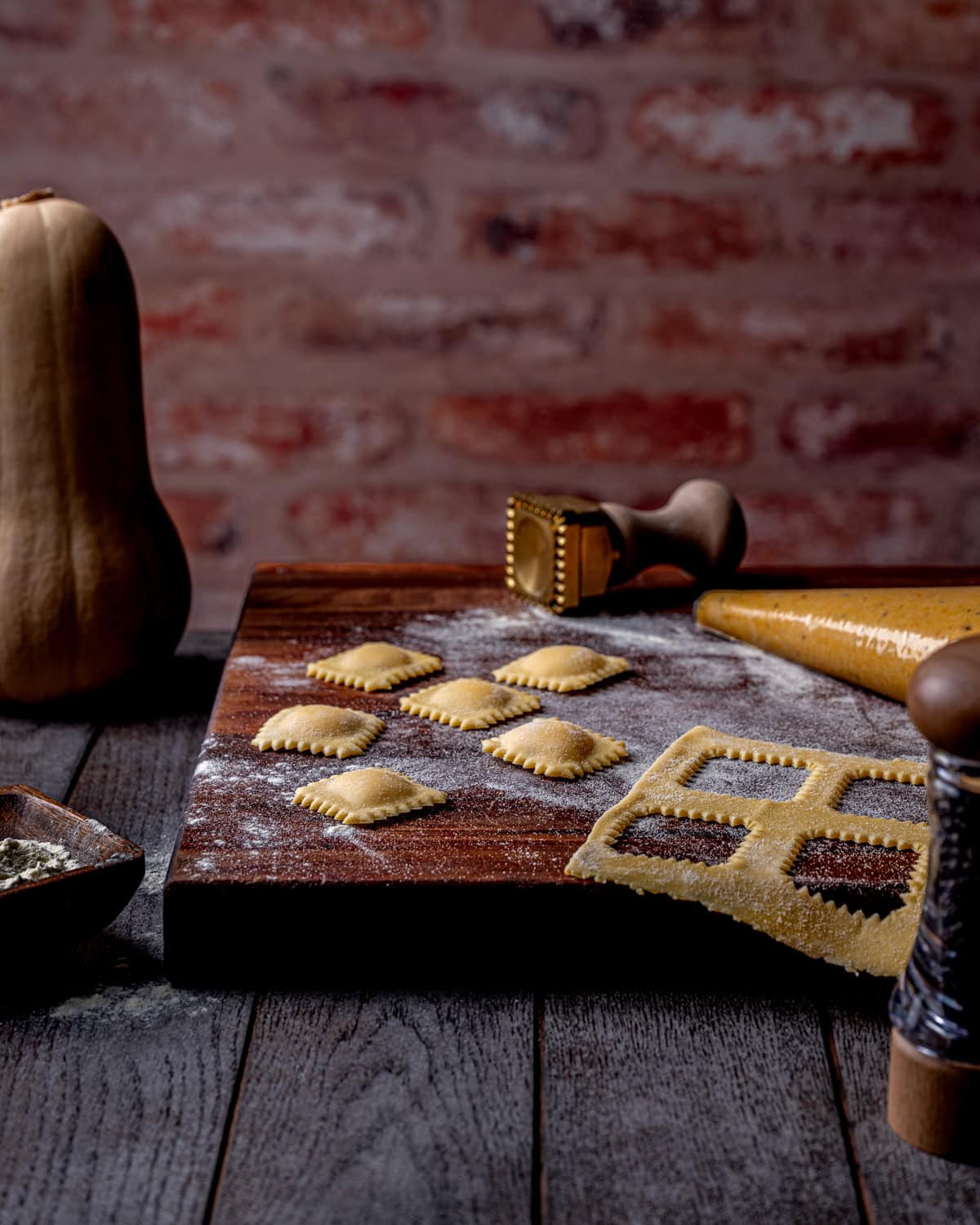
- Next, use a ravioli cutter, a shot glass, or a sharp knife to cut your sheet into 2 inch squares. Sprinkle a parchment paper-lined sheet tray with flour/semolina then place the filled ravioli in a single layer on the sheet tray. Dust the tops with a small amount of semolina/flour. The ravioli can sit at room temperature for up to an hour or kept in the refrigerator for up to 24 hours until ready to cook. Alternatively, they can be flash frozen on the sheet tray for 30-40 minutes, then gently placed in a freezer-safe, zip-top bag and frozen for later use.


Cook the Ravioli
- Over high heat, bring a large pot of salted water to a boil (about 2 tablespoon salt for every 6-8 quarts of water).
- Once boiling, carefully drop your fresh ravioli into the boiling water and cook for 2 minutes to al dente.
- Gently remove the cooked ravioli from the water with a slotted spoon to a serving plate, add your favorite sauce and serve.

Variations
Here are a couple ways to change up this recipe:
- Use pumpkin or another winter squash in place of the butternut squash, depending on what is available to you.
- If you really like cheese, add a small piece of mozzarella cheese in the middle of the filling for a super cheesy bite.
Storage
How to store fresh ravioli in the fridge:
- Store fresh uncooked ravioli in an airtight container in a single layer in the fridge for up to 24 hours.
- Store leftover cooked ravioli in an airtight container in the fridge for up to 5 days.
How to freeze fresh ravioli:
- Once you make the ravioli and put them on the semolina-floured sheet tray in a single layer, place the entire sheet tray in the freezer for 30-40 minutes. Then remove from the freezer and gently transfer to a freezer safe zip-top bag and store in the freezer for up to 4 months.
Cooking Frozen Ravioli:
- No need to thaw frozen uncooked ravioli before cooking. Simply bring your large pot of salted water to a boil, then add the frozen ravioli straight from the freezer and cook for 2-3 minutes, or until the ravioli float.
Top Tips
- Never stack the fresh-made ravioli. They will eventually stick to each other and tear. Keep them in a single layer until ready to cook or until they are frozen, if you are freezing them.
- Make ahead and freeze! Make a big batch of these ravioli in advance and freeze so that you have an easy meal any night of the week. If freezing the ravioli, you can cook them directly from frozen. They won't take much longer to cook (maybe 2-3 minutes total cook time) and when they float, they are done. You can also make the filling in advance and freeze it for up to 4 months to cut a step out of the ravioli make process. Then simply make the pasta dough, fill it with the defrosted filling, and cook your ravioli.
Troubleshooting
The main issue with making homemade pasta dough is under or over-hydrated pasta dough.
- Pasta dough too dry? If your dough is dry and, after kneading for a while, doesn't come together, wet one of your hands with water and keep kneading. Repeat as necessary, but know that a little water goes a long way.
- Pasta dough too wet? If your dough is sticky and wet, add some flour - about a tablespoon at a time, and keep kneading until the dough has a smooth consistency.

What sauce pairs with Butternut Squash Ravioli?
Butter sauces, cream sauces, and tomato sauces (try our homemade sugo di pomodoro) all work beautifully with these ravioli. Be creative and you will have an amazing dish.
We've even made these added to a bowl with butter and parmesan cheese for a very simple sauce! Nutty brown butter and sage sauce is a classic way to serve butternut squash ravioli, or try THIS Garlic Rosemary Brown Butter sauce. If you have a great extra virgin olive oil, you can simply use that to dress the ravioli, add a little parmesan or pecorino and crushed red pepper flakes and they'll be wonderful while also highlighting the ravioli texture and taste at the highest level.
Our favorite cream sauces for butternut squash ravioli are the following:
Recipe highlight
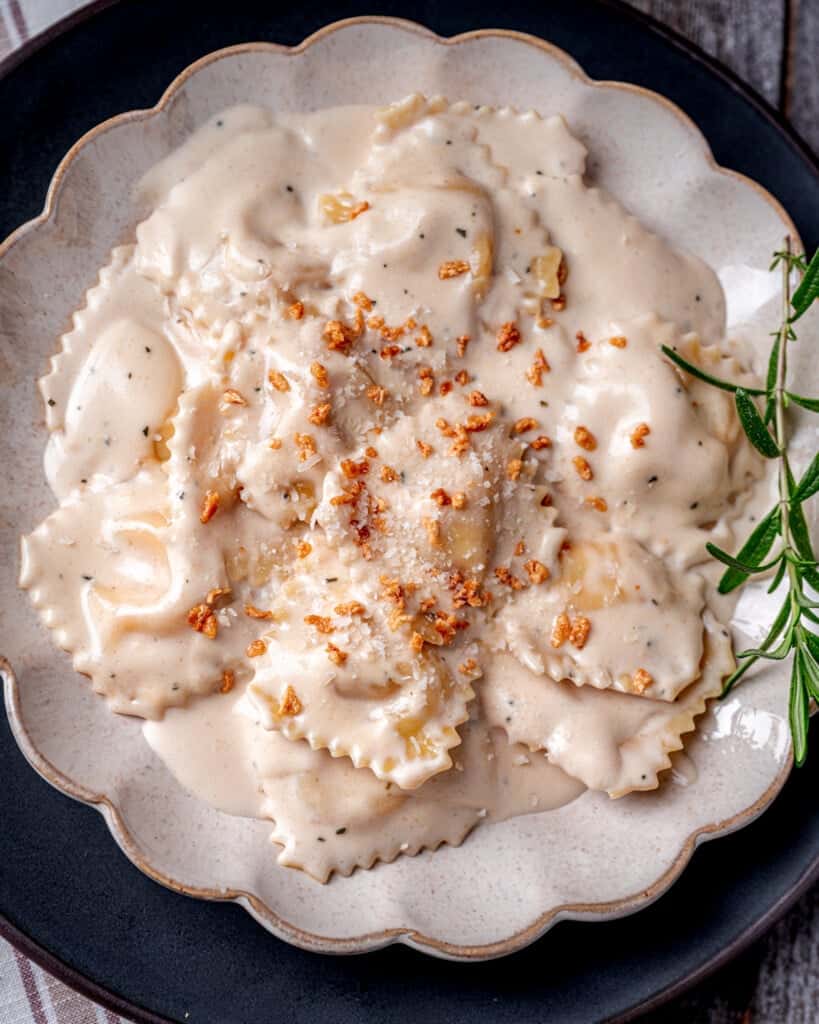
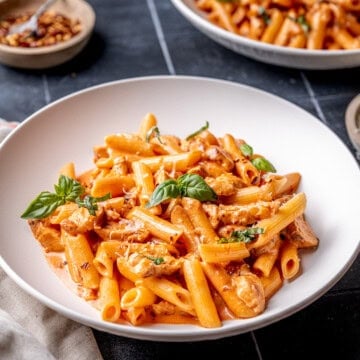
Make this recipe for Butternut Squash Ravioli with Rosemary Cream Sauce!
What Wines To Drink with Butternut Squash Ravioli?
Wines should be paired with the sauce in this case, so that is dependent on what you make. However, if you are using simple olive oil, we recommend Valpolicella or Barbera as red wine options with these ravioli. If using a butter sauce or cream sauce, think white wine, like chardonnay or Pinot Grigio.

Mangiamo Cookbook
Get your copy of our cookbook, Mangiamo, with 60 Italian recipes with drool-worthy images inspired by our Italian roots and travels!
FAQ
Generally, if you want to be traditional, they are served on their own as a first course in Italy. The main course would follow and is usually a heavier meat dish. Of course, they can be the main course on their own which is usually the case in the United States and some good bread to mop up leftover sauce is highly recommended!
Absolutely! These freeze perfectly and they'll keep for 4 months in the freezer. Once they are filled, place them on a parchment lined sheet tray lightly dusted with semolina/flour, and place the entire tray in the freezer uncovered for 30-40 minutes. Then the ravioli can be transferred to a freezer safe zip top bag or storage container and placed back in the freezer until ready to use. Cook from frozen for 2-3 minutes in a large pot of salted boiling water.
Related
Looking for other pasta recipes like this? Try these:


Pairing
These are our favorite main dishes to serve with this recipe for a multi-course Italian meal:


📖 Recipe

Homemade Butternut Squash Ravioli Recipe
Equipment
- 2 Parchment paper lined Sheet Trays
- Ravioli stamp ravioli cutter/ravioli mold or some other tool to cut the ravioli
- Pasta roller attachment for stand mixer or manual/electric pasta roller to make the ravioli sheets
- Food processor or blender to make the filling
- Piping bag (optional)
Ingredients
- 2 recipes MultiPurpose Pasta Dough or your favorite homemade pasta dough recipe
- 1 cup roasted butternut squash see below
- ½ cup ricotta cheese
- 2 teaspoons extra virgin olive oil
- ½ small shallot rough chopped
- 1 small garlic clove minced
- 1 teaspoon rosemary finely chopped
- 2 Tablespoons dry white wine pinot grigio
- 1 egg yolk
- 1 teaspoon kosher salt
- ½ teaspoon black pepper
- Pinch freshly ground nutmeg
Roasted Butternut Squash (makes 1-2+ cups depending on the size of your squash)
- 1 medium butternut squash
- 1 tablespoon olive oil

Instructions
Roast the Butternut Squash
- Preheat the oven to 400°F. Cut your butternut squash lengthwise into two pieces. Scoop the seeds and fibrous parts of the squash out and discard. Use a tablespoon of olive oil to rub on the flesh side of the squash. Place the halves skin side up (cut side down) on the parchment paper lined baking sheet tray and place in the oven until it is very tender. You should be able to slide a toothpick or skewer into the squash without resistance. This should take 60-90 minutes. Remove the squash from the oven and let cool. Once you can handle the squash, scoop out the flesh and discard the skin.1 medium butternut squash, 1 tbsp olive oil
Make the Fresh Pasta Dough
- While the squash roasts, make the pasta dough. Homemade pasta dough is simple to make. Follow our instructions to make a double recipe of our Multipurpose Pasta Dough (linked in ingredients above). While the dough is resting and when your squash is done, make your ravioli filling.2 recipes MultiPurpose Pasta Dough
- Make the Butternut Squash Ravioli Filling
- To make the filling, put 1 cup of the roasted butternut squash flesh into your food processor. Add the ricotta cheese, olive oil, shallot, garlic, white wine, egg yolk, salt, pepper and nutmeg and process until smooth, scraping the sides of your processor bowl as needed. Remove the filling from the food processor bowl and transfer the mixture to a piping bag (easiest) or a bowl if you'd prefer. Refrigerate the filling until ready to use.1 cup roasted butternut squash, ½ cup ricotta cheese, 2 teaspoons extra virgin olive oil, ½ small shallot, 1 small garlic clove, 1 teaspoon rosemary, 2 Tablespoons dry white wine, 1 egg yolk, 1 teaspoon kosher salt, ½ teaspoon black pepper, Pinch freshly ground nutmeg
Roll out the Pasta Sheets
- Remove the pasta dough from the refrigerator and let it sit at room temperature for 10 minutes inside the plastic wrap. Unwrap, and knead on a lightly floured surface for a few minutes by hand.
- Cut the dough into manageable pieces about the size of the palm of your hand (approx 85-100g per piece), then press each piece on a flat surface with your hands to flatten it to about ¼ inch (6 mm) thick. Run each piece through a pasta machine roller starting with the widest setting. Alternatively, you can roll the pasta dough out with a rolling pin, but be prepared to really put some muscle into it. You want to roll the sheet out until you can see the light through it when you hold it up.
- Fold and run through on the widest setting a total of 3 times. If it gets too wide you can fold the sides in to make it thinner. If it rips or tears, simply fold it over and start again. Run it through the next setting 2 more times folding in between.
- Then run the sheet through once at the next lowest setting, and continue until desired thickness is achieved. Every roller is different, so you may need to try out a few thicknesses to find what you prefer but for this dish we like to go very thin.
- Lay your pasta sheet flat on a lightly floured (semolina flour is best) work surface. We prefer to roll out one sheet at a time and fill the ravioli from each sheet before rolling out the next to prevent the dough from drying out too much - if your dough gets too dry, lay a damp paper towel over the top of each sheet, or lightly mist with water so that the edges stick to each other.
Fill and Cut the Ravioli
- Add about 1 teaspoon of the filling about 1 ½ inches apart on half of the sheet (making small 2 inch square ravioli). If using a piping bag, this is quite easy, or you can use a spoon. Fold the sheet in half onto your filling scoops, bringing the two short edges together. If your dough seems dry and doesn't easily stick together, dip your finger in a little water and run your wet finger around each scoop of filling. Carefully press the sheets together around each scoop of filing. Press out as much air as possible.
- Next, use a ravioli cutter, a shot glass, or a sharp knife to cut your sheet into 2 inch squares. Sprinkle a parchment paper-lined sheet tray with flour/semolina then place the filled ravioli in a single layer on the sheet tray. Dust the tops with a small amount of semolina/flour. The ravioli can sit at room temperature for up to an hour or kept in the refrigerator for up to 24 hours until ready to cook. Alternatively, they can be flash frozen on the sheet tray for 30-40 minutes, then gently placed in a freezer-safe, zip-top bag and frozen for later use.
Cook the Ravioli
- Over high heat, bring a large pot of salted water to a boil (about 2 tablespoon salt for every 6-8 quarts of water).
- Once boiling, carefully drop your fresh ravioli into the boiling water and cook for 2 minutes to al dente.
Notes
- Semolina flour: If you don't have semolina flour, it's not the end of the world, although it does make the pasta dough easier to work with and prevents it from sticking. You can use regular all purpose flour or tipo 00 flour to dust the surface if needed.
- Shallot: Onion can be substituted for the shallot if desired.
- Rosemary: Although we think rosemary is the perfect herb here, sage is a very close second and even a combination of the two can be substituted.
- Store fresh uncooked ravioli in an airtight container in a single layer in the fridge for up to 24 hours.
- Store leftover cooked ravioli in an airtight container in the fridge for up to 5 days.
- Never stack the fresh-made ravioli. They will eventually stick to each other and tear. Keep them in a single layer until ready to cook or until they are frozen, if you are freezing them.
- Make ahead and freeze! Make a big batch of these ravioli in advance and freeze so that you have an easy meal any night of the week. If freezing the ravioli, you can cook them directly from frozen. They won't take much longer to cook (maybe 2-3 minutes total cook time) and when they float, they are done. You can also make the filling in advance and freeze it for up to 4 months to cut a step out of the ravioli make process. Then simply make the pasta dough, fill it with the defrosted filling, and cook your ravioli.


Leave a Reply