
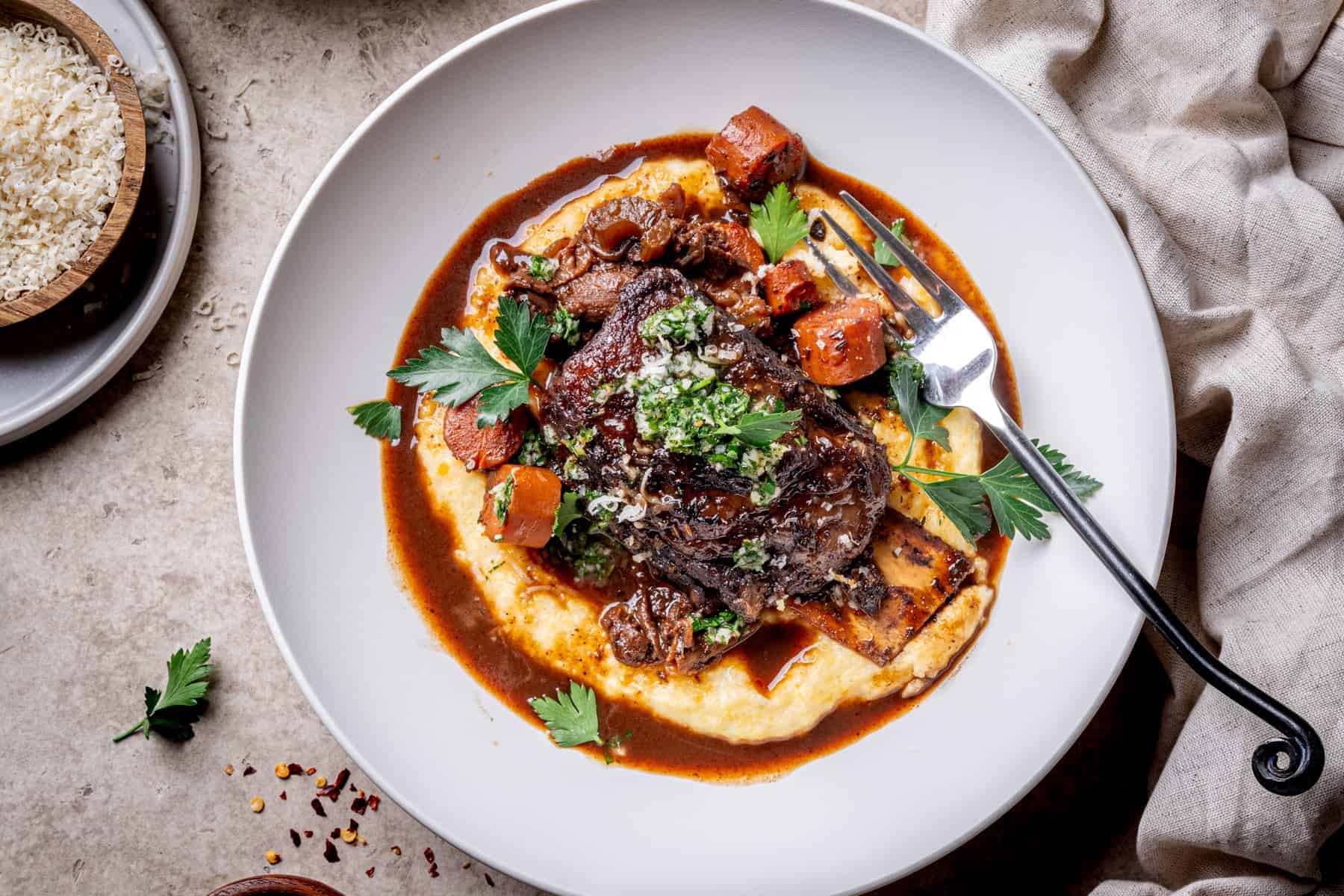
Restaurant-quality braised short ribs at home. This slow-braised short ribs recipe delivers fall-off-the-bone tender meat with deep wine-soaked flavor you'll crave all year long.
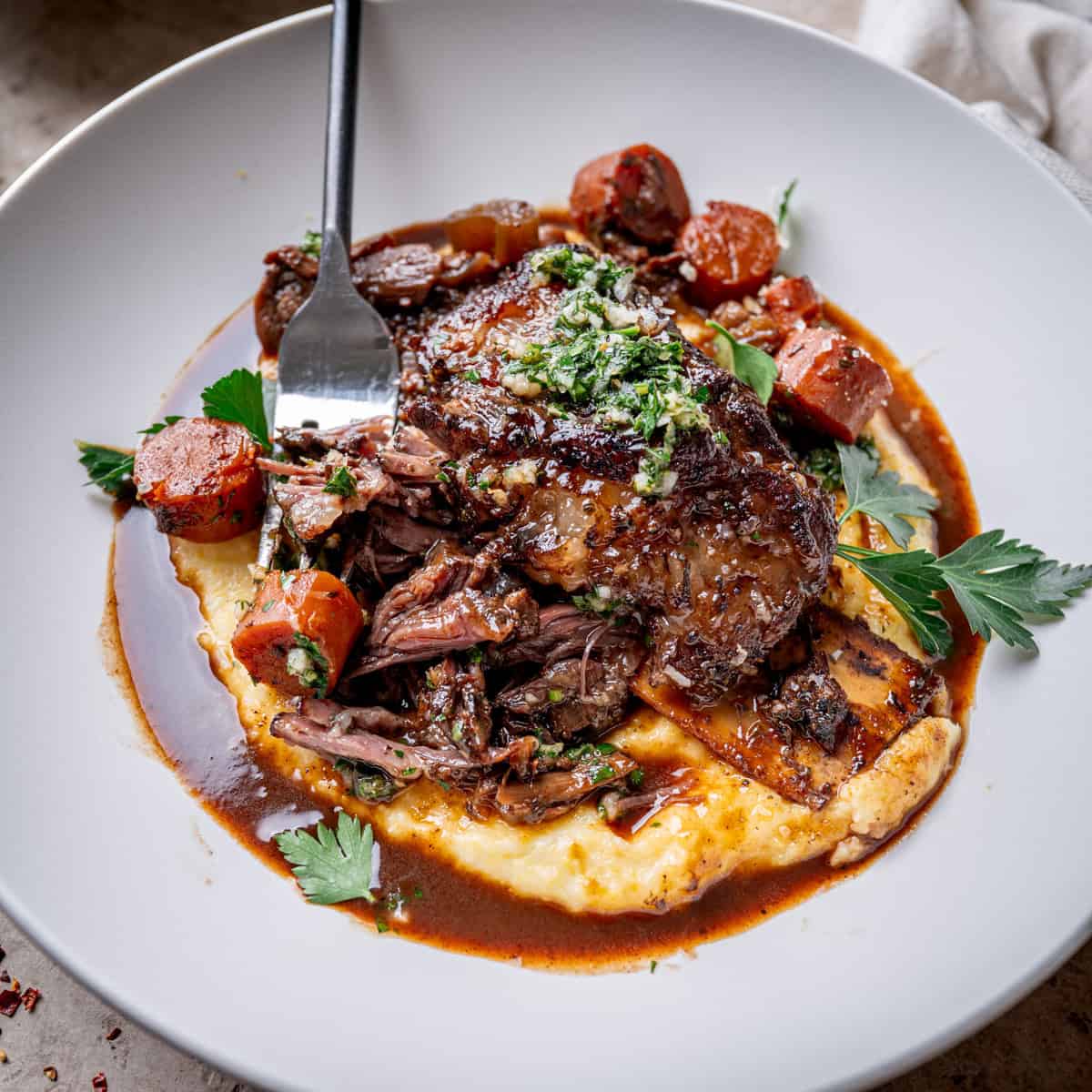
There's a magical transformation that happens to short ribs when they are braised in red wine on low heat, and for a good amount of time.
The smell alone is worth the wait. We're talking about beef that falls off the bone, braising liquid that's been transformed into a rich, decadent sauce, and vegetables that have soaked up all that beefy, winey, herby liquid. This recipe for Red Wine Braised Short Ribs is perfect for you to pull out when you have a bit of time and want something that will transform your life!
The secret isn't just the wine or the long braise. It's the porcini mushrooms, the sachet of warming spices, and the bright citrus parsley that cuts through all that richness at the end. Here's how to make short ribs that'll have people asking if you went to culinary school.
Looking for more dishes like this? Try out our Beer Braised Short Ribs or Braised Veal Shanks with Gremolata (Ossobuco Recipe).
Jump to:
- Why You'll Love this Recipe
- History and Origin of Braised Short Ribs
- Why This Recipe Works
- How to Make Red Wine Braised Short Ribs
- Ingredients
- Equipment
- Step-by-Step Instructions
- How to Know When It's Done
- Variations and Substitutions
- Storage
- Leftover Transformations
- Top Tips from the Pros
- What to serve with Braised Short Ribs
- What Wines To Drink with Braised Short Ribs
- FAQ
- Related
- Pairing
- 📖 Recipe
Why You'll Love this Recipe
- This is extremely good leftover!
- Most of the cooking time is hands off in the oven!
- Delicious dish that will be a new regular
- Completely transforms a cheaper cut of beef with tons of flavor
- Can be served with lots of side dish options, from mashed potatoes to rice, creamy polenta, or pasta and any veggie side dish.
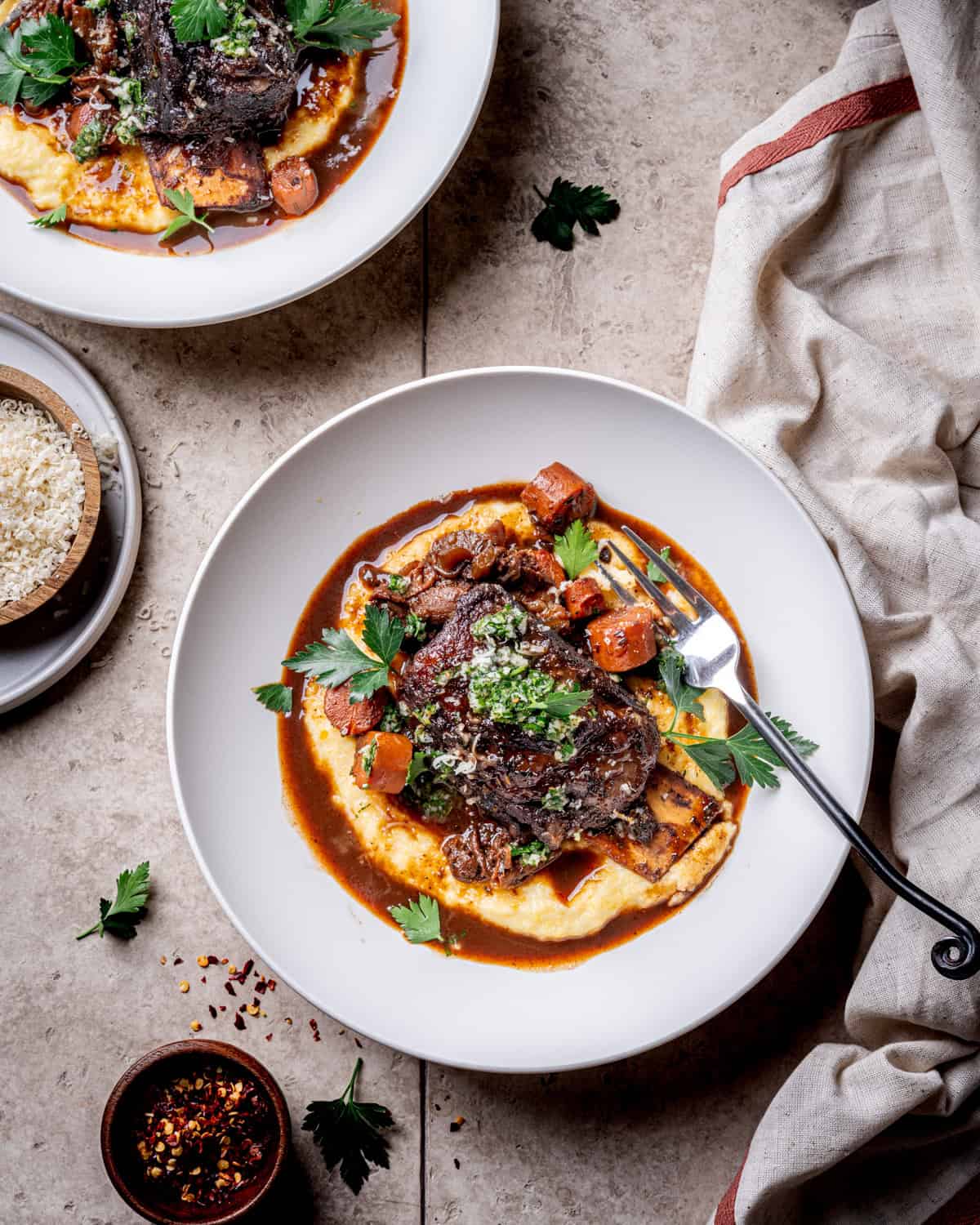
History and Origin of Braised Short Ribs
Braising is one of the oldest cooking techniques there is and it has a very important place in cooking methods. A good portion of any animal contains tough cuts of meat that, albeit not tender, hold a massive amount of flavor.
Short ribs, specifically, were the kind of cut butchers used to practically give away. Too tough for grilling, too fatty for roasting, they needed low, slow, moist heat to break down all that connective tissue into something you'd actually want to eat. French cuisine formalized braising into an art form with dishes like boeuf bourguignon, while in Italy, cooks did the same with brasato al Barolo. This slow cooking technique, especially in wine, transforms these cheap and tough cuts of meat into something magical!
Red wine braising, in particular, became a restaurant staple in the '90s and 2000s when chefs realized that short ribs, done right, could be plated like a steak but delivered way more flavor. Now it's a cold-weather classic that shows up on both white-tablecloth menus and home dinner tables.
The beauty is that the technique hasn't changed much. You still sear the meat, build a flavorful liquid, and let time do the work. What has evolved is how we layer in aromatics, like dried porcini and different spice combinations, to add complexity and elevated flavor. This recipe leans into that tradition while keeping things somewhat simple in a home kitchen.
Why This Recipe Works
This isn't just a "throw everything in a pot and hope" recipe. The first step for flavor building is the sear. This creates a specific thing called a "maillard reaction" on the outside of the beef. Essentially, you are caramelizing the short ribs and that creates flavor. When you deglaze with red wine, you're also scraping up the browned bits that stuck to the bottom of the pot (fond) and are turning it into the base of your sauce. The porcini mushrooms add an earthy, almost meaty depth that makes the sauce taste like it's been simmering for days.
The sachet keeps all those warming spices contained so you're not fishing out cinnamon sticks and star anise at the end, but you still get their flavor infused throughout. And the citrus parsley topping added at the end brings a welcome brightness to the rich, braised short ribs. The parsley, lemon, and grapefruit juice cut through the fat and really wake the dish up, similar to a gremolata in many Italian braised meat dishes like ossobuco.
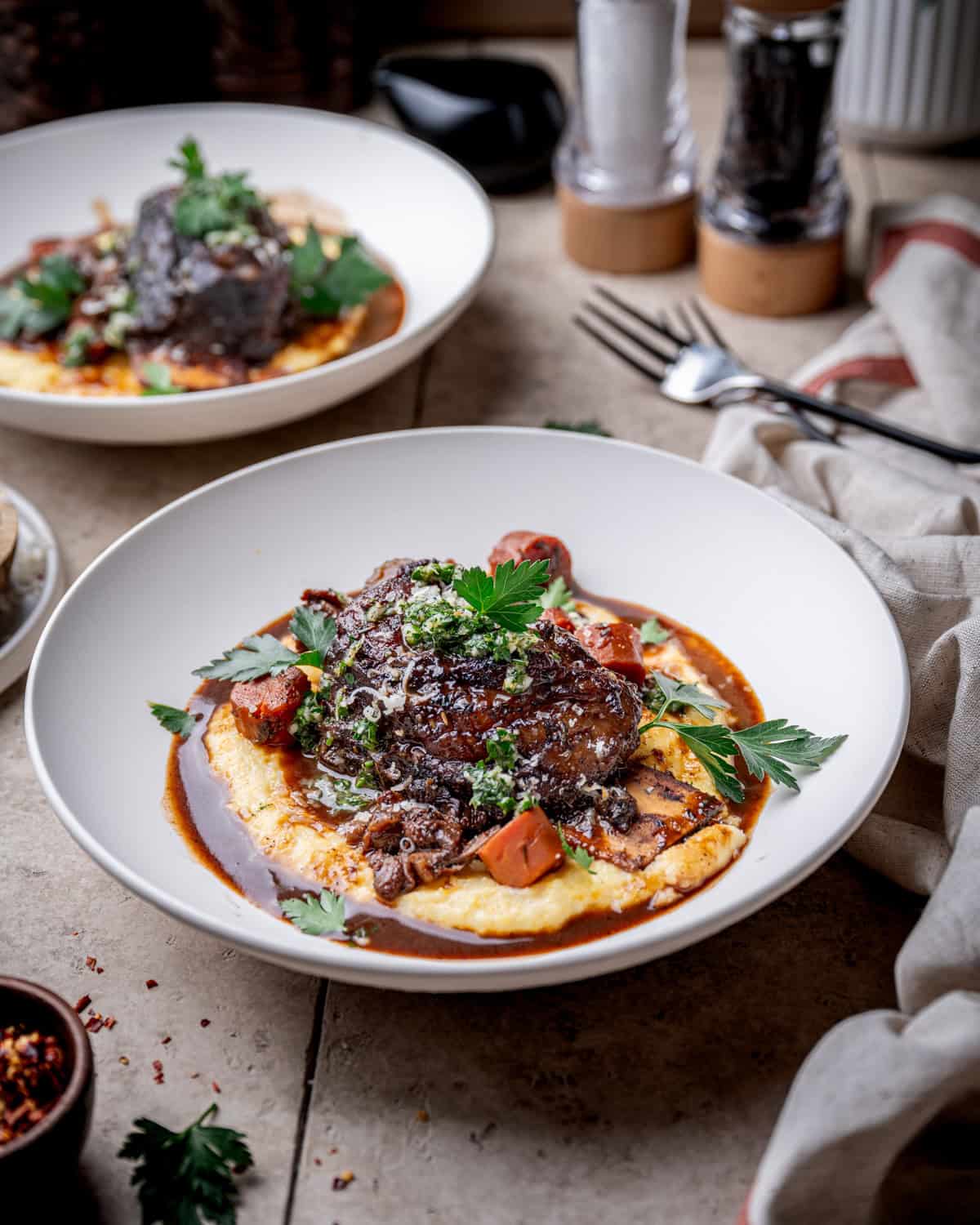
How to Make Red Wine Braised Short Ribs
The technique is straightforward, the ingredients do most of the work, and the result is something that tastes like it took way more skill than it did. Once you've made it a few times, you'll start tweaking it to fit your taste. That's the fun part of braised dishes. The foundation is basic and easy, but there's room to make it yours.
Ingredients
Here is what you need to make this recipe:
- Dried porcini mushrooms: These add a deep umami flavor that makes the braise taste richer and more complex. The soaking liquid can be saved and used in risotto or soup if you strain it well.
- Bone-in short ribs: The bone adds flavor and body to the braising liquid. Look for ribs with good marbling and a thick cap of meat. Boneless will work, but you lose some richness.
- Kosher salt, black pepper, garlic powder (for rub): This trio seasons the meat before searing, creating a flavorful crust.
- Olive Oil: Used just to sear the ribs, so no need to use your best olive oil here.
- Star anise, cinnamon stick, rosemary, bay leaf (sachet): These warm, aromatic spices add subtle complexity without overpowering the beef. The sachet (cheesecloth wrap) keeps them contained for easy removal.
- Yellow onion: A true foundational vegetable, onion is an important base for the braising liquid.
- Tomato paste: Concentrated tomato flavor adds acidity and a slight sweetness that rounds out the sauce. Cooking it for a short amount of time deepens the flavor.
- Dry red wine: Use something you'd drink. Syrah, Chianti, or a Côtes du Rhône pinot noir all work really well. The tannins in red wine help tenderize the meat, and the acidity balances the richness.
- Beef stock: This is your flavor foundation. If not using homemade, we prefer the "low sodium" option to control salt content.
- Carrots and celery: Classic braising vegetables that sweeten as they cook and soak up all the flavors in the pot. Cut them into bite-sized pieces so they cook evenly and are easy to serve.
- Dried Thyme: Dried thyme is a delicious herb and adds a nice flavor to the dish
- Sugar: Balances the acidity from the wine and tomatoes. It's a small amount, but it makes a noticeable difference in rounding out the rich red wine sauce.
- Citrus parsley topping (lemon, grapefruit, parsley): This is your finishing touch. The acidity brightens the dish and the fresh parsley adds a fresh, herbal note that keeps the richness from feeling heavy.
See recipe card below for quantities.
Equipment
- Heavy-bottomed large Dutch oven or braising pot (at least 6 quarts): This is where the magic happens. You need something that can go from stovetop to oven and hold heat evenly. Cast iron enamel works best. If you don't have one, a heavy roasting pan covered tightly with foil can work, but a Dutch oven is ideal.
- Tongs: For flipping the ribs during searing and pulling them out without shredding the meat.
- Cheesecloth and kitchen twine: For making the sachet. If you don't have cheesecloth, you can use a tea infuser or just fish the spices out later, but the sachet keeps things cleaner.
- Fine Mesh Strainer or slotted spoon: For pulling out the rehydrated porcini without getting grit in your braise.
If you don't own a Dutch oven, this is the recipe that might convince you to get one. A good one will last you decades and makes braising, bread baking, and one-pot meals infinitely easier. Substitutes exist, but nothing distributes heat quite like enameled cast iron (we love Le Creuset) and they last a lifetime.
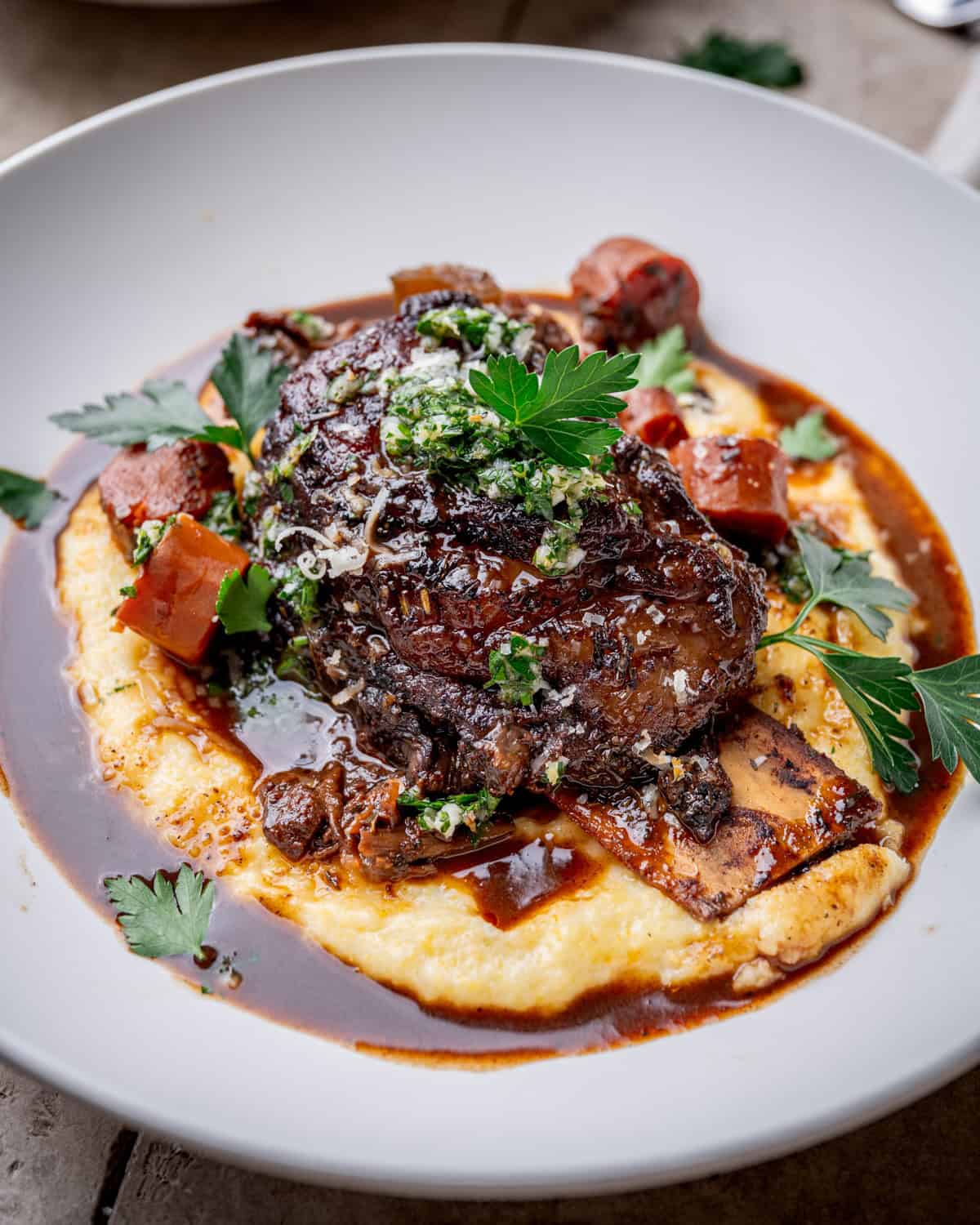
Step-by-Step Instructions
Prepare the Sachet and Mushrooms
- Start by making your sachet. To make the sachet, put the bay leaf, cinnamon stick, rosemary sprig, and the star anise in a piece of cheesecloth. Pull the sides up like a package or bag and tie with kitchen twine. Cut off any excess cheesecloth or twine with kitchen scissors and set the sachet aside.
- Next, soak the mushrooms in a large bowl of warm water. Let them soak for about 15 minutes, agitating the mushrooms gently halfway through. Then carefully remove the mushrooms with a strainer or slotted spoon and rinse one more time with cold water. Set aside on paper towels. Thoroughly strain the mushroom water and save for a different use or discard. Rough chop the mushrooms and set aside.
Season and Sear the Short Ribs
- Preheat the oven to 325°F.
- Rub the short ribs with the kosher salt, black pepper, and garlic powder. In a large enough pot/Dutch oven to hold all of the ribs, add the olive oil over medium-high heat to high heat. When hot, add the short ribs and sear on all sides (about 2-3 minutes per side). Once seared, turn the heat to medium low and remove the short ribs to a plate with tongs.
Start the Vegetables and Braising Liquid
- Reduce to medium-low heat, then add the onions to your large pot. Stir to coat and turn the heat back to medium-high and cook for about 5 minutes or until the onions start to get some color. Add the tomato paste and cook for 30 seconds stirring often. Then turn the stove down to medium heat and carefully add half of the red wine, stirring constantly and scraping the bottom of the pot to remove the brown bits (fond).
- Add the remaining red wine, then add the short ribs back to the pot bone side down. Then carefully add the stock, carrots, celery, dried thyme, sugar, salt and pepper, and the sachet. Make sure the sachet is submerged. Turn the heat up and bring to a simmer. Cover and put the pot in the oven.
Braise in the Oven
- Let the ribs slow braise in the oven for 3.5-4 hours depending on the level of tenderness you desire. Although this seems like a long time, 3.5 hours will give you very tender meat that keeps its shape and is still falling off the bone. Slow braising for 4 hours will be more tender and will break down a little more if you want to serve this off the bone or shredded. You have leeway here so you can prepare any other side dishes you want while it cooks or just relax!
Make the Citrus Parsley
- While the beef ribs braise, make the citrus parsley. Add all of the ingredients to a small bowl and stir. Let it sit and stir again before serving. Once the ribs are done, remove and serve with some citrus parsley topping on top to brighten it up!
How to Know When It's Done
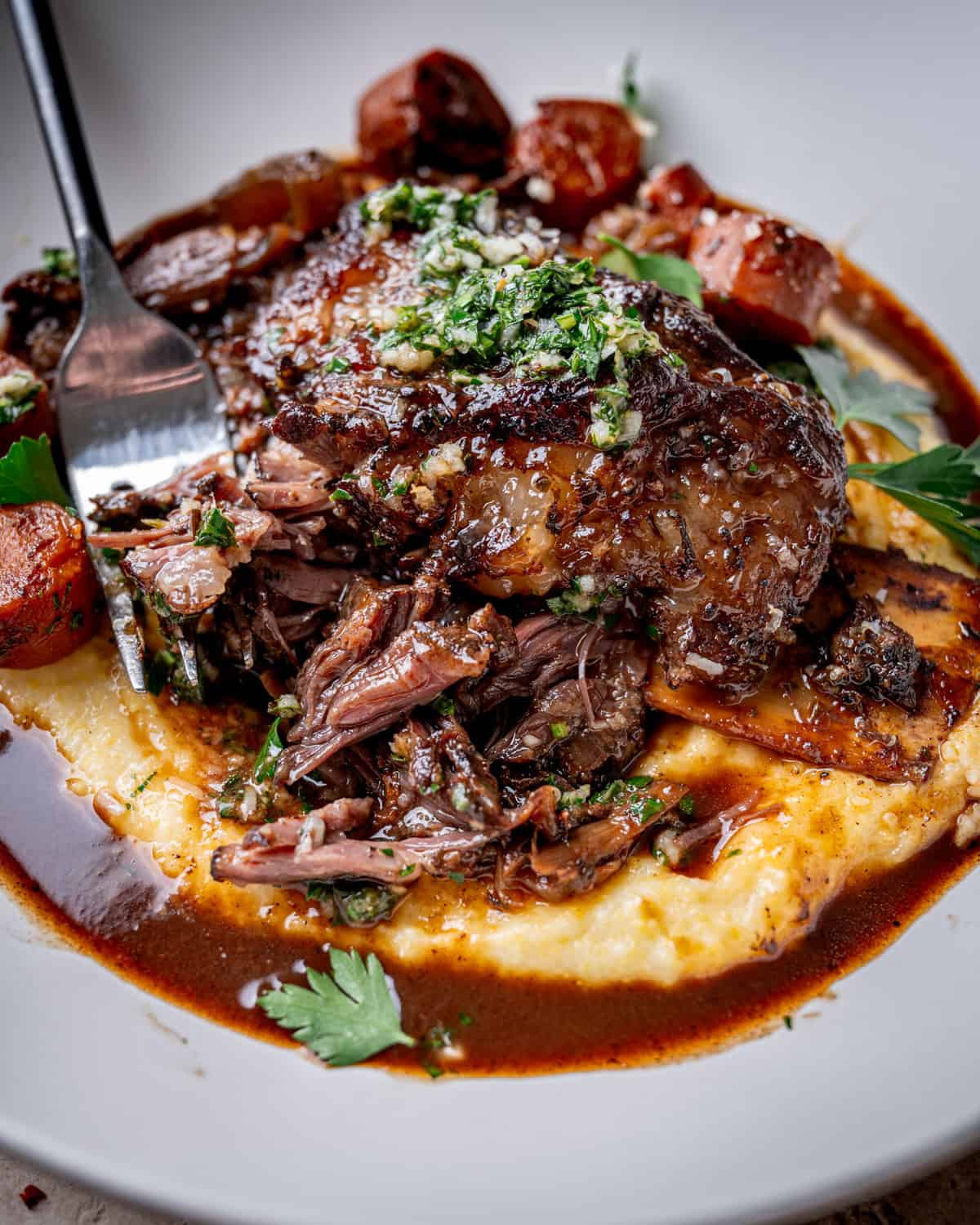
Timers are helpful, but your senses are better. The key is not opening the oven every 20 minutes to check on things. Let the heat and time do their job. The ribs will tell you when they're done by how easily the meat pulls away from the bone. Here are some ways to know when it's ready and common issues to troubleshoot:
- Fork Tender Test: At the 3.5-hour mark, open the pot and poke the meat with a fork. It should yield easily and start to pull away from the bone without falling apart completely. If the meat is still tough or chewy, give it another 30 minutes. Braising is forgiving. You're more likely to undercook than overcook, and even if the ribs break down a bit more than you planned, they'll still taste incredible shredded.
- Liquid Consistency: The sauce should be thickened and glossy, coating the back of a spoon. If the liquid looks too thin or there is too much liquid, pull the ribs out and simmer the sauce on the stovetop for a few minutes to reduce it before serving over the plated short ribs. If it looks too thick or the liquid has reduced too much during braising, add a splash of broth/stock or water.
- Taste: The sauce should taste balanced, with no single flavor dominating. If it tastes too acidic, a pinch more sugar will fix it. If it's too sweet, a squeeze of lemon juice at the end brings it back.
Variations and Substitutions
This recipe has a solid backbone, but you can twist it depending on what you have or what you're craving.
- Swap the porcini for fresh mushrooms. If you can't find porcini, shiitakes work as a substitute, though the flavor will be slightly different. Use cremini or baby bellas, about 8 ounces, and sauté them with the onions. You'll lose some of the earthy depth, but you'll gain a meatier texture.
- Try different aromatics in the sachet. If star anise isn't available, skip it rather than substituting. Swap the cinnamon and star anise for orange peel and fennel seeds for a more Mediterranean vibe. Or use smoked paprika and chipotle for a smoky, spicy take. You can also experiment with a variety of fresh herbs like thyme, sage and fresh rosemary.
- Go boneless. Boneless short ribs work fine here. You'll lose a bit of body in the sauce, but the cooking time stays about the same. Just make sure they're well-marbled.
- Add root vegetables. Parsnips, turnips, or fingerling potatoes can go in with the carrots and celery. They'll soak up the braise and give you a more complete one-pot meal.
- Parsley citrus topping swaps: If you hate parsley, sub in fresh chives or tarragon, but the citrus is important! Of course, any citrus will work well here so feel free to experiment!
The core technique stays the same. Sear, build flavor, braise low and slow. Everything else is adjustable based on your taste and what's in your pantry.
Storage
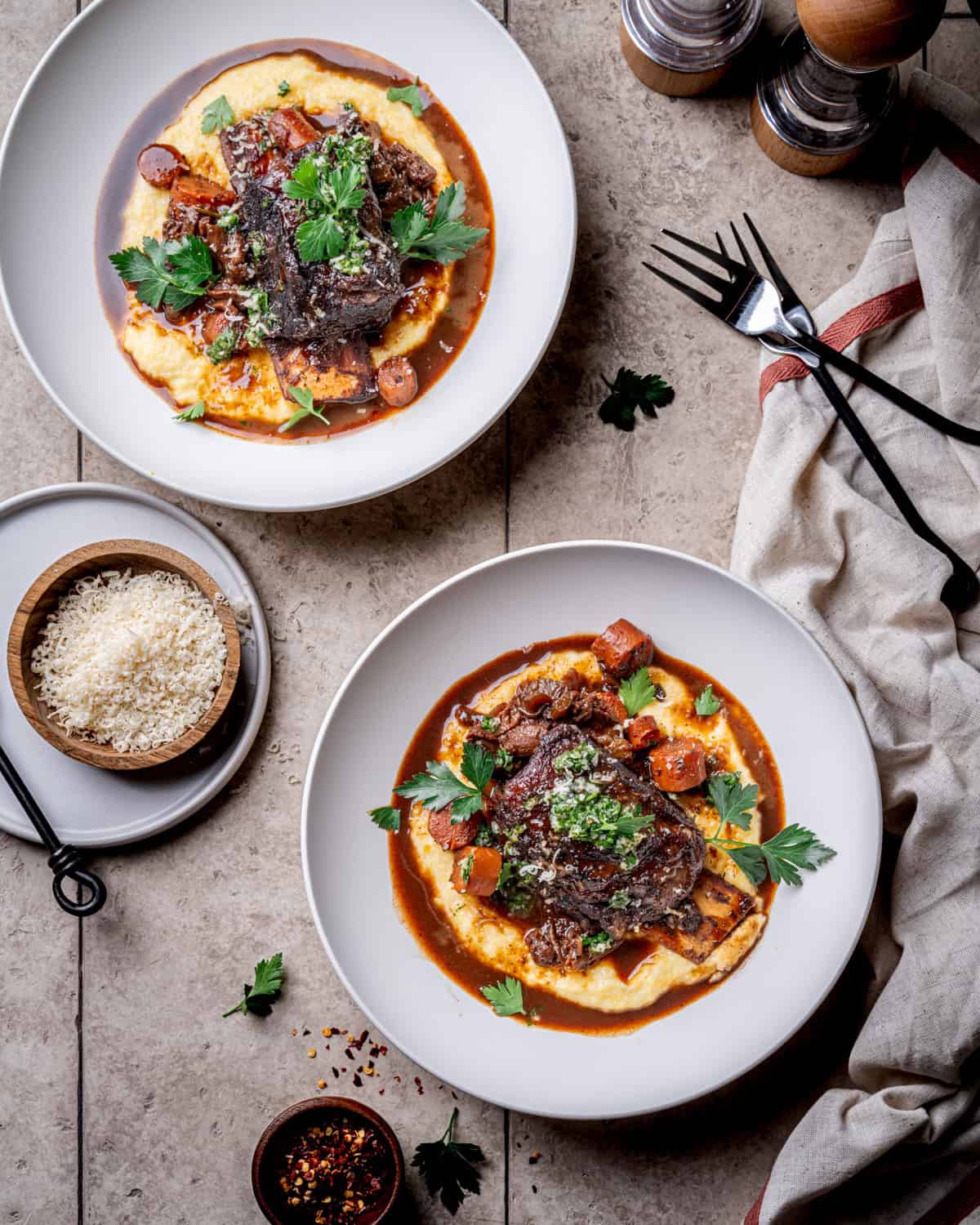
Braised short ribs are one of those dishes that actually taste better the next day, so they are great leftover or to prepare in advance for a dinner party.
How to store leftover braised short ribs:
- Let the ribs cool to room temperature, then transfer them to an airtight container with the sauce and vegetables. They'll keep in the fridge for up to four days. The fat will solidify on top, which actually helps seal in freshness.
How to reheat leftover braised short ribs:
- When you're ready to reheat, lift off the fat layer, then warm the ribs gently on the stovetop over low heat or in a 300°F oven, covered, for about 20 minutes. Add a splash of stock or water if the sauce has thickened too much.
- The citrus parsley should always be made fresh, though. It loses its brightness after a day, so whip up a new batch right before serving leftovers.
Can you freeze leftover braised short ribs?
- You can freeze braised short ribs for up to three months. Let them cool completely, then pack them in a freezer-safe container with the sauce. Thaw overnight in the fridge before reheating. The texture holds up remarkably well, and the flavors stay intact. Just make sure to reheat slowly so the meat doesn't dry out.
Leftover Transformations
If you have leftover short ribs, you're in luck because they transform into completely different meals with almost no effort.
- Short rib tacos: Shred the meat, warm it in a skillet with some of the braising liquid, and pile it into tortillas with pickled onions, cilantro, and a squeeze of lime.
- Short rib hash: Dice the meat and crisp it up in a hot skillet with diced potatoes, onions, and bell peppers. Top with a fried egg and you've got a fantastic breakfast.
- Fried rice upgrade: Chop the meat into small pieces and toss it into fried rice with garlic, ginger, soy sauce, and whatever vegetables you have. The beef adds a richness that takes fried rice from great to even better!
- Short rib grilled cheese: Thinly slice the cold meat, layer it with sharp cheddar or gruyere between buttered bread, and grill until the cheese melts. Serve with a little bowl of the warmed braising liquid for dipping.
Top Tips from the Pros
- Let the ribs come to room temperature before searing. Cold meat won't brown as well. Pull them out of the fridge 30 minutes before you start cooking.
- Don't crowd the pot during the sear. If you have to sear in batches, do it. Overcrowding drops the temperature and prevents a proper crust from forming.
- Skim the fat before serving. After braising, a layer of fat will pool on top of the sauce. You can skim it off with a spoon or, if you have time, chill the whole pot overnight and lift off the solidified fat in the morning before reheating.
- Don't skip the citrus parsley topping. It sounds like a garnish, but it's actually a crucial part of the dish. The brightness cuts through the richness and makes every bite feel balanced instead of heavy.
These small adjustments that make a big difference in how the final dish tastes and looks.
What to serve with Braised Short Ribs
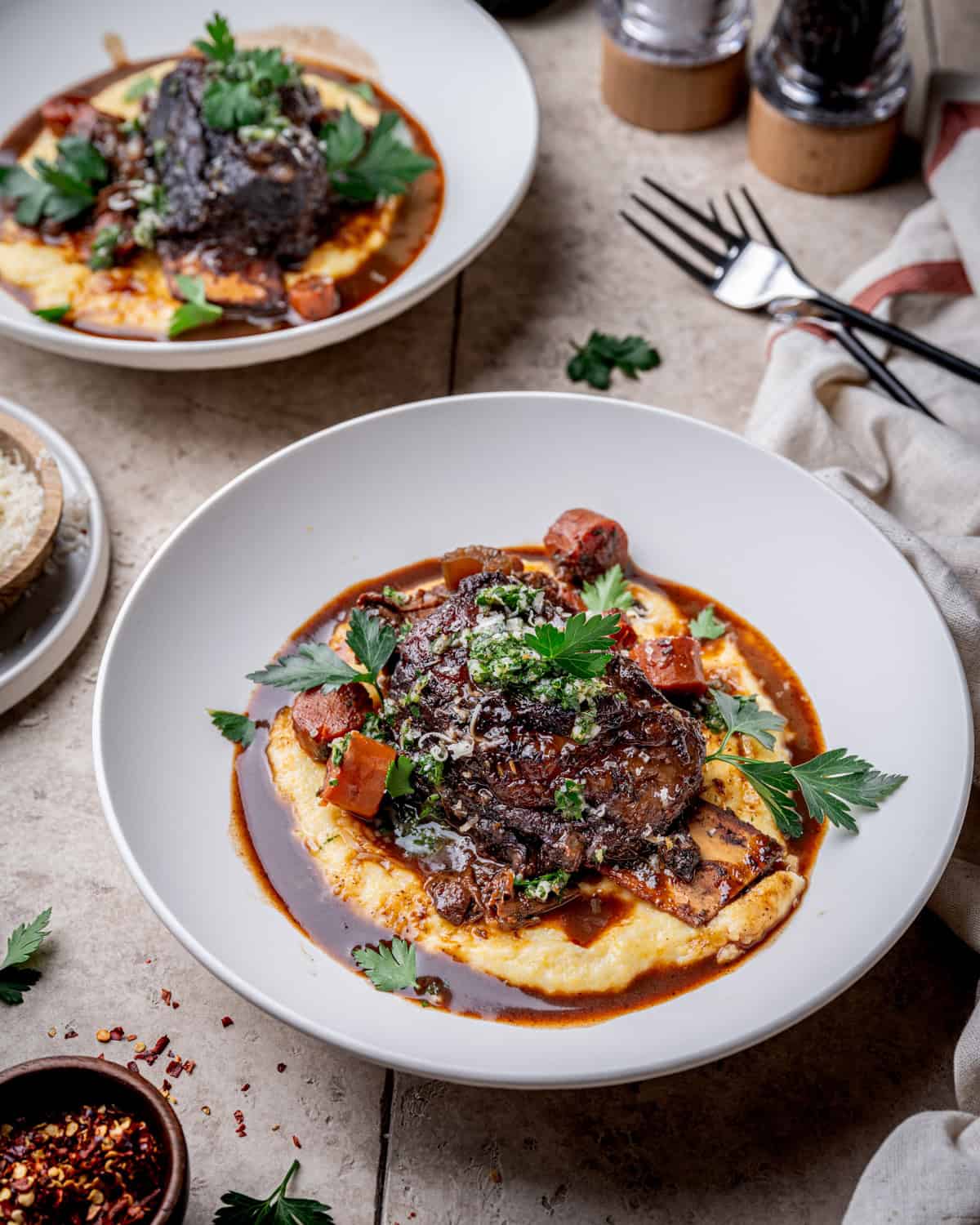
This is a comforting dish that is best served over creamy polenta, mashed potatoes, risotto or pasta.
For vegetable side dishes, we generally like to brighten the plate up with a green vegetable such as broccolini, asparagus, green beans, or zucchini. A nice green salad with homemade vinaigrette is a great option as well!
What Wines To Drink with Braised Short Ribs
The dish is rich, fatty, and slightly sweet with warm spice notes, so you want a wine with enough tannins to cut through the fat and enough fruit to match the depth of flavor.
Red Wine Pairings: A Cabernet Sauvignon from Napa or Sonoma works beautifully. The tannins grab onto the fat and the dark fruit flavors echo the wine in the braise. A Syrah or Shiraz brings peppery, smoky notes that complement the star anise and cinnamon. If you want something a little lighter, a Côtes du Rhône or Châteauneuf-du-Pape has the herbal, earthy quality that mirrors the rosemary and porcini.
If you cooked with a specific bottle, serve that same wine at the table. It's a classic pairing move and it works. White wine is not ideal for this dish as the rich flavors will completely overpower white wines.
For cocktails, a robust Old Fashioned with a big ice cube and an orange peel works surprisingly well. The bourbon's sweetness and spice mirror the braise, and the bitters add complexity. If you're feeling fancy, a Negroni with its bitter, herbal edge stands up to the richness without overwhelming it.
FAQ
We use 2 cups as our pot is a perfect size to braise with 4 cups of liquid (the other 2 cups are stock). This is adaptable and customizable so feel free to tinker with ratios.
It depends on the dish and your personal preference. The bone will impart more flavor and more fat. Therefore, you may have to skim off some excess fat, and you'll need to deposit the bones in a bowl to get them out of the way. But in return you'll get a richer, more decadent flavor. It's a choice and you really can't go wrong with either!
We've experimented with the time for quite some time and have determined that 3.5-4 hours is perfect for our oven, pot, and preferences. You may find that you like it done more or less, but either way it will be a beautiful flavor bomb!
Related
Looking for other recipes like this? Try these:


Pairing
These are our favorite vegetable side dishes to serve with Braised Short Ribs:


📖 Recipe
Red Wine Braised Short Ribs (Tender Oven-Braised Recipe)
Equipment
- Dutch oven or large braising pot (oven safe)
- Tongs to sear the short ribs
- Cheese cloth for the sachet
- Kitchen twine for the sachet
- Fine sieve mesh strainer, to strain the porcini mushrooms
Ingredients
For the Sachet
- 1 bay leaf
- 1 small cinnamon stick about 4"
- 1 sprig rosemary about 4"
- 2 whole star anise
For the Mushrooms and Short Ribs
- 1 cup dried porcini mushrooms
- 2.5 pounds bone-in short ribs
- 1 Tablespoon kosher salt
- 1 teaspoon black pepper
- 1 teaspoon garlic powder
- 3 Tablespoons olive oil
For the Braising Liquid and Vegetables
- 1 large onion large dice
- ¼ cup tomato paste
- 2 cups dry red wine
- 2 cups beef stock
- 2 large carrots peeled and cut into bite-sized pieces
- 3 medium celery stalks cut into ¼" pieces
- 1 Tablespoon dried thyme
- 2 Tablespoons sugar
- 2 teaspoons kosher salt
- 1 teaspoon black pepper
For the Citrus Parsley Topping
- 1 lemon zest only
- 2 Tablespoons lemon juice
- 2 Tablespoons grapefruit juice
- ¼ cup parsley finely chopped
- Pinch sea salt
- Pinch black pepper

Instructions
Prepare the Sachet and Mushrooms
- Start by making your sachet. To make the sachet, put the bay leaf, cinnamon stick, rosemary sprig, and the star anise in a piece of cheesecloth. Pull the sides up like a package or bag and tie with kitchen twine. Cut off any excess cheesecloth or twine with kitchen scissors and set the sachet aside.1 bay leaf, 1 small cinnamon stick, 1 sprig rosemary, 2 whole star anise
- Next, soak the mushrooms in a large bowl of warm water. Let them soak for about 15 minutes, agitating the mushrooms gently halfway through. Then carefully remove the mushrooms with a strainer or slotted spoon and rinse one more time with cold water. Set aside on paper towels. Thoroughly strain the mushroom water and save for a different use or discard. Rough chop the mushrooms and set aside.1 cup dried porcini mushrooms
Season and Sear the Short Ribs
- Preheat the oven to 325°F.
- Rub the short ribs with the kosher salt, black pepper, and garlic powder.2.5 pounds bone-in short ribs, 1 Tablespoon kosher salt, 1 teaspoon black pepper, 1 teaspoon garlic powder
- In a large enough pot/Dutch oven to hold all of the ribs, add the olive oil over medium-high heat to high heat. When hot, add the short ribs and sear on all sides (about 3-4 minutes per side). Once seared, turn the heat to medium low and remove the short ribs to a plate with tongs.3 Tablespoons olive oil
Start the Vegetables and Braising Liquid
- Reduce to medium-low heat, then add the onions to your large pot. Stir to coat and turn the heat back to medium-high and cook for about 5 minutes or until the onions start to get some color.1 large onion
- Next add the tomato paste and cook for 30 seconds stirring often. Then turn the stove down to medium heat and carefully add half of the red wine, stirring constantly and scraping the bottom of the pot to remove the brown bits (fond).¼ cup tomato paste, 2 cups dry red wine
- Add the remaining red wine, then add the short ribs back to the pot bone side down. Then carefully add the stock, carrots, celery, dried thyme, sugar, salt and pepper, and the sachet. Make sure the sachet is submerged. Turn the heat up and bring to a simmer. Cover and put the pot in the oven.2 cups beef stock, 2 large carrots, 3 medium celery stalks, 1 Tablespoon dried thyme, 2 Tablespoons sugar, 2 teaspoons kosher salt, 1 teaspoon black pepper
Braise in the Oven
- Let the ribs slow braise in the oven for 3.5-4 hours depending on the level of tenderness you desire. Although this seems like a long time, 3.5 hours will give you very tender meat that keeps its shape and is still falling off the bone. Slow braising for 4 hours will be more tender and will break down a little more if you want to serve this off the bone or shredded. You have leeway here so you can prepare any other side dishes you want while it cooks or just relax!
Make The Citrus Parsley
- While the beef ribs braise, make the citrus parsley. Add all of the ingredients to a small bowl and stir. Let it sit and stir again before serving. Once the ribs are done, remove and serve with some citrus parsley topping on top to brighten it up!1 lemon, 2 Tablespoons lemon juice, 2 Tablespoons grapefruit juice, ¼ cup parsley, Pinch sea salt, Pinch black pepper
Notes
- Swap the porcini for fresh mushrooms. If you can't find porcini, shiitakes work as a substitute, though the flavor will be slightly different. Use cremini or baby bellas, about 8 ounces, and sauté them with the onions. You'll lose some of the earthy depth, but you'll gain a meatier texture.
- Try different aromatics in the sachet. If star anise isn't available, skip it rather than substituting. Swap the cinnamon and star anise for orange peel and fennel seeds for a more Mediterranean vibe. Or use smoked paprika and chipotle for a smoky, spicy take. You can also experiment with a variety of fresh herbs like thyme, sage and fresh rosemary.
- Go boneless. Boneless short ribs work fine here. You'll lose a bit of body in the sauce, but the cooking time stays about the same. Just make sure they're well-marbled.
- Add root vegetables. Parsnips, turnips, or fingerling potatoes can go in with the carrots and celery. They'll soak up the braise and give you a more complete one-pot meal.
- Parsley citrus topping swaps: If you hate parsley, sub in fresh chives or tarragon, but the citrus is important!
- How to store leftover braised short ribs:
- Let the ribs cool to room temperature, then transfer them to an airtight container with the sauce and vegetables. They'll keep in the fridge for up to four days. The fat will solidify on top, which actually helps seal in freshness.
- How to reheat leftover braised short ribs:
- When you're ready to reheat, lift off the fat layer, then warm the ribs gently on the stovetop over low heat or in a 300°F oven, covered, for about 20 minutes. Add a splash of stock or water if the sauce has thickened too much.
- The citrus parsley should always be made fresh, though. It loses its brightness after a day, so whip up a new batch right before serving leftovers.
- Can you freeze leftover braised short ribs?
- You can freeze braised short ribs for up to three months. Let them cool completely, then pack them in a freezer-safe container with the sauce. Thaw overnight in the fridge before reheating. The texture holds up remarkably well, and the flavors stay intact. Just make sure to reheat slowly so the meat doesn't dry out.
- Let the ribs come to room temperature before searing. Cold meat won't brown as well. Pull them out of the fridge 30 minutes before you start cooking.
- Don't crowd the pot during the sear. If you have to sear in batches, do it. Overcrowding drops the temperature and prevents a proper crust from forming.
- Skim the fat before serving. After braising, a layer of fat will pool on top of the sauce. You can skim it off with a spoon or, if you have time, chill the whole pot overnight and lift off the solidified fat in the morning before reheating.
- Don't skip the citrus parsley topping. It sounds like a garnish, but it's actually a crucial part of the dish. The brightness cuts through the richness and makes every bite feel balanced instead of heavy.
Nutrition


Leave a Reply