
This is Italian home cooking at its most unfussy and most seductive. A boneless leg of lamb gets rubbed down with fresh herbs, lemon zest, garlic, and white wine, then sits overnight in the fridge to absorb flavors. The next day, it roasts low and slow on a bed of sliced onions with potatoes in the pan, soaking up every drop of flavor.
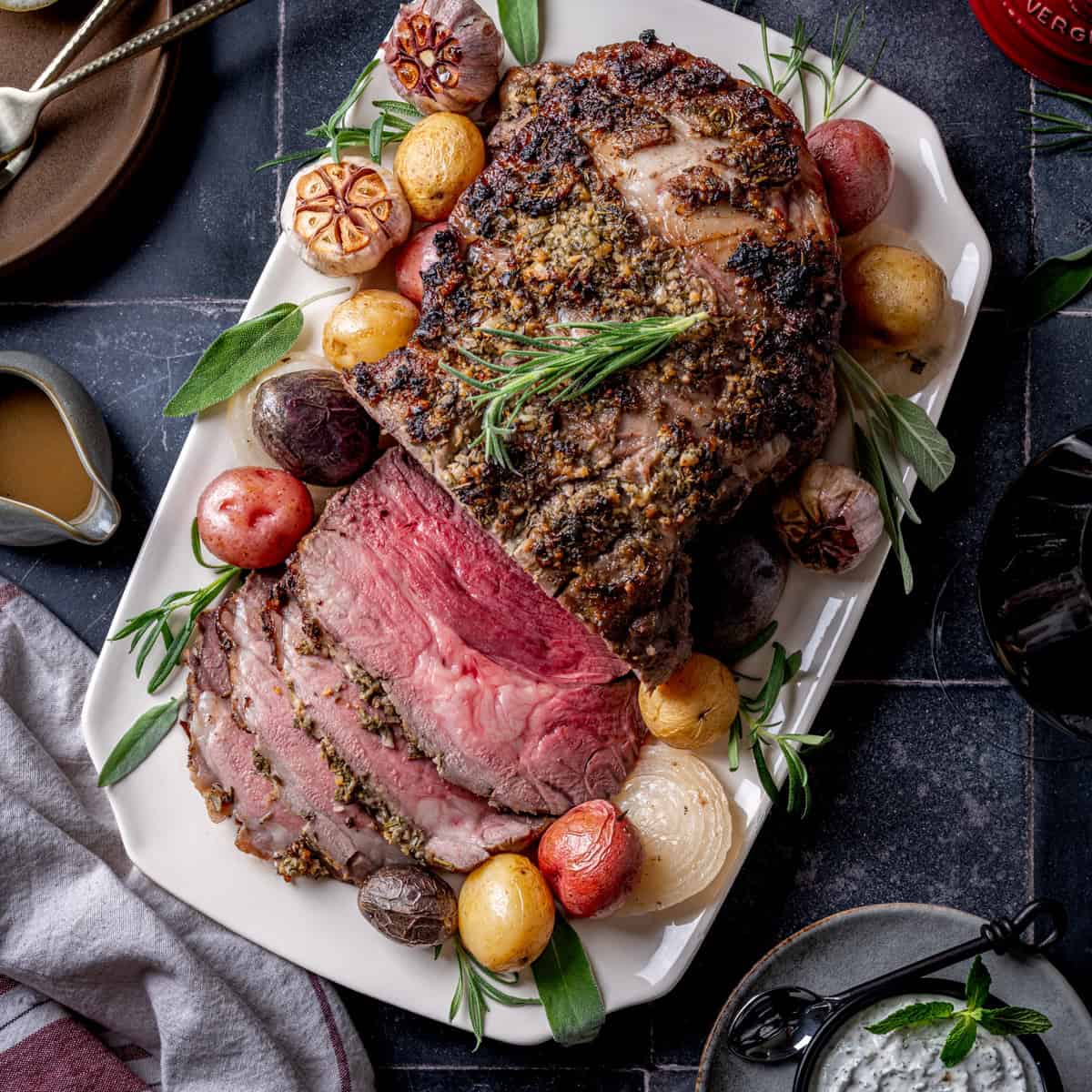
Forget complicated techniques. Rosemary, lemon, garlic, and one slow roast create restaurant-level lamb at home without any stress or mystery. By the time it's done, you've got fork tender lamb with a nice crust, flavorful roasted potatoes, and a pan sauce so good you'll want to drink it with a spoon.
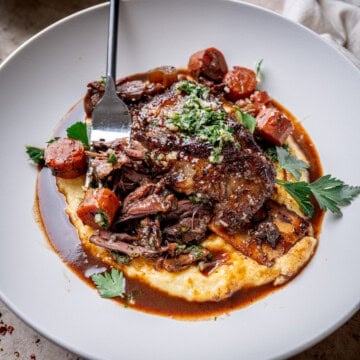
Looking for more dishes like this? Try out our Braised Lamb Shanks with Red Wine (Fall off the Bone Tender) or Marinated Lamb Chops with Mint and Cilantro Yogurt Sauce.
Jump to:
- Why You'll Love this Recipe
- Italian Leg of Lamb History and Origin
- Why This Recipe Works
- How to Make Roasted Leg of Lamb
- Ingredients
- Equipment
- Step-by-Step Instructions
- How to Know When It's Done
- Variations and Substitutions
- Storage
- Top Tips from the Pros
- What to serve with Roasted Leg of Lamb
- What Wines To Drink with Roasted Leg of Lamb
- FAQ
- Related
- Pairing
- 📖 Recipe
Why You'll Love this Recipe
- It's a very easy recipe with mostly hands-off techniques.
- Just the smell of this roasting will be mesmerizing!
- It's a great dish for a Sunday dinner or a gathering of people
- The sauce makes itself!
- Lamb has a cleaner, less gamey taste than it did years ago and we think that makes it more mainstream
Italian Leg of Lamb History and Origin
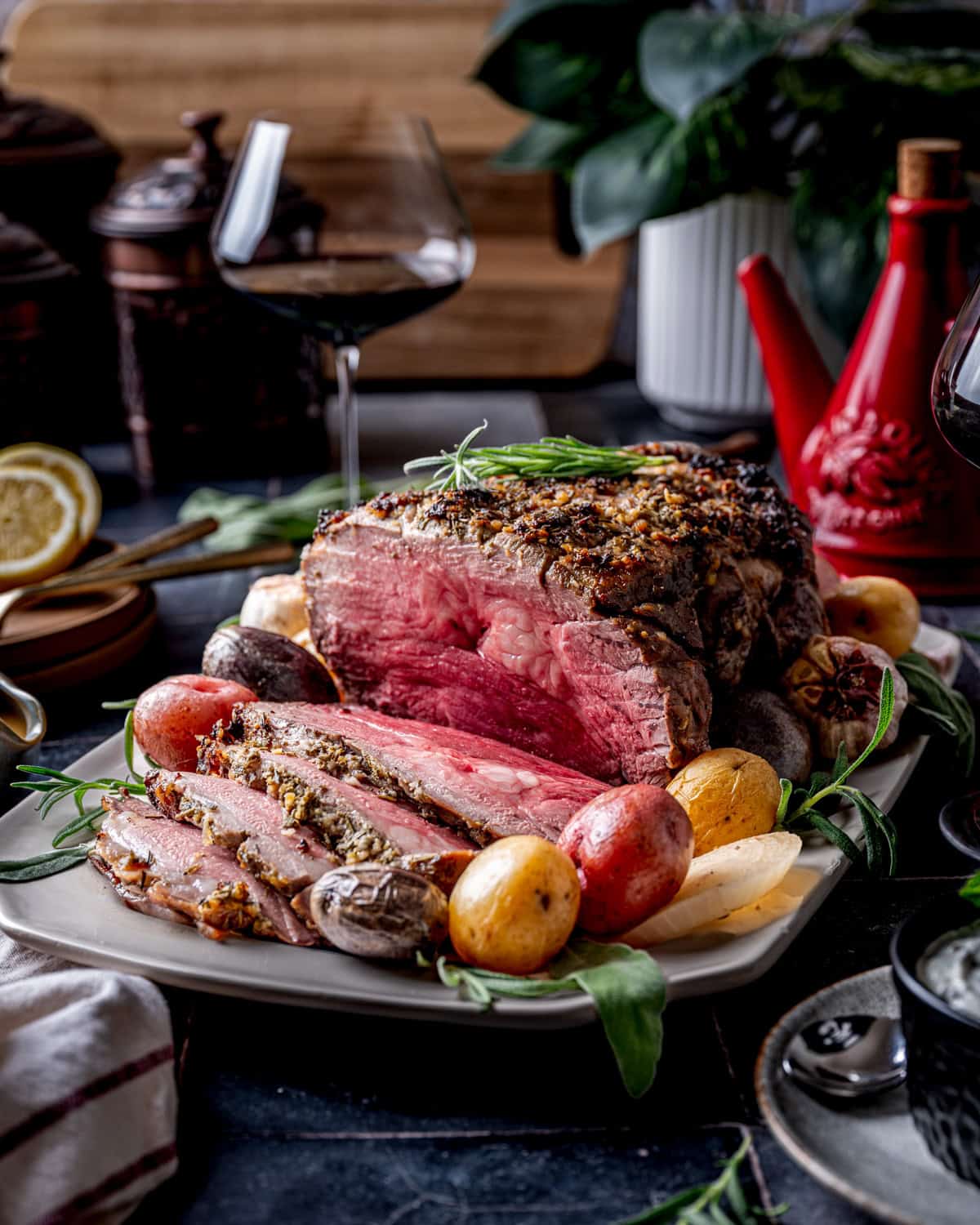
Slow roast leg of lamb has been the centerpiece of Italian family feasts for centuries, especially in central and southern regions where sheep farming runs deep. In Abruzzo, Lazio, and Umbria, lamb isn't just Easter dinner, it's Sunday tradition.
The dish you're making here pulls from that same lineage, a rustic preparation built on fresh herbs, local wine, and time. Italian cooks have always understood that lamb doesn't need to be fancy. It needs to be seasoned aggressively, cooked gently, and served with something starchy to soak up the juices. The potatoes roasted in the same pan aren't just a side, they're flavor bombs!
Why This Recipe Works
This isn't just a roast, it's a system designed to eliminate the two biggest problems with cooking lamb at home.
- Problem one: dryness. Lamb has a reputation for going from perfect to dry quite quickly. The overnight marinade solves that by letting salt, acid, and oil penetrate deep into the meat before it ever sees heat. Then, roasting at 325°F instead of the usual 375°F or higher keeps the interior juicy while the outside develops color. Pulling it at 135°F internal temp means it'll rest into a perfect medium, not a leathery disappointment.
- Problem two: bland potatoes. Roasting the lamb directly on a bed of sliced onions creates a natural rack that prevents sticking and adds sweetness to the pan liquid. The potatoes go in at the start, not halfway through, so they have the full cook time to absorb butter, wine, lemon juice, and lamb drippings. By the time the roast is done, those potatoes are full of flavor and creamy in the center with more flavor than anything you'd make separately.
Flavor builds in the marinade and then again as the lamb roasts. Then it concentrates one more time when you reduce the pan juices into a sauce. Every step adds depth without adding complexity.
How to Make Roasted Leg of Lamb
Ingredients
Here is what you need to make this recipe:
- Boneless leg of lamb (4 to 5 pounds): Boneless legs are usually sold rolled and tied, sometimes with the fat cap still on. You want one with some marbling but not a thick outer layer of fat, which won't render in a low-temp roast and just tastes greasy. If your butcher offers New Zealand or Australian lamb, grab it. It's younger, milder, and more consistent than domestic. American lamb works too but tends to be bigger and gamier. Costco leg of lamb is a great option if you are a member, but leg of lamb is generally easy to find in most grocery stores.
- Rosemary and sage: These are the main seasonings and will perfume your kitchen as the lamb cooks! Use fresh, not dried and chop them finely so they form a paste with the other ingredients.
- Lemon zest: Brightens the richness of the lamb and cuts through the fat without making the marinade taste citrusy. Use a microplane and avoid the white pith, which is bitter.
- Dry white wine: Adds acidity and a subtle fruitiness to both the marinade and the roasting liquid. Use something dry like Pinot Grigio or Sauvignon Blanc.
- Fresh garlic: We use garlic for the marinade but we also throw a couple of whole bulbs in with the potatoes. Roasted garlic becomes sweet and mellow, not harsh. Perfect to spread on the lamb, potatoes, or some crusty bread.
- Olive oil: Helps the marinade stick to the meat and prevents it from drying out during the long roast. It also carries fat-soluble flavors from the rosemary and garlic into the lamb.
- Kosher salt and black pepper
- Onions: Sliced into rings. These go under the lamb to create a natural roasting rack and prevent sticking. As they cook, they caramelize and sweeten the pan juices. Slice them thick so they don't disintegrate into mush.
- Unsalted butter, wine, and lemon juice in the roasting pan: This is what turns into your sauce. The butter adds richness, the wine adds acidity, and the lemon juice balances everything. As the lamb roasts, these liquids mix with the drippings and reduce into something you'll want to pour over everything on the plate.
- Potatoes: Baby potatoes, fingerlings, or small Yukon golds work best. They need to be small enough to cook through in 2.5 hours but sturdy enough not to fall apart. Halve them so they have a flat side to get a bit crispy against the pan.
See recipe card below for quantities.
Equipment
Here is what you need to make this dish
- A heavy roasting pan (not a rimmed baking sheet). You need something with high sides to contain all the liquid and prevent flare-ups. A 9x13 metal roasting pan or enameled cast iron works perfectly.
- Instant-read thermometer. Lamb can be expensive and timing by weight alone is a gamble. You want to pull it when it hits 135°F in the thickest part, and you can't do that by guessing. If you want a handsoff bluetooth thermometer option, we love THIS ONE and use it all the time.
- Kitchen twine. Most boneless legs come pre-tied, but if yours doesn't, you'll need to truss it into an even shape so it cooks uniformly. Uneven rolls mean overcooked ends and undercooked centers.
- A fine-mesh strainer. For finishing the sauce. You'll strain out the onions, garlic bits, and herb stems, leaving behind a clean, glossy liquid you can reduce without any gritty texture.
- Aluminum foil. For tenting the lamb and potatoes while they rest.
Step-by-Step Instructions
Prepare The Lamb
- Trim the lamb of excess fat, removing most of the fat cap. Place the lamb in a roasting pan (not on a rack) and set aside.
Marinate The Lamb Overnight
- Combine the rosemary, sage, lemon zest, white wine, minced garlic, olive oil, salt, and pepper in a bowl. Mix thoroughly so you have a paste-like marinade. Rub the marinade over the lamb on all sides and return to the roasting pan. Place the lamb in the refrigerator overnight.
Roast The Lamb And Potatoes
- Preheat the oven to 325°F.
- Remove the lamb from the refrigerator 45 minutes before cooking so it can warm up slightly. Lift the lamb up and place the sliced onions down in the bottom of the pan and place the lamb on top of the onions. To the pan add the roasting pan liquid consisting of the wine, lemon juice, butter along with the halved potatoes.
- Place the roasting pan with the lamb in the preheated oven, uncovered, and roast until the internal temperature reaches 135°F. Generally, this should take about 2.5 hours but start temping the roast around 2 hours. Once the thickest part of the roast reaches 135°, remove the pan from the oven, remove the lamb to a cutting board and tent it with foil.
- The potatoes, garlic heads, and onions can be removed to a bowl and covered tightly with foil also. The lamb should rest at least 10 minutes while you make the sauce.
Finish The Sauce
- You can strain the sauce, salt to taste and serve it as is without doing anything additional if you'd like, but if you want a slightly more elevated sauce option, we recommend reducing it slightly as follows.
- Strain the liquid into a skillet and start reducing over medium-high heat. Once reduced by about ⅓ to half, taste. Adjust seasoning with salt and pepper, a little sugar if the sauce tastes too bitter, or a little vinegar if it tastes too flat. You can also whisk in a tablespoon or two of butter off the heat if desired to add some richness. Slice the juicy lamb and serve with the potatoes, onions, and some sauce. Garnish with finely chopped parsley if desired.
How to Know When It's Done
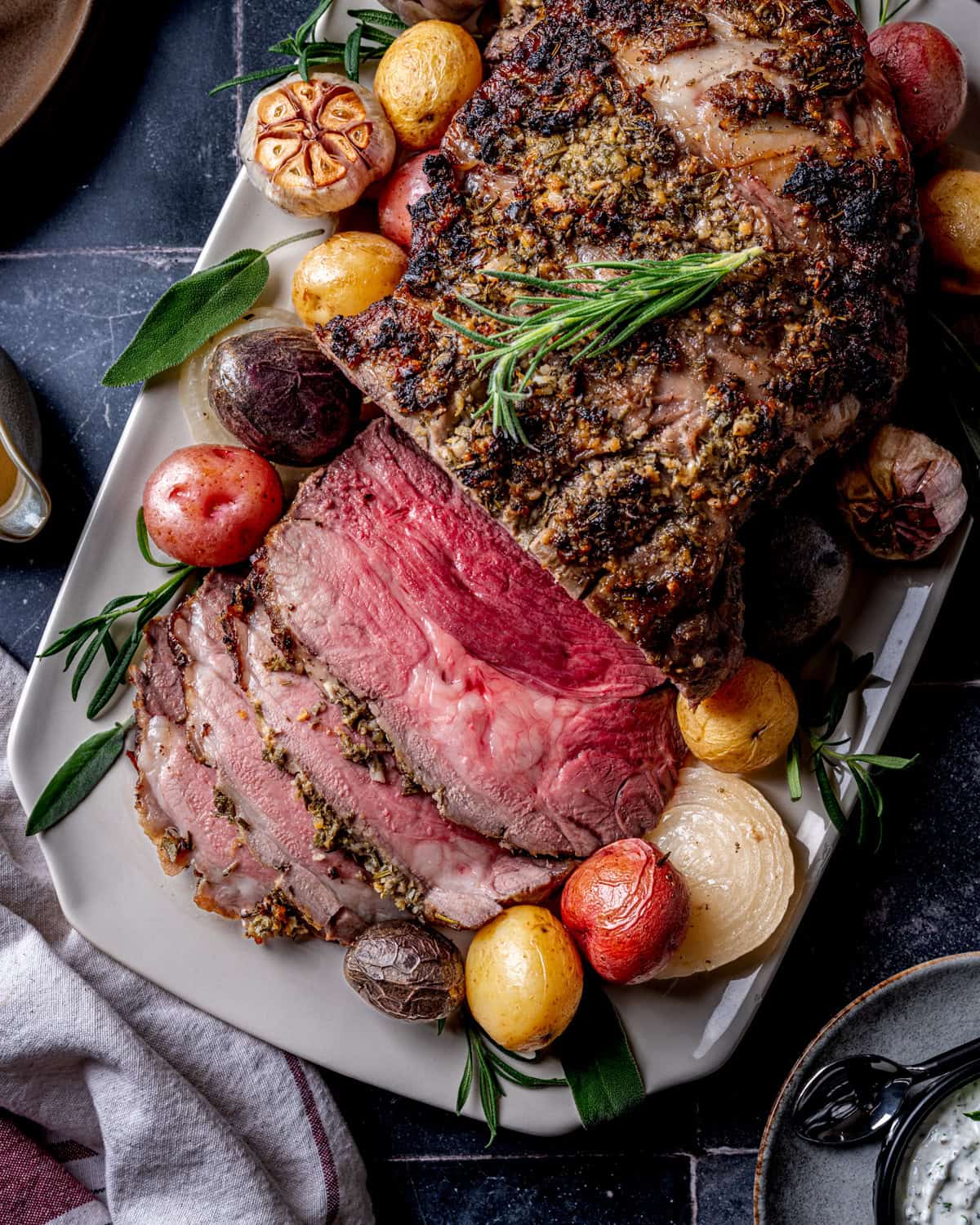
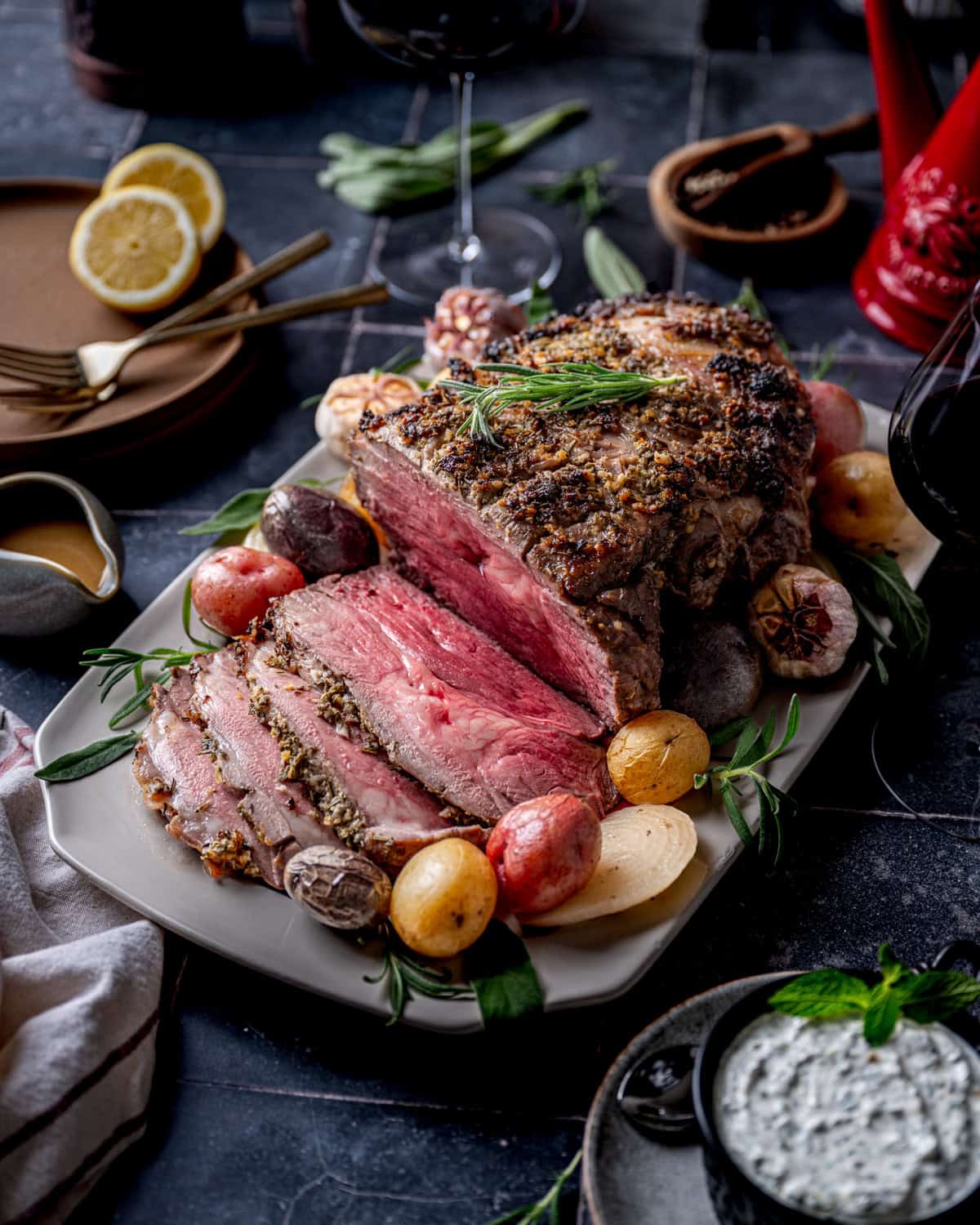
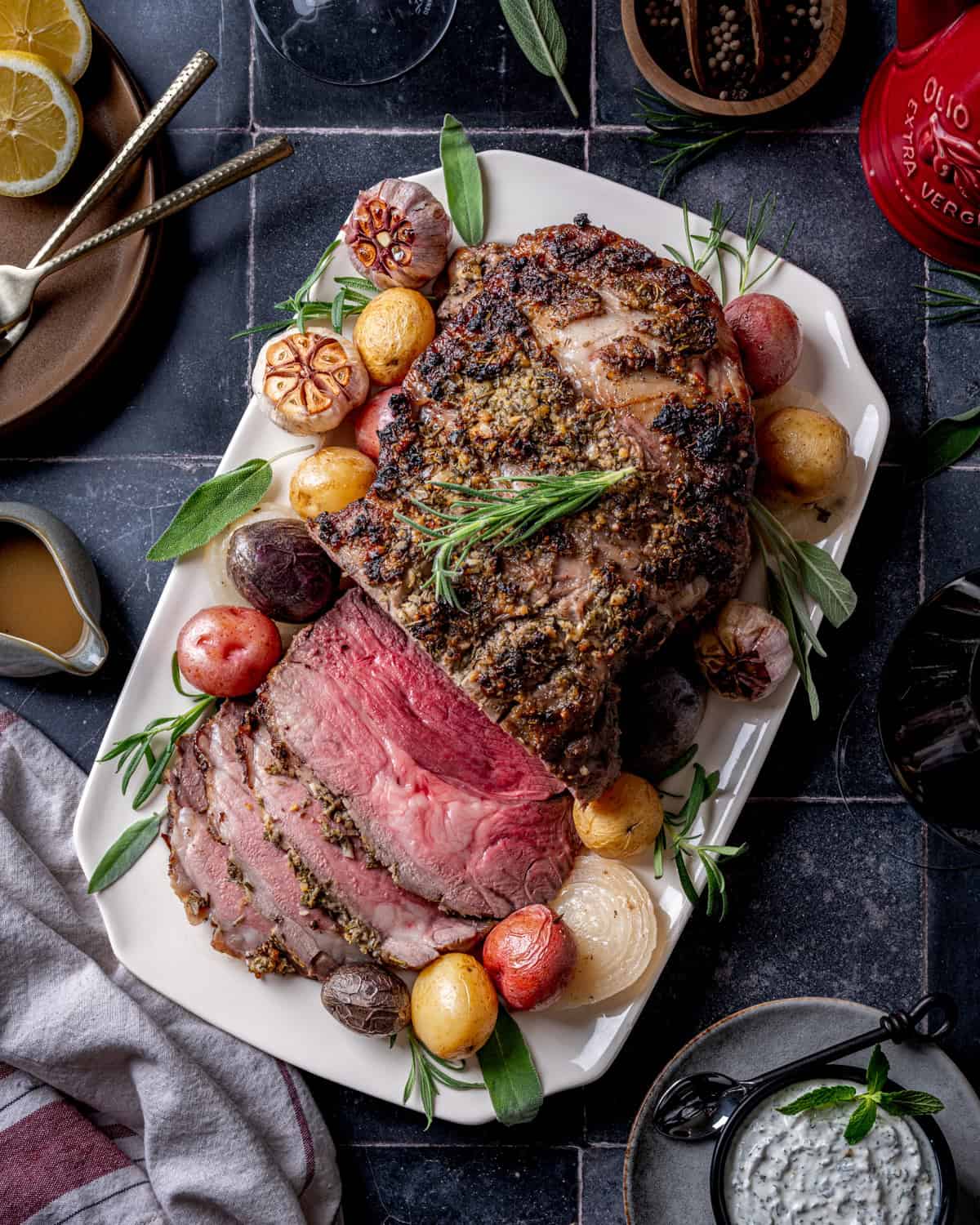
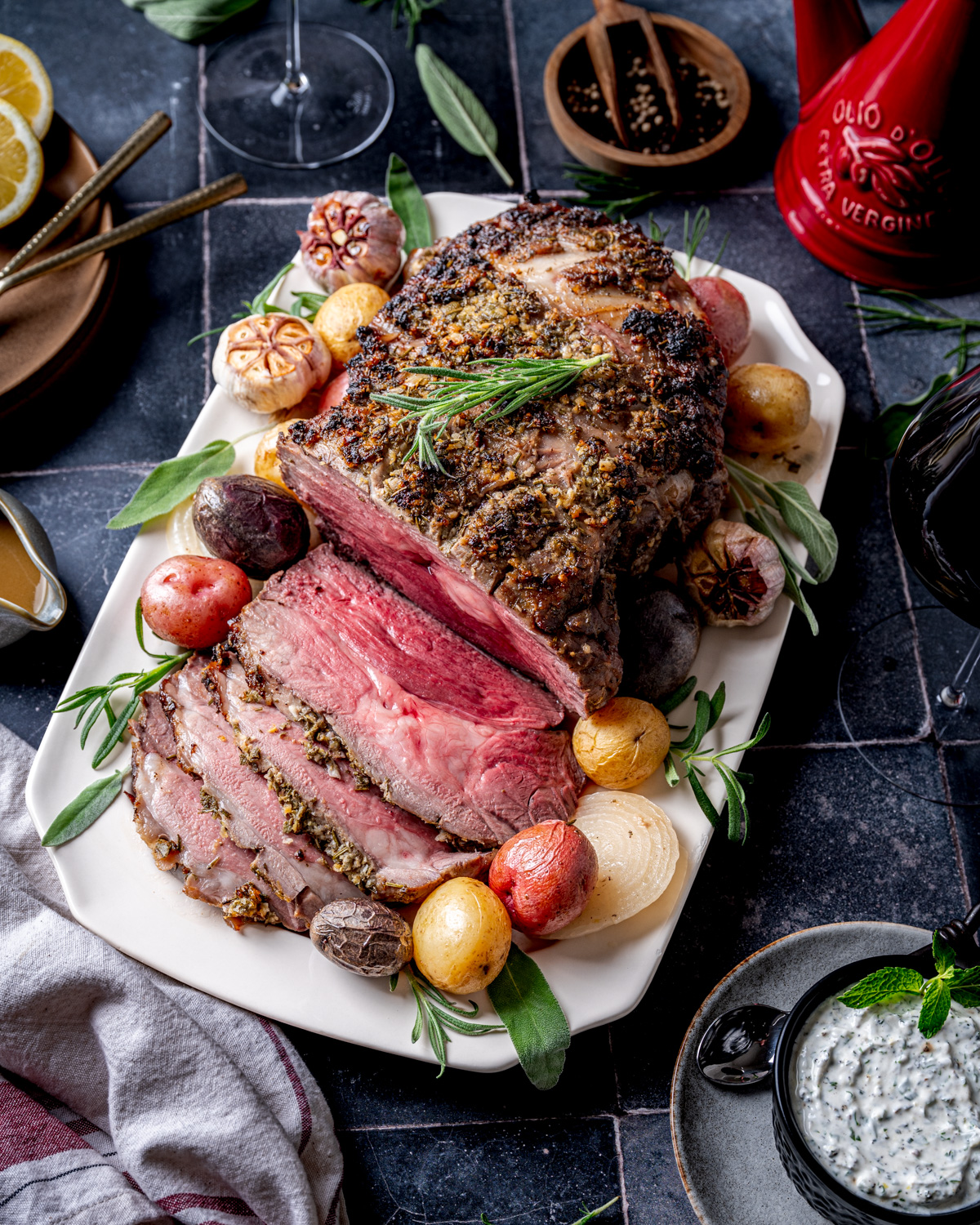
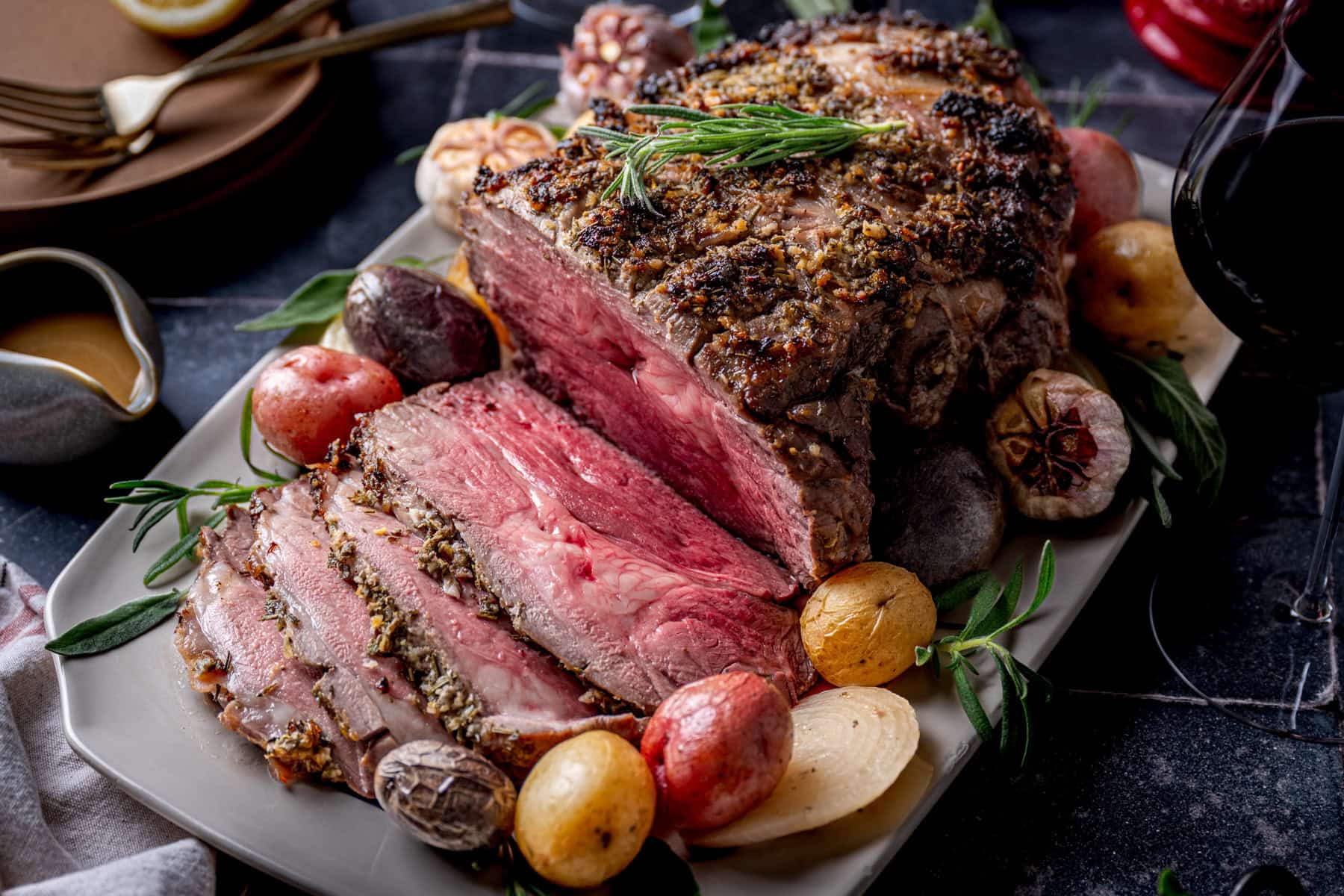
Use a meat thermometer and check in three spots: the thickest center section, one end, and the other end. If all three read 135°F, you're good. If one end is lagging at 125°F, give it another 10 minutes and check again. The goal is a rosy, juicy center that's slightly past medium-rare. At 135°F, the lamb roast will rest up and carryover to about 140°F, which is perfect.
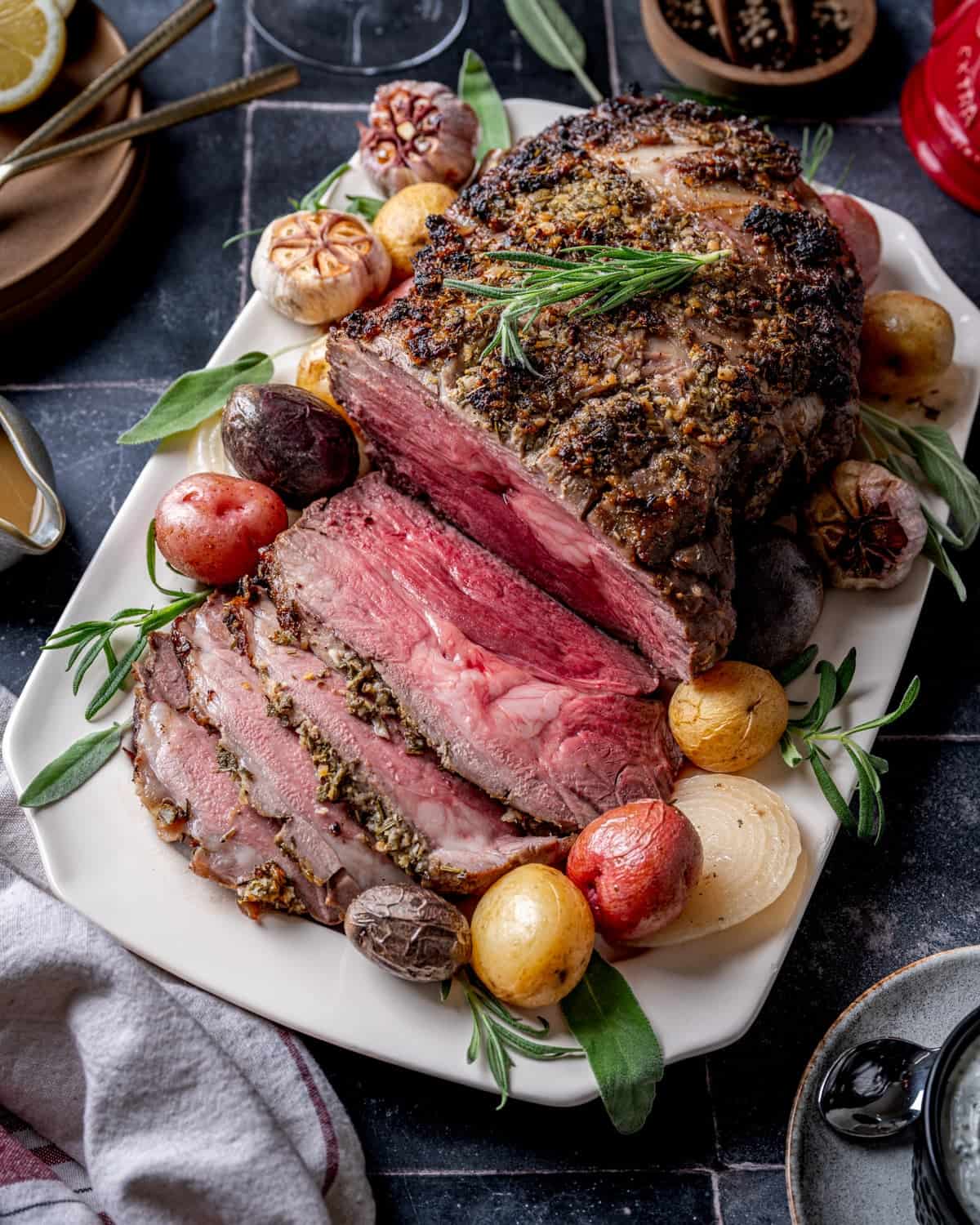
Visual cues to watch for: The exterior should be deeply golden with crispy, darkened edges where the marinade caramelized. The potatoes should be bronzed on their cut sides with crispy, blistered skins. The onions will be soft, almost melted, and dark brown in spots. The pan liquid should look reduced and glossy, not thin and watery.
Variations and Substitutions
This recipe is flexible once you understand the structure.
- Herb swaps: If you can't find fresh sage, use thyme or oregano instead. Fresh rosemary is harder to replace since it's so distinct, but fresh thyme plus a little fennel seed gets you close to that Mediterranean vibe.
- Different cuts: Bone-in leg of lamb works too, but you'll need to add 30 to 45 minutes to the roast time and the carving gets trickier. Lamb shoulder is fattier and more forgiving if you're nervous about overcooking, but it takes closer to 3.5 hours.
- Swap the potatoes: Carrots, parsnips, turnips, winter squash or fennel bulbs all roast beautifully in the same pan. Cut them into similar-sized pieces so they cook evenly. If you use root vegetables, toss them in a little olive oil first so they don't stick.
- Make it spicy: Add a teaspoon of red pepper flakes to the marinade and a pinch of smoked paprika. Serve with a yogurt sauce spiked with harissa.
Storage
This lamb keeps well, which makes it perfect for meal prep or entertaining ahead.
How to store leftover leg of lamb:
- Let the lamb cool completely, then wrap it tightly in foil or transfer it to an airtight container. It'll keep for up to four days. Store the potatoes and sauce separately so they don't get soggy.
How to reheat leftover leg of lamb:
- For the lamb, bring it to room temp first, then warm it gently in a 300°F oven covered with foil. Add a splash of stock or water to the pan to keep it moist. It'll take about 15-20 minutes. For the potatoes, reheat them in a hot skillet with a little olive oil to crisp them back up. The sauce reheats beautifully on the stovetop over low heat. Whisk in a little butter and the sauce will be perfect.
Can you freeze the leftover leg of lamb?
Yes! Slice the lamb first, then wrap individual portions in plastic wrap and foil or a freezer safe zip top bag. Freeze for up to three months. The texture won't be quite as tender after freezing, but it's still going to taste good. The potatoes don't freeze well so best to roast a fresh batch of potatoes if you want to enjoy those with the lamb.
Top Tips from the Pros
- Salt the night before, not the day of. Overnight salting is basically dry-brining. It seasons deep into the muscle and helps the lamb retain moisture during the roast. If you salt it an hour before cooking, it just pulls moisture to the surface and you end up steaming instead of roasting.
- Let the marinade come to room temp before rubbing. Cold oil doesn't spread as well. Let the bowl sit out for 10 minutes after you mix it so the olive oil loosens up. You'll get better coverage and the herbs will stick instead of sliding off.
- Don't skip the resting step. Those 10 minutes are important to get the lamb to the perfect temperature.
- Score the fat cap before marinating. If your lamb still has a layer of fat, score it in a crosshatch pattern before applying the marinade. This helps the seasonings penetrate and lets some of the fat render during roasting.
What to serve with Roasted Leg of Lamb
Additional Sauces: Although the pan sauce we describe here is easy and fantastic served with the lamb, if you want something else that will really wow your guests, we recommend making this Mint and Cilantro Yogurt Sauce or a vibrant gremolata.
Sides that make sense: You've already got potatoes, so keep the rest simple. A big bowl of arugula dressed with lemon juice and olive oil adds pepperiness and crunch. Asparagus or charred broccolini work if you want something green. A crusty loaf of bread for mopping up sauce is a great addition. If you want to go bigger, make a white bean salad or serve it with creamy polenta.
Appetizers to start: Keep it light so you don't kill the appetite before the main event. Burrata with olive oil and sea salt, a simple antipasto plate with olives and cured meats, or a lemony Caesar salad all set the stage without competing. Avoid anything too heavy or creamy. This lamb is the star!
What Wines To Drink with Roasted Leg of Lamb
This lamb is rich, herbaceous, and just acidic enough from the lemon to handle a wide range of pairings.
White wine pairings: Open a bottle of what you cooked with. A crisp Italian white like Vermentino, Soave, or Falanghina mirrors the brightness in the dish and cuts through the fat without fighting the flavors.
Red wine pairings: If you want red, go for something with good acidity and not too much tannin. Chianti, Barbera, or a lighter Montepulciano d'Abruzzo all work.
FAQ
No. You only want to cover it after it comes out of the oven for 10 minutes while it rests.
A nice long marinade, low heat, and a long cook all contribute to a tender leg of lamb.
Yes it does. That's why having a thermometer is important so you don't overcook the meat.
Related
Looking for other recipes like this? Try these:


Pairing
These are our favorite side dishes to serve with:


📖 Recipe
Slow-Roasted Boneless Italian Leg of Lamb with Potatoes
Ingredients
For the Lamb and Marinade
- 1 boneless leg of lamb usually 4-5 pounds
- ¼ cup rosemary leaves then finely chopped
- 12 sage leaves finely chopped
- Zest of 3 large lemons
- 1 ounce dry white wine
- 8 garlic cloves minced
- 2 Tablespoons olive oil
- 2 Tablespoons kosher salt
- 2 teaspoons black pepper
- 1 large onion sliced into ¼" rings
For the Roasting Pan Liquid
- ½ cup dry white wine
- Juice of ½ lemon
- 5 Tablespoons unsalted butter
- 2 heads whole garlic tops sliced off
- 16 baby small or fingerling potatoes, halved
For Garnish
- Parsley for garnish, optional
- Mint and Cilantro Yogurt Sauce optional

Instructions
Prepare The Lamb
- Trim the lamb of excess fat, removing most of the fat cap. Place the lamb in a roasting pan (not on a rack) and set aside.1 boneless leg of lamb
Marinate The Lamb Overnight
- Combine the rosemary, sage, lemon zest, white wine, minced garlic, olive oil, salt, and pepper in a bowl. Mix thoroughly so you have a paste-like marinade. Rub the marinade over the lamb on all sides and return to the roasting pan. Place the lamb in the refrigerator overnight.¼ cup rosemary leaves, 12 sage leaves, Zest of 3 large lemons, 1 ounce dry white wine, 8 garlic cloves, 2 Tablespoons olive oil, 2 Tablespoons kosher salt, 2 teaspoons black pepper
Roast The Lamb And Potatoes
- Preheat the oven to 325°F.
- Remove the lamb from the refrigerator 45 minutes before cooking so it can warm up slightly. Lift the lamb up and place the sliced onions down in the bottom of the pan and place the lamb on top of the onions. To the pan add the roasting pan liquid consisting of the wine, lemon juice, butter along with the halved potatoes.1 large onion, ½ cup dry white wine, Juice of ½ lemon, 5 Tablespoons unsalted butter, 16 baby
- Place the roasting pan with the lamb in the preheated oven, uncovered, and roast until the internal temperature reaches 135°F. Generally, this should take about 2.5 hours but start temping the roast around 2 hours. Once the thickest part of the roast reaches 135°, remove the pan from the oven, remove the lamb to a cutting board and tent it with foil.
- The potatoes, garlic heads, and onions can be removed to a bowl and covered tightly with foil also. The lamb should rest at least 10 minutes while you make the sauce.
Finish The Sauce
- You can strain the sauce, salt to taste and serve it as is without doing anything additional if you'd like, but if you want a slightly more elevated sauce option, we recommend reducing it slightly as follows.
- Strain the liquid into a skillet and start reducing over medium-high heat. Once reduced by about ⅓ to half, taste. Adjust seasoning with salt and pepper, a little sugar if the sauce tastes too bitter, or a little vinegar if it tastes too flat. You can also whisk in a tablespoon or two of butter off the heat if desired to add some richness. Slice the juicy lamb and serve with the potatoes, onions, and some sauce. Garnish with finely chopped parsley if desired.Parsley
Notes
- Herb swaps: If you can't find fresh sage, use thyme or oregano instead. Fresh rosemary is harder to replace since it's so distinct, but fresh thyme plus a little fennel seed gets you close to that Mediterranean vibe.
- Different cuts: Bone-in leg of lamb works too, but you'll need to add 30 to 45 minutes to the roast time and the carving gets trickier. Lamb shoulder is fattier and more forgiving if you're nervous about overcooking, but it takes closer to 3.5 hours.
- Swap the potatoes: Carrots, parsnips, turnips, winter squash or fennel bulbs all roast beautifully in the same pan. Cut them into similar-sized pieces so they cook evenly. If you use root vegetables, toss them in a little olive oil first so they don't stick.
- Make it spicy: Add a teaspoon of red pepper flakes to the marinade and a pinch of smoked paprika. Serve with a yogurt sauce spiked with harissa.
- How to store leftover leg of lamb:
- Let the lamb cool completely, then wrap it tightly in foil or transfer it to an airtight container. It'll keep for up to four days. Store the potatoes and sauce separately so they don't get soggy.
- How to reheat leftover leg of lamb:
- For the lamb, bring it to room temp first, then warm it gently in a 300°F oven covered with foil. Add a splash of stock or water to the pan to keep it moist. It'll take about 15-20 minutes. For the potatoes, reheat them in a hot skillet with a little olive oil to crisp them back up. The sauce reheats beautifully on the stovetop over low heat. Whisk in a little butter and the sauce will be perfect.
- Can you freeze the leftover leg of lamb?
- Yes! Slice the lamb first, then wrap individual portions in plastic wrap and foil or a freezer safe zip top bag. Freeze for up to three months. The texture won't be quite as tender after freezing, but it's still going to taste good. The potatoes don't freeze well so best to roast a fresh batch of potatoes if you want to enjoy those with the lamb.
- Salt the night before, not the day of. Overnight salting is basically dry-brining. It seasons deep into the muscle and helps the lamb retain moisture during the roast. If you salt it an hour before cooking, it just pulls moisture to the surface and you end up steaming instead of roasting.
- Let the marinade come to room temp before rubbing. Cold oil doesn't spread as well. Let the bowl sit out for 10 minutes after you mix it so the olive oil loosens up. You'll get better coverage and the herbs will stick instead of sliding off.
- Don't skip the resting step. Those 10 minutes are important to get the lamb to the perfect temperature.
- Score the fat cap before marinating. If your lamb still has a layer of fat, score it in a crosshatch pattern before applying the marinade. This helps the seasonings penetrate and lets some of the fat render during roasting.
Nutrition


Leave a Reply