
You know that moment when you taste something so good you stop mid-bite and think, "This is what happiness tastes like"?
That's what stuffed shrimp should be. Not some sad, rubbery thing with a dry wad of mystery filling. We're talking jumbo shrimp butterflied wide open, stuffed with garlic-herb breadcrumbs that taste like the Italian coast, and absolutely drenched in lime butter that makes everything shiny and impossible to resist.
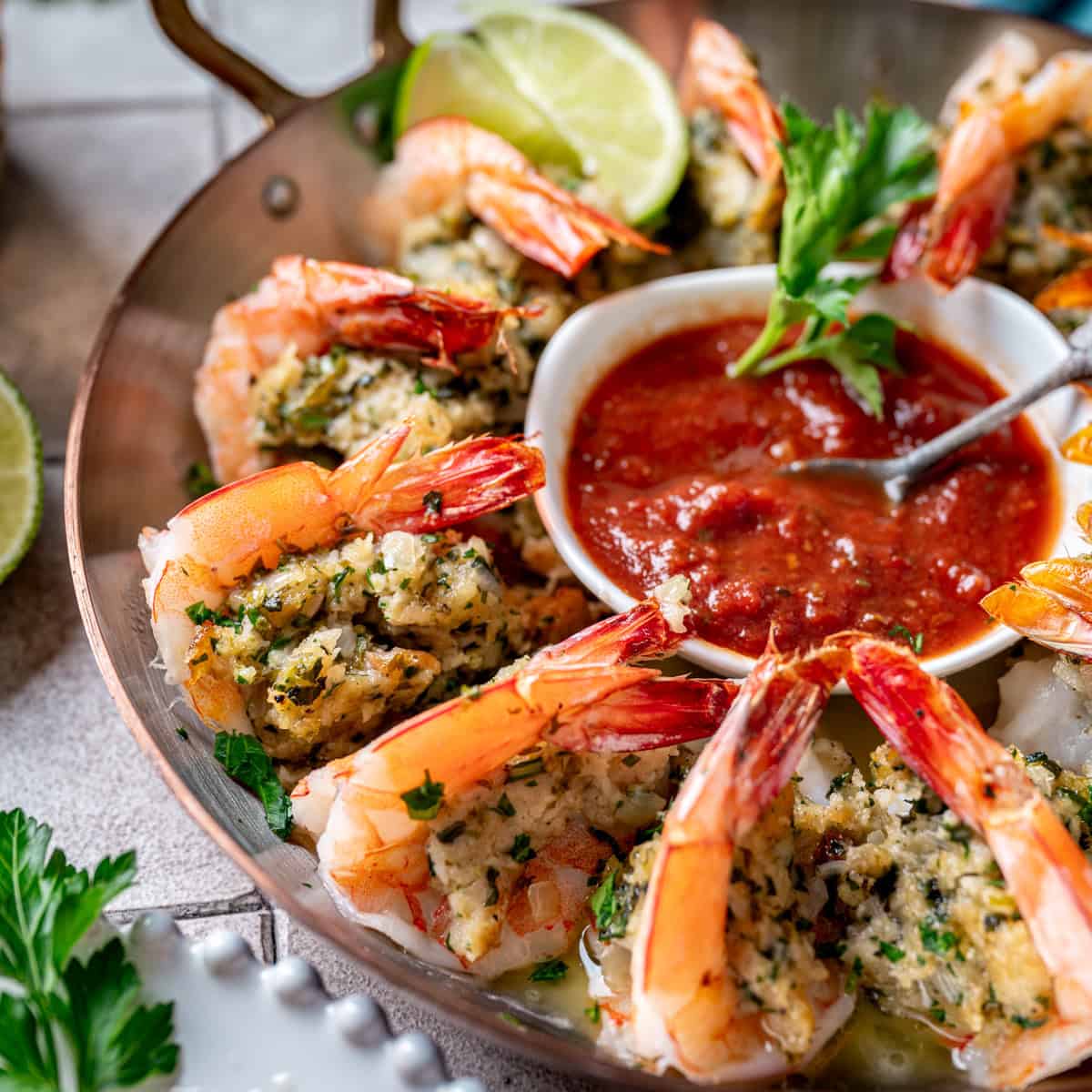
This recipe isn't hard, but it does look expensive and impressive. This is the dinner party flex you've been waiting for. You just need good shrimp and the confidence to butterfly them without overthinking it.
Looking for more shrimp recipes? Try out our Shrimp with Spicy Vodka Sauce (Shrimp alla Vodka) or Shrimp Orecchiette with Lemon Garlic Cream Sauce.
Jump to:
- Why You'll Love this Recipe
- What is Stuffed Shrimp?
- Why This Recipe Works
- How to Make Italian Herb Stuffed Shrimp
- Ingredients
- Equipment You'll Need
- Step-by-Step Instructions
- How to Know It's Done
- Variations and Swaps
- Storage
- Leftover Transformations
- Top Tips from the Pros
- Serving Suggestions: What to Serve with Stuffed Shrimp
- What Wines to Drink with Italian Herb Stuffed Shrimp
- FAQ
- Related
- Pairing
- 📖 Recipe
Why You'll Love this Recipe
- Very easy preparation
- Beautiful and delicious shrimp recipe
- This easy stuffed shrimp recipe comes together and cooks quickly
- Great as an appetizer or as a main course
- Light but filling
What is Stuffed Shrimp?
Most stuffed shrimp recipes, including this one, aren't really "stuffed." The butterflied presentation, where the tail curls over the body like a scorpion, is pure showmanship. It started as a way to maximize surface area for breading and stuffing, but it stuck because it looks great on a plate.
Stuffed shrimp isn't tied to one place, but the technique shows up everywhere coastal cultures intersect with bread and butter. Italian-American restaurants in the Northeast made it a steakhouse classic in the mid-20th century. Portuguese and Spanish versions lean on chorizo and saffron. Gulf Coast preparations go heavy on Creole spice and crab.
Our version pulls from the Italian herb gene, but swaps out the usual suspects for fresh basil, parsley, and lime zest, which gives it a brighter, less nostalgic vibe. It's what happens when you want the drama of stuffed shrimp but not the heaviness.
Why This Recipe Works
This isn't your standard dump-and-bake shrimp situation. The recipe works because every step builds flavor and texture without overcomplicating things. Here's what's actually happening:
- Butterflying the shrimp creates a natural pocket for stuffing and ensures even cooking. When you flatten them, the tail loops over the body, giving you that signature "scorpion tail" look that takes only 30 seconds per shrimp.
- Cooking the stuffing first means the breadcrumbs and torn baguette soak up all the butter, garlic, stock, and fresh herbs before they ever hit the shrimp. This isn't raw stuffing that steams in the oven. It's already flavor-loaded and just needs to crisp up.
- High oven temp at 450°F cooks the shrimp fast so they stay tender and don't turn into rubber. The stuffing gets a quick toast on top while the shrimp barely have time to tighten up.
- Finishing with lime butter is not just a drizzle, but a full pour that seeps into the stuffing, coats the shrimp, and makes everything glossy and rich. The acidity from the lime cuts through the butter so it doesn't feel heavy.
The balance between fresh herbs, citrus, and fat is what separates this from the heavy, one-note versions. You get richness without the brick-in-your-stomach feeling.

How to Make Italian Herb Stuffed Shrimp
This is quite simple and will be a stunning presentation as well as a flavor bomb. This is the kind of dish that makes people assume you're a better cook than you actually are. The technique is simple, but the payoff is huge. Jumbo shrimp butterflied wide, stuffed with garlic-herb breadcrumbs, and drenched in lime butter that soaks into every crevice.
Ingredients
Here is what you need to make this recipe:
- Jumbo Shrimp: Large tail-on shrimp work well here (10-16 per pound). Look for shrimp that are already deveined if you can find them for ease. Fresh or frozen both work, but if using frozen, thaw them completely in the fridge overnight and pat them very dry. Wet shrimp won't brown and the stuffing will slide. We leave just the tail for the presentation.
- Unsalted Butter: Split between the stuffing (3 tablespoons) and the finishing butter (5 tablespoons). Unsalted butter is best so you can better control the amount of saltiness in the dish. The finishing butter is basically a sauce, so quality matters when it comes to the butter. We like European-style butter best, but use your favorite.
- Onion: Yellow sweet onion works best here. It adds a subtle sweetness and aromatic backbone to the stuffing.
- Garlic: Fresh garlic gives that nice extra flavor in the stuffing and it is a favorite pairing with shrimp.
- Low-Sodium Vegetable Stock: Moistens the stuffing and adds savory depth. Chicken stock works too. Low-sodium is better so you can control seasoning.
- Kosher Salt: Kosher salt has a cleaner flavor than table salt and it's easier to control.
- Black Pepper: Just enough to add a little heat.
- Fresh Parsley and Basil: Fresh herbs are the soul of this dish.
- Lime Zest: Zest only, no white pith. The oils in lime zest add brightness and cut through the butter. Two limes give you enough zest to notice.
- Panko Breadcrumbs: Adds structure and a little crunch to the stuffing. Regular breadcrumbs work but panko is lighter and crisps better. We add just a small amount because the torn baguette does most of the heavy lifting.
- Baguette: This is the base of the stuffing. Tear it into chickpea-sized pieces. If your baguette is super fresh, toast the pieces lightly in the oven for a few minutes before using.
- Fresh Lime Juice: Goes into the finishing butter. Adds acidity to balance the richness.
- Parsley: Optional but recommended. It adds a pop of green and makes the final dish look polished.
- Lime wedges: Also optional, but great for serving so your guests can add an extra spritz to the shrimp if they want. Lemon wedges work here too.
See recipe card below for quantities.
Equipment You'll Need
You don't need a ton of specialized gear, but a few key tools make this smoother:
- Sharp paring knife: Essential for butterflying.
- Large skillet: For cooking the stuffing. You need enough surface area to toast the breadcrumbs and baguette evenly without crowding. A 12-inch skillet is ideal.
- Baking dish (9x13 or similar): Something that fits all 12 shrimp in a single layer without overlapping. Glass or ceramic works fine. If you only have a smaller dish, you can use two.
- Small sauce pot: For melting the finishing butter. A 1-quart pot is perfect.
- Microplane or zester: For the lime zest. A box grater works in a pinch, but a microplane gives you finer, more evenly distributed zest that doesn't clump.

Step-by-Step Instructions
Prepare the Shrimp
- Spray a baking dish with nonstick spray. Rinse the shrimp under cold water and pat completely dry with paper towels. Use a paring knife to make a shallow cut along the back of the shrimp and pull out the vein if not already deveined.
- Now comes the butterflying: make a deeper cut along the same line, going about ¾ of the way through the shrimp from the head end almost to the tail. Don't cut all the way through. Gently press the shrimp flat with your hand so it opens like a book. The tail should naturally loop up and over the body. Do this to all 12 shrimp and arrange them in the prepared baking dish with some space between each. Sprinkle very lightly with a pinch of salt and set aside.
Make the Stuffing
- Heat a large skillet over medium heat and add 3 tablespoons of butter. Once it's melted and foamy, add the chopped onion. Cook for about a minute until it starts to soften. Add the minced garlic and cook for another 30 seconds until fragrant.
- Next, pour in the vegetable stock, then add the salt, black pepper, rough chopped parsley and basil, lime zest, panko breadcrumbs, and torn baguette pieces. Stir everything together so the bread soaks up the liquid and butter. Keep stirring often and cook for about 10 minutes. The bread should soften and the mixture should look cohesive but not soupy. Remove from heat and transfer the stuffing to a bowl. Let it cool for at least 5 minutes so you can handle it without burning your fingers.
Stuff the Shrimp
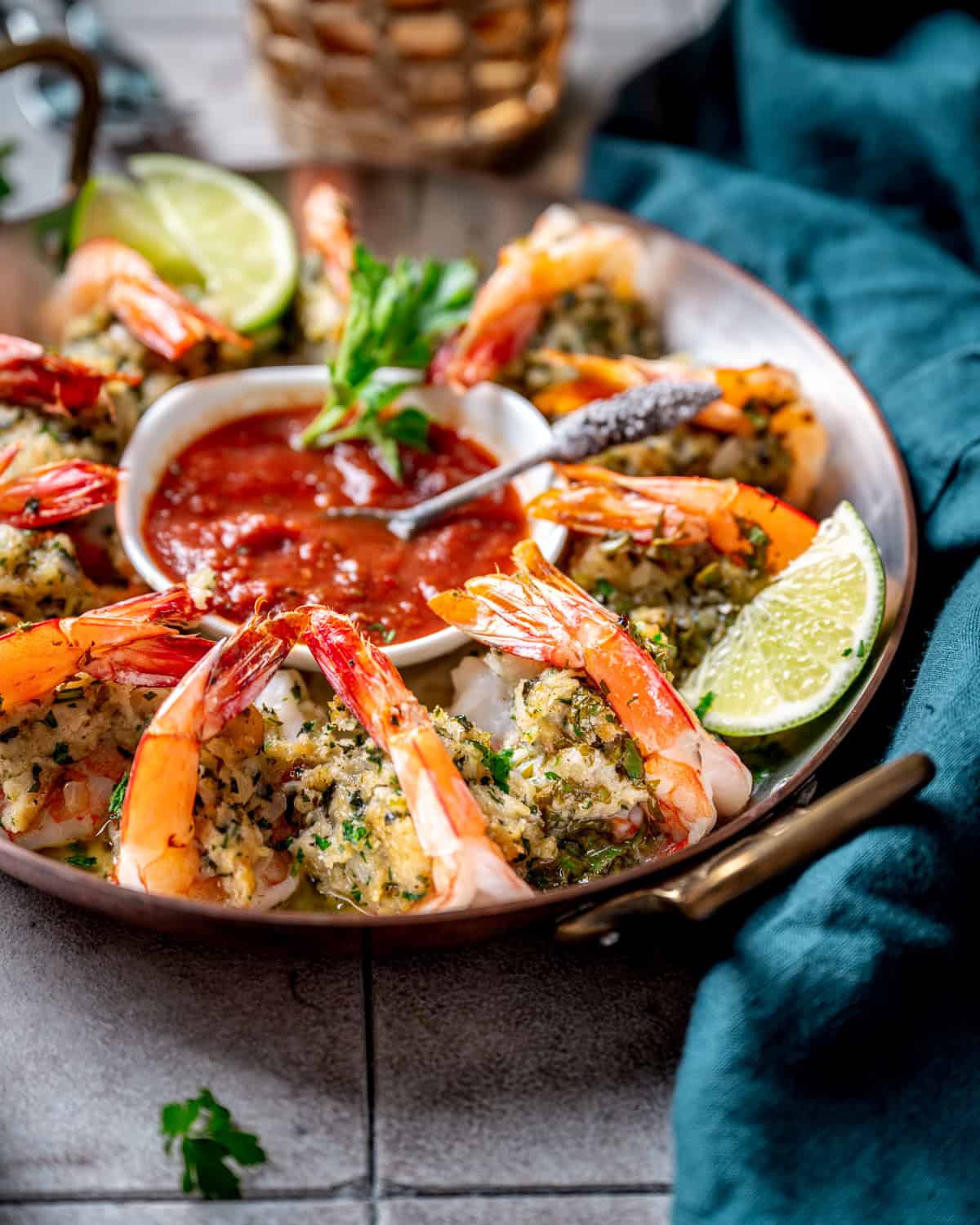
- Preheat your oven to 450°F. Once the stuffing is cool enough to touch, take a generous spoonful and press it onto the butterflied shrimp, tucking it under the tail. The tail should arch over the stuffing like a little handle. Repeat with all 12 shrimp, dividing the stuffing evenly.
Bake the Shrimp
- Place the baking dish into the preheated oven. Bake for 8 to 10 minutes depending on what size shrimp you have. You're looking for the shrimp to turn opaque and pink, and the stuffing to get lightly golden on top. If your shrimp are on the smaller side of jumbo, check at 8 minutes. Bigger ones can go the full 10. Don't overcook or the shrimp will be rubbery. When done, pull the dish out and set it aside.
Make the Lime Butter
- While the shrimp are baking, melt the remaining 5 tablespoons of butter in a small sauce pot over medium-low heat. Once it's fully melted, stir in the lime juice and a small pinch of kosher salt. Keep it warm but don't let it boil.
- As soon as the shrimp come out of the oven, spoon or pour the lime butter generously over each one. It should pool around the shrimp and soak into the stuffing.
Plate and Serve
- Transfer the shrimp to a serving platter or divide them among individual plates. Sprinkle the minced parsley over the top for color and a fresh hit of flavor. Serve immediately while the butter is still glossy and the shrimp are hot.
How to Know It's Done
Shrimp are unforgiving when overcooked, so you need to watch for the right cues instead of just trusting the timer.
- Visual check: The shrimp should be opaque and pink all the way through. If you see any translucent gray areas, they need more time. The flesh should look firm but not tight or shriveled. Overcooked shrimp curl into tight little C-shapes and feel rubbery when you poke them.
- Stuffing color: The top of the stuffing should be lightly golden, with some darker crispy bits around the edges. If it's still pale, give it another minute. If it's dark brown, you went too far.
- Internal temp: If you want to be precise, shrimp are done at 120°F internal temp. But by the time you temp them, they're probably overcooked. Better to rely on visual cues.
- Texture: The shrimp should feel springy when you press them gently with a fingertip. If they're mushy, they're undercooked. If they're hard, they're overdone.
Trust the 8 to 10 minute range and pull them when the shrimp just turn opaque. Carryover heat will finish the job. You can always pull one out and cut into it and put the dish back in the oven if they aren't quite ready.
Variations and Swaps
Spicy version: Add red pepper flakes to the stuffing or drizzle the finished shrimp with chili oil instead of plain lime butter. Calabrian chili paste stirred into the stuffing gives it a smoky, fruity heat.
Meat additions: Add some Spanish chorizo, pancetta, or a cured ham to the stuffing mix to add even more flavor and body to the dish.
Crab-stuffed shrimp hybrid: Mix fresh lump crabmeat into the stuffing along with the breadcrumbs. Use about ½ cup and reduce the amount of baguette slightly so it doesn't get too dense.
Lemon instead of lime: Swap lime zest and juice for lemon juice and zest if that's what you have. The flavor is brighter and slightly more floral. Add a pinch of lemon zest to the finishing butter too.
Herb swaps: No basil? Use all parsley and add fresh thyme or oregano. Dill works if you want a more Mediterranean vibe. Cilantro and a squeeze of orange juice gives it a Latin vibe.
Gluten-free: Replace the panko and baguette with gluten-free breadcrumbs or crushed gluten-free crackers. The texture will be slightly different but it'll still work.

Storage
Stuffed shrimp don't store as well as you'd hope, but here's how to handle leftovers if you have them.
How to store leftover Stuffed Shrimp:
- Let the shrimp cool completely, then transfer them to an airtight container. They'll keep in the refrigerator for up to 2 days. The stuffing will lose its crunch and the shrimp will firm up, but they're still edible.
How to reheat leftover Stuffed Shrimp:
- Preheat to 350°F, place the shrimp on a baking sheet, and cover loosely with foil. Heat for about 8 minutes until warmed through.
Can you freeze leftover Stuffed Shrimp?
- Not recommended. Shrimp will get mealy and the stuffing turns mushy when frozen and thawed. If you absolutely have to freeze them, do it before baking. Stuff the raw shrimp, freeze them on a tray until solid, then transfer to a freezer bag. Bake from frozen, adding 3 to 5 minutes to the cook time.
Stuffing storage: If you made extra stuffing, store it separately in the fridge for up to 3 days. You can use it to top fish fillets, chicken breasts, or stuff mushrooms.

Leftover Transformations
If you somehow have leftover stuffed shrimp and don't want to just reheat them, here's how to repurpose them into something new.
Shrimp and stuffing salad: Chop the shrimp and stuffing into bite-sized pieces. Toss with arugula, cherry tomatoes, and a lemon vinaigrette.
Shrimp pasta: Remove and discard the stuffing from the shrimp, chop the shrimp and toss into hot pasta with olive oil, garlic, and red pepper flakes. Top with Parmesan and fresh herbs.
Shrimp grain bowl: Slice the shrimp and serve over quinoa or farro with roasted vegetables, avocado, and a squeeze of lime. The stuffing can be crisped up in the oven and crumbled on top as a crunchy garnish.
Top Tips from the Pros
- Dry your shrimp as much as you can. Pat them with paper towels multiple times. Wet shrimp won't brown and the stuffing will slide off. If you have time, leave them uncovered in the fridge for 30 minutes after butterflying to air-dry the surface.
- Don't skip the stock in the stuffing. It keeps the bread moist and adds savory depth. If you use all butter and no liquid, the stuffing will be greasy and dense.
- Taste the stuffing before you stuff. It should be well-seasoned on its own because the shrimp are only lightly salted but always check the stuffing and add more salt to taste before stuffing the shrimp.
- Pack the stuffing on tight. It won't fall off if you press it firmly onto the butterflied shrimp and tuck it under the tail.
- Use a spoon to baste. Pouring the lime butter straight from the pot can be messy. Use a large spoon to drizzle it slowly over each shrimp so it soaks in instead of running off into the pan.
- Serve immediately. Stuffed shrimp are best right out of the oven when the butter is still glossy and the stuffing has a little crunch. They don't hold well.
- Make components in advance. Professional kitchens prep and butterfly the shrimp hours ahead, keep the cooked stuffing in the fridge, then stuff and bake to order. You can do the same if you're hosting a party. Just don't bake them until you're ready to serve.
Serving Suggestions: What to Serve with Stuffed Shrimp
These stuffed shrimp work as either an impressive appetizer or a main course, depending on how you plate and what you serve alongside them.
- As an appetizer: You can arrange all the shrimp on a large platter family-style and let guests help themselves. Or serve 2 to 3 shrimp per person on small appetizer plates with a wedge of lime and a small pile of fresh arugula or watercress. The peppery greens cut through the richness.
- As a main course: Plan on 3-4 shrimp per person and serve family-style on a large platter in the center of the table. Pair with simple sides and let the shrimp be the star. A light arugula salad with lemon vinaigrette, roasted or sautéed asparagus or broccolini, garlic mashed potatoes, creamy polenta, or a simple risotto all work well. Crusty bread for soaking up the extra lime butter is a pretty good idea!

What Wines to Drink with Italian Herb Stuffed Shrimp
This dish is rich, garlicky, and citrus-forward, so you want a drink a wine that cuts through the butter without overpowering the herbs.
Wine Pairings: Go for something crisp and acidic. Vermentino, Albariño, or unoaked Chardonnay all work. The acidity balances the richness and the minerality plays well with the seafood. Avoid anything too oaky or buttery because it'll clash. You can also do a dry riesling, Italian or Spanish rosè, or a white Burgundy.
Sparkling wine: Prosecco or Cava are perfect, especially if serving these shrimp as an appetizer. The bubbles cut through the fat and the slight sweetness complements the lime. Plus it feels fancy, which matches the vibe of the dish.
Other Drink Pairing Options
Cocktails: A classic gin and tonic with a lime wedge is shockingly good here. The botanical notes in the gin echo the fresh herbs and the tonic adds a bitter edge that balances the butter. A Paloma (tequila, grapefruit, lime, soda) also works if you want something citrus-forward.
Beer: If you're a beer person, go with a crisp lager, a fruited beer, or a Belgian witbier. Nothing too hoppy or heavy. You want carbonation and a clean finish.
Non-alcoholic: Sparkling water with a big squeeze of lime and a sprig of basil mimics the flavor profile of the dish and keeps your palate fresh between bites.
FAQ
Shrimp Oregonata, which is probably more Italian-American than anything, but it is classic and well known. It is basically a shrimp dish with lots of breadcrumbs, butter, wine, and, of course, oregano. This baked dish can also have a number of other ingredients, but it's generally a saucier and less obvious "stuffed" shrimp preparation.
It can improve the texture of the shrimp as well as the flavor, but it is definitely an optional step. If doing this, submerge a pound of shrimp in very cold water in which you dissolved ¼ teaspoon of baking soda. 15 minutes later, remove the shrimp, rinse them with cold water and dry them well before seasoning or cooking.
Technically you don't and on very small shrimp it's nearly impossible. But you absolutely should when you can. That's the shrimp's organs and also digestive tract, and no one really wants to be eating that *stuff*, if you get our drift here...
This absolutely depends on the cooking technique. Some take longer and some shorter. But for this recipe, we are baking large shrimp that are butterflied so the time will be 8-10 minutes.
Related
Looking for more dinner party ideas like this? Try these:


Pairing
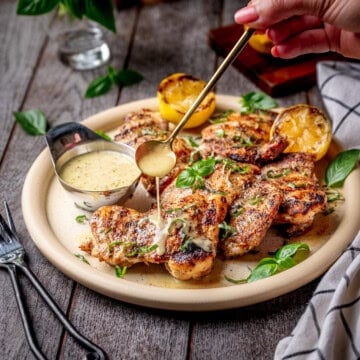
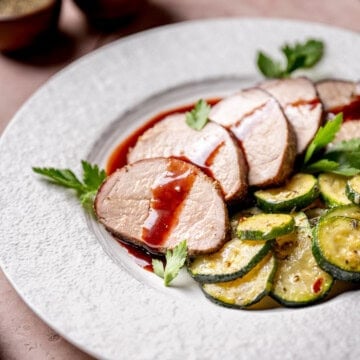
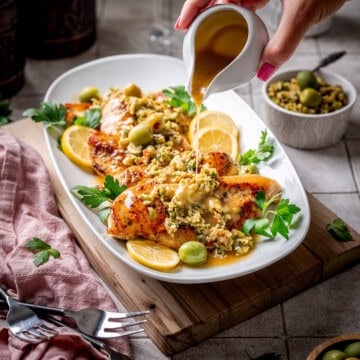
These are my favorite main dishes to serve with this Italian Herb Stuffed Shrimp appetizer:

📖 Recipe

Baked Italian Herb Stuffed Shrimp with Lime Butter
Equipment
- Sharp paring knife or kitchen shears, to butterfly the shrimp
- large skillet to cook the stuffing
- Baking dish (9"x13" or similar) or cast iron skillet
- Small sauce pot to melt the lime butter
- Microplane or zester, to zest the lime
Ingredients
For the Shrimp
- 12 Jumbo 10-16 per pound shrimp, tail on, shells and head removed
- pinch of salt
For the Stuffing
- 3 Tablespoons unsalted butter
- ¼ cup onion finely chopped
- 2 cloves garlic minced
- ½ cup low-sodium vegetable stock
- ½ teaspoon kosher salt
- Pinch black pepper
- 1 Tablespoon parsley rough chopped
- 2 Tablespoons basil rough chopped
- 2 limes zest only
- 1 Tablespoon panko breadcrumbs
- 4 inch piece of baguette torn into small pieces
For the Lime Butter
- 5 tablespoon unsalted butter
- Juice of 1 lime
- pinch of salt
Garnish
- 1 Tablespoon parsley finely chopped for garnish
- Lime wedges optional for serving

Instructions
Prepare the Shrimp
- Spray a baking dish with nonstick spray. Rinse the shrimp under cold water and pat completely dry with paper towels. Use a paring knife to make a shallow cut along the back of the shrimp and pull out the vein if not already deveined.12 Jumbo, pinch of salt
- Now comes the butterflying: make a deeper cut along the same line, going about ¾ of the way through the shrimp from the head end almost to the tail. Don't cut all the way through. Gently press the shrimp flat with your hand so it opens like a book. The tail should naturally loop up and over the body. Do this to all 12 shrimp and arrange them in the prepared baking dish with some space between each. Sprinkle very lightly with a pinch of salt and set aside.
Make the Stuffing
- Heat a large skillet over medium heat and add 3 tablespoons of butter. Once it's melted and foamy, add the chopped onion. Cook for about a minute until it starts to soften. Add the minced garlic and cook for another 30 seconds until fragrant.3 Tablespoons unsalted butter, ¼ cup onion, 2 cloves garlic
- Next, pour in the vegetable stock, then add the salt, black pepper, rough chopped parsley and basil, lime zest, panko breadcrumbs, and torn baguette pieces. Stir everything together so the bread soaks up the liquid and butter. Keep stirring often and cook for about 10 minutes. The bread should soften and the mixture should look cohesive but not soupy. Remove from heat and transfer the stuffing to a bowl. Let it cool for at least 5 minutes so you can handle it without burning your fingers.½ cup low-sodium vegetable stock, ½ teaspoon kosher salt, Pinch black pepper, 1 Tablespoon parsley, 2 Tablespoons basil, 2 limes, 1 Tablespoon panko breadcrumbs, 4 inch piece of baguette
Stuff the Shrimp
- Preheat your oven to 450°F. Once the stuffing is cool enough to touch, take a generous spoonful and press it onto the butterflied shrimp, tucking it under the tail. The tail should arch over the stuffing like a little handle. Repeat with all 12 shrimp, dividing the stuffing evenly.
Bake the Shrimp
- Place the baking dish into the preheated oven. Bake for 8 to 10 minutes depending on what size shrimp you have. You're looking for the shrimp to turn opaque and pink, and the stuffing to get lightly golden on top. If your shrimp are on the smaller side of jumbo, check at 8 minutes. Bigger ones can go the full 10. Don't overcook or the shrimp will be rubbery. When done, pull the dish out and set it aside.
Make the Lime Butter
- While the shrimp are baking, melt the remaining 5 tablespoons of butter in a small sauce pot over medium-low heat. Once it's fully melted, stir in the lime juice and a small pinch of kosher salt. Keep it warm but don't let it boil.5 tbsp unsalted butter, Juice of 1 lime, pinch of salt
- As soon as the shrimp come out of the oven, spoon or pour the lime butter generously over each one. It should pool around the shrimp and soak into the stuffing.
Plate and Serve
- Transfer the shrimp to a serving platter or divide them among individual plates. Sprinkle the minced parsley over the top for color and a fresh hit of flavor. Serve immediately while the butter is still glossy and the shrimp are hot.1 Tablespoon parsley, Lime wedges
Notes
- Onion: Shallots work here as well
- Vegetable stock: Chicken stock can be used in place of veggie stock.
- Limes: Lemons are a good alternative
- How to store leftover Stuffed Shrimp: Let the shrimp cool completely, then transfer them to an airtight container. They'll keep in the refrigerator for up to 2 days. The stuffing will lose its crunch and the shrimp will firm up, but they're still edible.
- How to reheat leftover Stuffed Shrimp: Preheat to 350°F, place the shrimp on a baking sheet, and cover loosely with foil. Heat for about 8 minutes until warmed through.
- Can you freeze leftover Stuffed Shrimp?Not recommended. Shrimp will get mealy and the stuffing turns mushy when frozen and thawed. If you absolutely have to freeze them, do it before baking. Stuff the raw shrimp, freeze them on a tray until solid, then transfer to a freezer bag. Bake from frozen, adding 3 to 5 minutes to the cook time.
- Stuffing storage: If you made extra stuffing, store it separately in the fridge for up to 3 days. You can use it to top fish fillets, chicken breasts, or stuff mushrooms.
- Dry your shrimp as much as you can. Pat them with paper towels multiple times. Wet shrimp won't brown and the stuffing will slide off. If you have time, leave them uncovered in the fridge for 30 minutes after butterflying to air-dry the surface.
- Don't skip the stock in the stuffing. It keeps the bread moist and adds savory depth. If you use all butter and no liquid, the stuffing will be greasy and dense.
- Taste the stuffing before you stuff. It should be well-seasoned on its own because the shrimp are only lightly salted but always check the stuffing and add more salt to taste before stuffing the shrimp.
- Pack the stuffing on tight. It won't fall off if you press it firmly onto the butterflied shrimp and tuck it under the tail.
- Use a spoon to baste. Pouring the lime butter straight from the pot can be messy. Use a large spoon to drizzle it slowly over each shrimp so it soaks in instead of running off into the pan.
- Serve immediately. Stuffed shrimp are best right out of the oven when the butter is still glossy and the stuffing has a little crunch. They don't hold well.
- Make components in advance. Professional kitchens prep and butterfly the shrimp hours ahead, keep the cooked stuffing in the fridge, then stuff and bake to order. You can do the same if you're hosting a party. Just don't bake them until you're ready to serve.
Nutrition

Leave a Reply