
A lot of people think they hate beets because they've only had them boiled, canned, or pickled. But roasted beets are a completely different animal. They turn sweet, earthy, and look stunning on a plate. The flesh gets tender without going mushy.
Pair them with honey-spiked goat cheese whipped until it's as light as frosting, and a drizzle of aged balsamic vinegar and you've got a dish that looks like it came from a restaurant but requires almost zero technique.
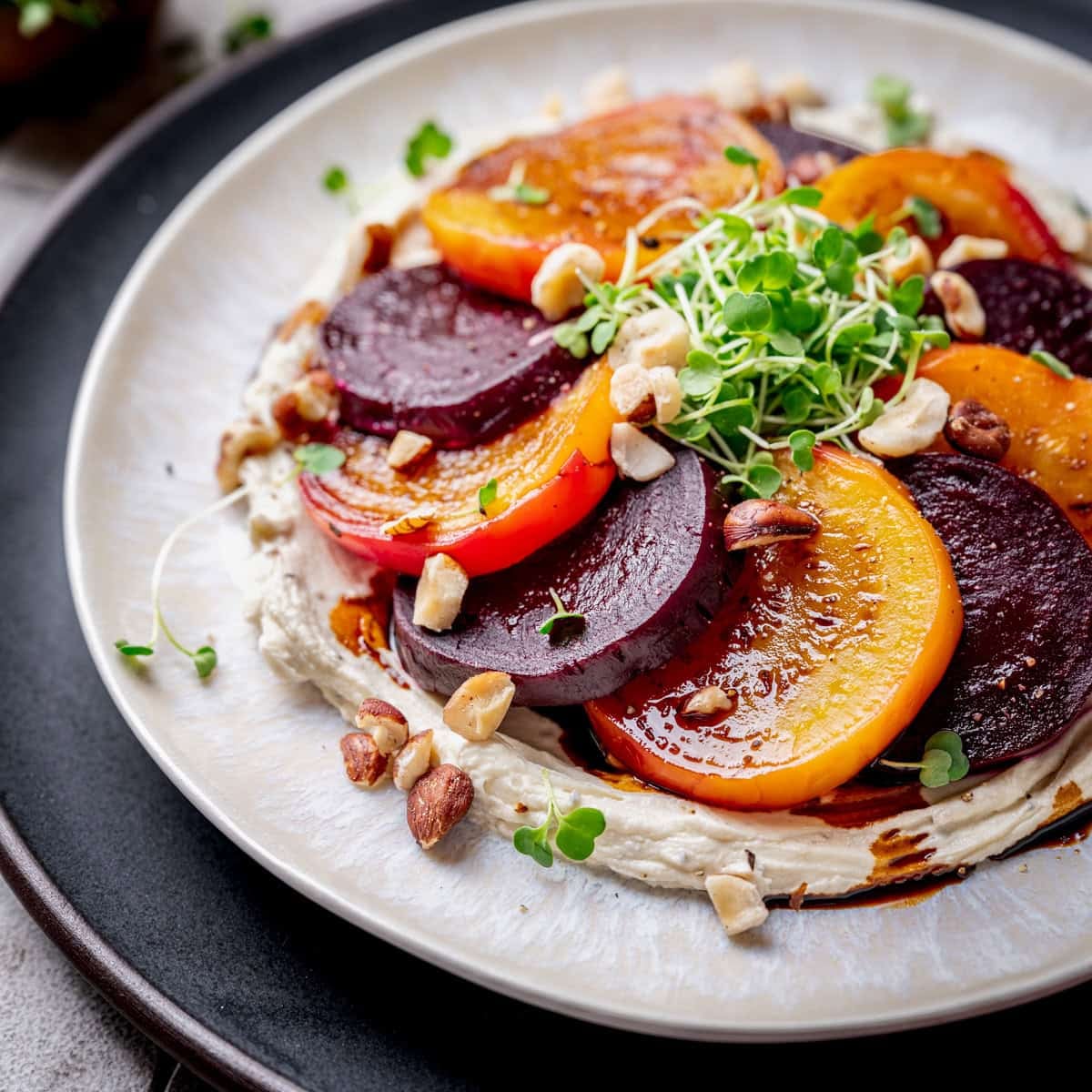
If you are a beet lover, then you'll adore this and if you don't…well give it a shot and maybe this is a game-changer!
Looking for more side dishes or appetizers like this? Try out our Whipped Ricotta with Pesto and Sun Dried Tomatoes.
Jump to:
- Why You'll Love this Recipe
- History of Beets and Goat Cheese
- Why This Recipe Works
- How to Make Roasted Beets with Whipped Goat Cheese
- Ingredients
- Equipment
- Step-by-Step Instructions
- How to Know It's Done
- Variations and Substitutions
- Storage
- Leftover Transformations
- Top Tips from the Pros
- What to serve with Roasted Beets
- What Wines To Drink with Roasted Beets
- Best Wines For Cooking (And When to Use Them)
- FAQ
- Related
- Pairing
- 📖 Recipe
Why You'll Love this Recipe
- The fresh beets are roasted, not boiled. Boiling leaches flavor and turns beets mushy. Roasting concentrates their sweetness and gives them a firmer, more satisfying texture.
- The foil packet method is foolproof. You don't need to check them constantly or worry about overcooking. Just set a timer and walk away.
- Whipped goat cheese is softer and more luxurious than crumbled. It spreads easily across the plate and coats each slice of beet instead of sitting in clumps.
- Honey and olive oil mellow out the goat cheese's sharpness. If you've ever found goat cheese too tangy or chalky, this method fixes that.
History of Beets and Goat Cheese
Beets have been cultivated for thousands of years, but they didn't start as the sweet root vegetable we know today.
Ancient Greeks and Romans grew them primarily for the beet greens, treating the roots as medicinal. But by the 19th century, beets had become very popular across Europe, especially in Eastern European and Scandinavian countries where they showed up in borscht, pickles, and hearty salads.
Goat cheese is one of the oldest cheeses in the world. France perfected the chèvre we know today, but variations exist across the Mediterranean, North Africa, and the Middle East.
The pairing of beets and goat cheese is a more modern invention, likely popularized by California cuisine in the 1980s when chefs started combining earthy root veggies with tangy cheeses. The contrast in flavor, texture, and color made it a natural fit and now it's a classic combination that shows up often.

Why This Recipe Works
Roasting beets in foil with a splash of water creates a mini steam environment that cooks them evenly without drying them out.
You're essentially steaming and roasting at the same time. The foil traps moisture, so the beets don't shrivel or develop tough spots. The high heat caramelizes their sugars, which intensifies their natural sweetness and adds depth. Wrapping red and golden beets separately is necessary so the red pigment doesn't bleed onto the golden ones and turn everything magenta.
The whipped goat cheese is outstanding when paired with the beets. Whipping it with olive oil, honey, and black pepper transforms it into something creamy, spreadable, and almost mousse-like. The olive oil loosens the texture and adds richness. The honey balances the goat cheese's natural tanginess. The black pepper adds a subtle bitterness and bite without being too significant.
The combination of sweet, earthy beets and creamy, tangy goat cheese is a dynamic flavor contrast using opposing but complementary tastes.
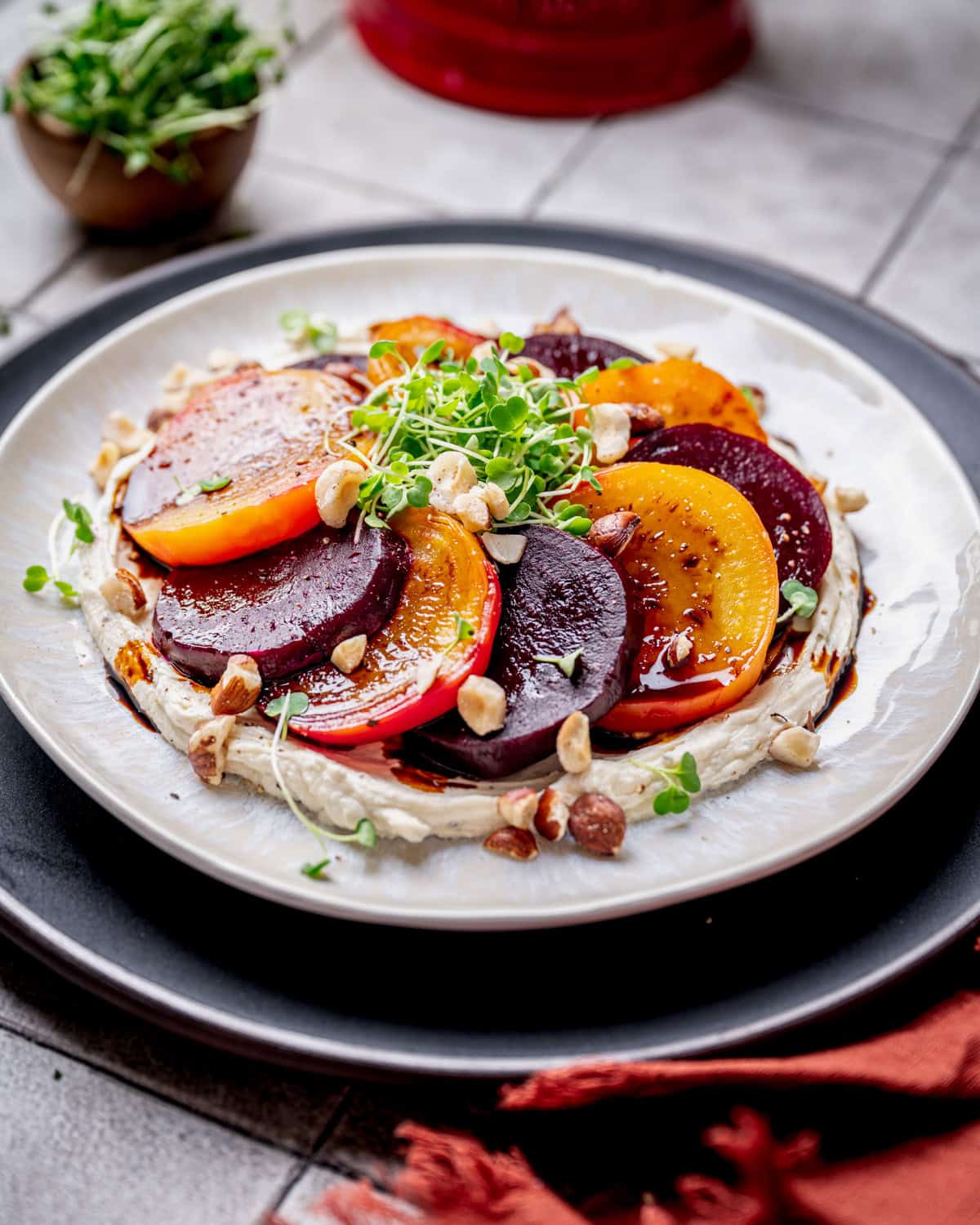
How to Make Roasted Beets with Whipped Goat Cheese
Simple ingredients can be better than complicated as long as you use the right ones. This is a great example! Just roast the beets and you can make the goat cheese while the beets are cooking. Then peel, slice and plate them for a stunning and delicious dish that pairs well with so many things!
Ingredients
Here is what you need to make this roasted beets recipe:
- Red beets: These are the stars of the show. Red beets are earthier and slightly more mineral-forward than golden beets. They also have the most dramatic color, which makes the final dish look stunning. Look for whole beets that are firm, smooth, and about the same size so they cook evenly. We generally buy smaller beets for this purpose (small to medium beets) as the large beets take a bit too long to roast.
- Yellow (golden) beets: Golden beets are milder and slightly sweeter than red beets. They don't stain like red beets, which is why they're wrapped separately.
- Goat cheese: This is the creamy, tangy base of the whipped topping. Fresh goat cheese (chèvre) is what you want, not aged or crumbly goat cheese. It should be soft, spreadable, and sold in a log or tub.
- Black pepper: Freshly cracked black pepper adds a subtle heat and complexity to the goat cheese.
- Extra virgin olive oil: This loosens the goat cheese so it whips smoothly and adds richness. Use a fruity, high-quality olive oil here since you're not heating it and you'll taste it.
- Aged Balsamic Vinegar: A drizzle of aged balsamic vinegar right before serving adds acidity and depth that cuts through the richness of the goat cheese and makes the beets taste even sweeter. Use the real deal balsamic vinegar from Italy for best requests. The bottle in the vinegar aisle labeled "balsamic glaze" is NOT recommended.
- Honey: Honey balances the goat cheese's tanginess and complements the sweetness of the beets.
- Flakey sea salt: Using a nice finishing salt is key here since there are very few ingredients.
- Toasted hazelnuts: Add texture and a nice nutty flavor that rounds out the dish. The little crunch goes a long way here.
- Microgreens (optional): Add some microgreens for a final touch.
See recipe card below for quantities.
Equipment
- Aluminum foil: You'll use it to wrap the beets tightly so they steam while they roast. Heavy-duty foil works best because it won't tear as easily when you're wrapping hot, awkward-shaped beets.
- A rimmed sheet tray: The foil packets can leak as the beets release moisture, so you want a pan with edges to catch any drips. A half-sheet pan is ideal, but any oven-safe tray with a lip will work.
- A food processor or whisk: The food processor makes the goat cheese light and fluffy in seconds, but if you don't have one, a bowl and a sturdy whisk will get you there with a little more elbow grease. Just make sure the goat cheese is at room temperature so it's easier to break down.
- A paring knife: You'll use it to peel the roasted beets once they're cool enough to handle. A vegetable peeler won't work here because the skins are too thin and slippery after roasting. A small, sharp knife gives you more control. Make sure you use a thin-bladed knife for best results.
- Disposable gloves (optional but a good idea): Beet juice stains everything it touches. If you don't want your hands stained, wear gloves when you peel them.

Step-by-Step Instructions
Prep and Roast the Beets
- Preheat your oven to 400°F.
- Wash the beets and cut off the tops and tail. Wrap the red beets tightly in foil with a teaspoon of water. Separately, wrap the yellow beets in the same manner. Place the aluminum foil packets on a foil-lined baking sheet or shallow baking dish (in case they leak) and place in the oven and roast beets for 60-75 minutes depending on their size.
Make the Whipped Goat Cheese
- While the beets roast, make the goat cheese. In a food processor or by hand with a whisk, add the goat cheese, pepper, olive oil, and honey and process until smooth. If the mixture is too tight add a little more olive oil until it is smooth and whipped. Taste and adjust with more honey or salt if needed.
Plate and Serve
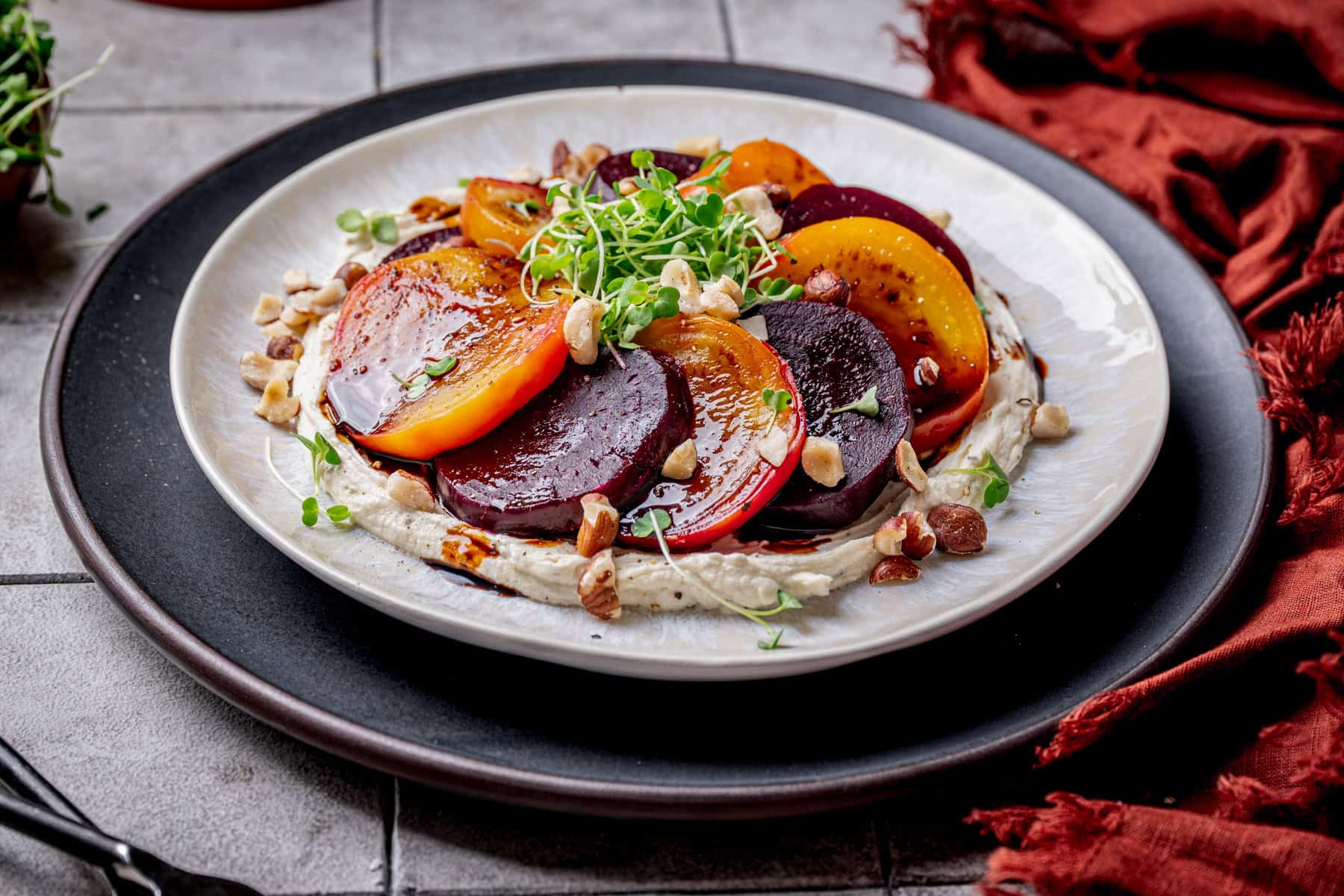
- When the beets are done, open the packs and let them sit until cool enough to handle. Wear gloves to prevent the beets from staining your hands and place a piece of parchment paper over your cutting board to prevent staining. Using a paring knife, peel the skins off of the beets. Put some of the whipped goat cheese mixture on a serving plate or individual serving dishes. Slice the beets to desired thickness (we like ¼" or so) and plate, alternating red with golden beets. Drizzle a few drops of aged balsamic vinegar over the beets and sprinkle with a little sea salt and serve!
- This dish is a great side dish served at room temperature, so don't stress if it sits for 10 or 15 minutes before you eat it. The flavors actually improve as everything settles.
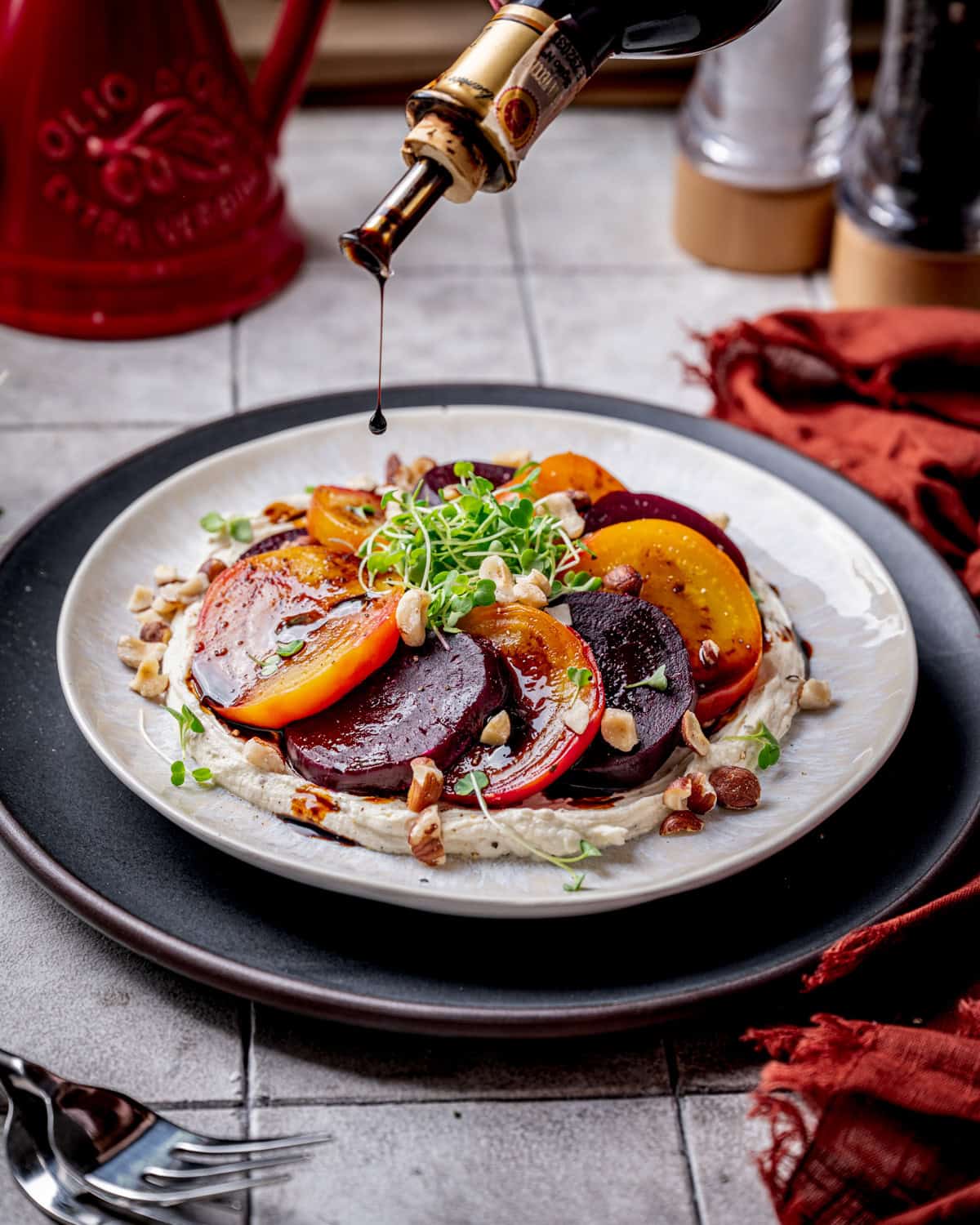
How to Know It's Done
The only way to tell if beets are fully cooked is to test them with a knife as follows: Insert a paring knife or a toothpick into the thickest part of the beet. It should slide through with zero resistance, like you're piercing soft butter. If you feel any drag or toughness, the beets need more time. Check them every 10 minutes after the 60-minute mark until they're tender.
When you peel the beets, the skins should slip off with almost no effort. If you have to scrape aggressively or the skins stick, that's another sign they're undercooked. Pop them back in the oven for another 10 to 15 minutes, reseal the foil, and test again.
The whipped goat cheese is done when it's smooth, creamy, and holds soft peaks. If it looks curdled or grainy, add a little more olive oil and keep processing. If it's too loose and runny, it just means you added too much oil. You can stir in a tablespoon of extra goat cheese to thicken it back up.
Variations and Substitutions
- Use all red beets. If you can't find golden beets, just use six red beets instead. The dish will be monochromatic, but it'll still taste great. You can also use all golden beets to reduce the red staining. Roasted golden beets are more mild and sweeter and are a great option for people who dislike the very earthy flavor of red beets.
- Swap goat cheese for ricotta. Whipped ricotta is milder and creamier than goat cheese. Add a little lemon zest and salt to brighten it up. Blue cheese is also delicious with roasted beets for another cheese option.
- Add different nuts. Toasted pine nuts, pumpkin seeds, or hazelnuts add crunch and a nutty richness that complements both the beets and the cheese. If you have a nut allergy, swap out the nuts for sunflower seeds, pumpkin seeds or pine nuts. Or you can omit the nuts altogether and this dish will still be fantastic.
- Try different fresh herbs. Fresh thyme, dill, or mint all work well with beets. Chop them finely and either incorporate them into the goat cheese or sprinkle them over the finished dish.
- Add citrus. Orange or grapefruit segments add a bright, juicy contrast to the earthy beets. Add a few of them to the plate. Adding some orange zest or lemon zest is also a great addition to this dish.

Storage
How to store leftover roasted beets and whipped goat cheese:
- Store the roasted beets and whipped goat cheese separately in an airtight container in the fridge for up to 5 days.
- The whipped goat cheese will last for 4-5 days. It may firm up in the fridge, but it'll soften again at room temperature. If it looks a little separated, just stir it back together.
How to reheat leftover roasted beets:
- You don't necessarily need to reheat the beets because they are greet at room temp or even slightly chilled, but if you want to, it's quite simple. To reheat the beets, warm them gently in a 300°F oven for about 10 minutes.
- The goat cheese is best served at room temperature, so pull it out of the fridge 20 to 30 minutes before you plan to eat.
Can you freeze leftover roasted beets?
- This is not recommended for this dish.
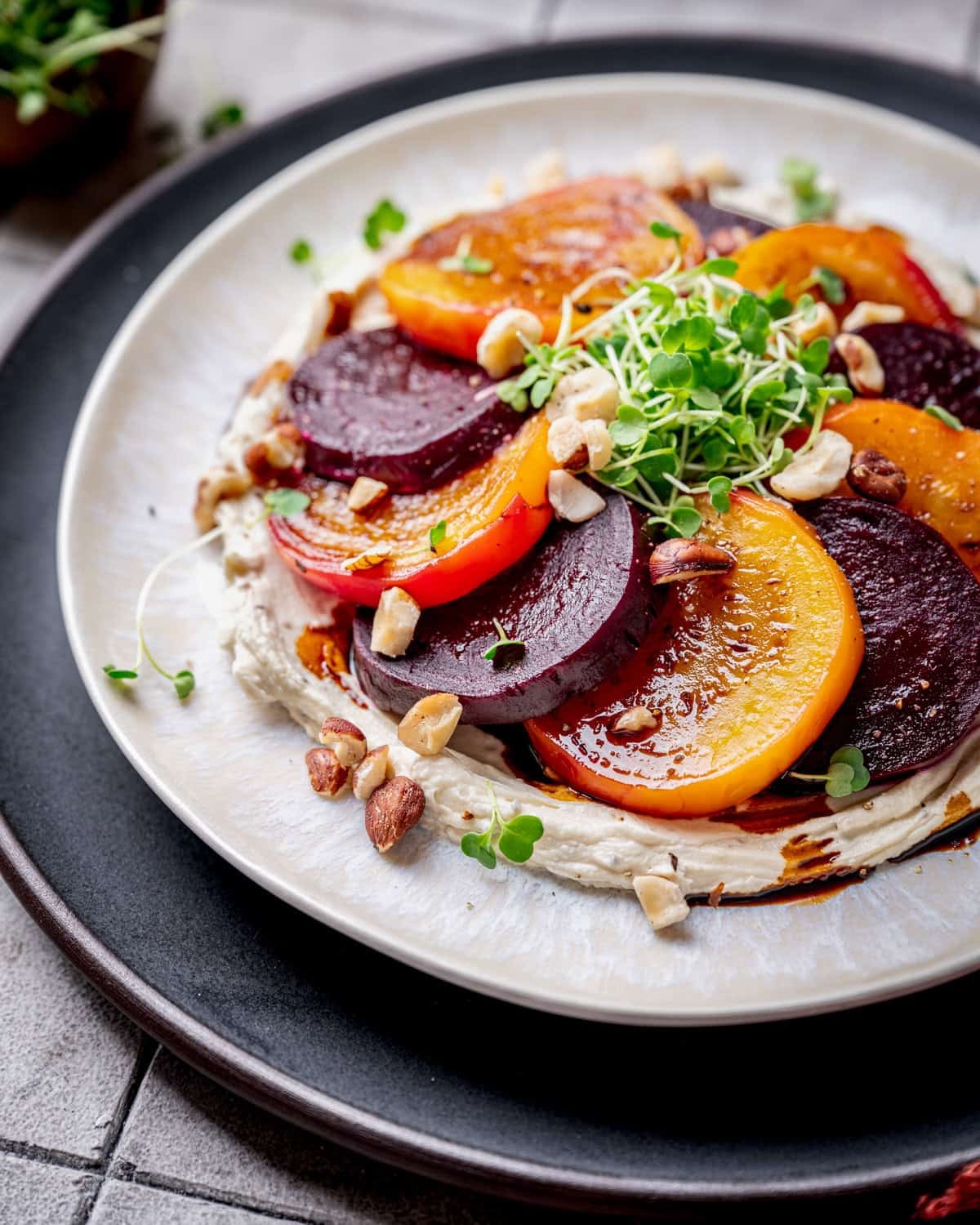
Leftover Transformations
This roasted beet recipe is incredibly versatile and leftovers can be repurposed into completely different dishes.
- Serve warmed beets on top of proteins such as chicken or pork.
- Toss them into salads with arugula, walnuts, and a lemon vinaigrette. A roasted beet salad is a fantastic way to use leftover beets.
- The whipped goat cheese can be spread on toast. You can even go extra and top the toast with smoked salmon and capers.
- If you have both beets and goat cheese left over, layer them in a jar with arugula and a simple vinaigrette for a grab-and-go snack.
Top Tips from the Pros
- Buy beets that are all the same size. This ensures they cook at the same rate. If you're stuck with a mix of sizes, wrap the smaller ones separately and pull them out of the oven earlier. Beets grow in very different sizes, so try your best to find ones that are close to the same size for best results.
- Don't skip the gloves. Beet juice will stain your hands, your cutting board, your dish towels, and anything else it touches.
- Let the beets cool before you peel them. If you try to peel them while they're scorching hot, you'll burn your hands and the skins won't slip off as easily. Ten to fifteen minutes is about right.
- Make the goat cheese ahead. You can whip the goat cheese up to two days in advance and store it in the fridge. Just let it come to room temperature before you serve it so it spreads easily.
- Taste the goat cheese as you go. Some goat cheese is tangier than others, so adjust the honey and olive oil to your preference. If it's too sharp, add more honey and if it needs a pinch of salt, add it.
What to serve with Roasted Beets
Roasted beets are the perfect side dish for a variety of mains. This dish pairs well with crusty bread, an arugula salad, roasted chicken, pork chops or grilled lamb.
What Wines To Drink with Roasted Beets
- Riesling. A nice German riesling is a great pairing for roasted beets. A touch of sweetness is welcome from the wine and this may be the best overall pairing.
- Rosé. A dry, mineral-driven rosé from Provence works beautifully, especially in warmer months. The acidity cuts through the goat cheese well.
- Sauvignon Blanc. New Zealand has the sauvignon blanc you want for this. The acidity balances the richness of the cheese, and balances the earthy beets.
- Merlot. For this dish, merlot is the best red wine pairing. The flavors just work perfectly together.
For non-alcoholic options, try a ginger beer or a sparkling water with a squeeze of lemon.
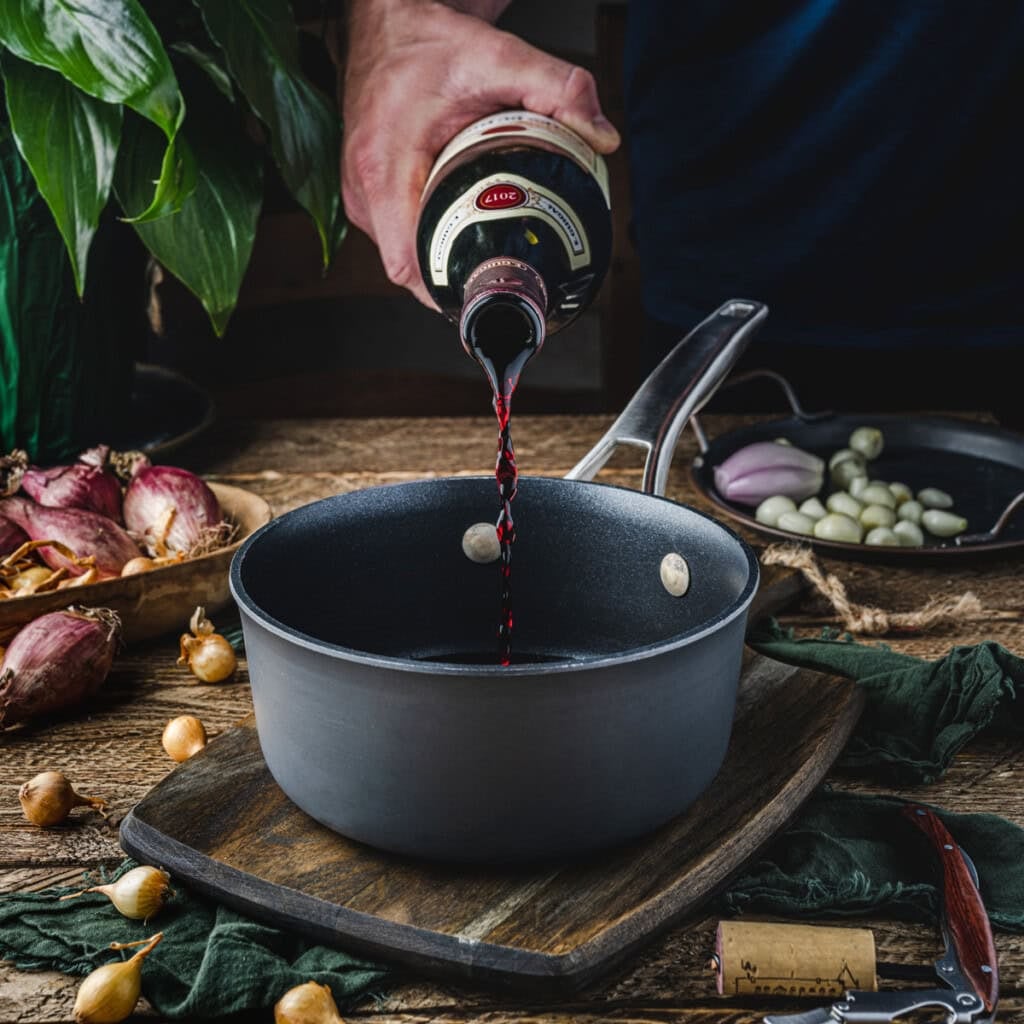
Read our Cooking with Wine Guide:
Best Wines For Cooking (And When to Use Them)
Wrong wine ruins the dish. These simple rules match each bottle to the right meal so you never waste money or flavor again.
FAQ
No. Roast them and peel them afterward. The peel comes off much easier after roasting so this is the best method.
It makes the cooking more even, allows for easier removal of the skins, and keeps any staining beet juice from leeching all over.
Yes. You can cook them too far and they don't keep their shape well. They'll get a bit mushy and they won't have a desirable texture. If this happens, you can blend the roasted beets into your goat cheese mixture for a beet and goat cheese dip or spread.
Related
Looking for other side dishes to complement your meal? Try these:



Pairing
These are our favorite main dishes to serve with these roasted beets:




📖 Recipe

Roasted Beets with Whipped Goat Cheese
Equipment
- Aluminum foil to wrap the beets
- sheet tray to roast the beets
- Pairing knife to peel the beets
- Food processor to whip the goat cheese
- Disposable gloves to prevent staining when peeling beets
Ingredients
- 3 red beets whole
- 3 yellow beets whole
- 4 ounces goat cheese
- ½ teaspoon black pepper
- 1 Tablespoon good extra virgin olive oil
- 2 teaspoons honey
- 1 teaspoon aged balsamic vinegar to drizzle for serving
- Toasted hazelnuts to sprinkle on top
- Microgreens optional for garnish
- Sea salt and cracked black pepper to taste

Instructions
Prep and Roast the Beets
- Preheat your oven to 400°F.
- Wash the beets and cut off the tops and tail. Wrap the red beets tightly in foil with a teaspoon of water. Separately, wrap the yellow beets in the same manner. Place the aluminum foil packets on a foil-lined baking sheet or shallow baking dish (in case they leak) and place in the oven and roast beets for 60-75 minutes depending on their size.3 red beets, 3 yellow beets
Make the Whipped Goat Cheese
- While the beets roast, make the goat cheese. In a food processor or by hand with a whisk, add the goat cheese, pepper, olive oil, and honey and process until smooth. If the mixture is too tight add a little more olive oil until it is smooth and whipped. Taste and adjust with more honey or salt if needed.4 ounces goat cheese, ½ teaspoon black pepper, 1 Tablespoon good extra virgin olive oil, 2 teaspoons honey
Plate and Serve
- When the beets are done, open the packs and let them sit until cool enough to handle. Wear gloves to prevent the beets from staining your hands and place a piece of parchment paper over your cutting board to prevent staining. Using a paring knife, peel the skins off of the beets. Put some of the whipped goat cheese mixture on a serving plate or individual serving dishes. Slice the beets to desired thickness (we like ¼" or so) and plate, alternating red with golden beets.
- Drizzle a few drops of aged balsamic vinegar over the beets and sprinkle with toasted hazelnuts, microgreens (optional), a little sea salt, cracked black pepper and serve!1 teaspoon aged balsamic vinegar, Toasted hazelnuts, Microgreens, Sea salt and cracked black pepper
- This dish is a great side dish served at room temperature, so don't stress if it sits for 10 or 15 minutes before you eat it. The flavors actually improve as everything settles.
Notes
- Use all red beets. If you can't find golden beets, just use six red beets instead. You can also use all golden beets to reduce the red staining mess. Roasted golden beets are more mild and sweeter and are a great option for people who dislike the very earthy flavor of red beets.
- Swap goat cheese for ricotta. Whipped ricotta is milder and creamier than goat cheese. Add a little lemon zest and salt to brighten it up. Blue cheese is also delicious with roasted beets for another cheese option.
- Add different nuts. Toasted pine nuts, pumpkin seeds, or pecans add crunch and a nutty richness that complements both the beets and the cheese. If you have a nut allergy, swap out the nuts for sunflower seeds, pumpkin seeds or pine nuts. Or you can omit the nuts altogether and this dish will still be fantastic.
- Add citrus. Orange or grapefruit segments add a bright, juicy contrast to the earthy beets. Add a few of them to the plate. Adding some orange zest or lemon zest is also a great addition to this dish.
- How to store leftover roasted beets and whipped goat cheese:
- Store the roasted beets and whipped goat cheese separately in an airtight container in the fridge for up to 5 days.
- The whipped goat cheese will last for 4-5 days. It may firm up in the fridge, but it'll soften again at room temperature. If it looks a little separated, just stir it back together.
- How to reheat leftover roasted beets:
- You don't necessarily need to reheat the beets because they are greet at room temp or even slightly chilled, but if you want to, it's quite simple. To reheat the beets, warm them gently in a 300°F oven for about 10 minutes.
- The goat cheese is best served at room temperature, so pull it out of the fridge 20 to 30 minutes before you plan to eat.
- Can you freeze leftover roasted beets?
- This is not recommended for this dish.
- Buy beets that are all the same size. This ensures they cook at the same rate. If you're stuck with a mix of sizes, wrap the smaller ones separately and pull them out of the oven earlier. Beets grow in very different sizes, so try your best to find ones that are close to the same size for best results.
- Don't skip the gloves. Beet juice will stain your hands, your cutting board, your dish towels, and anything else it touches.
- Let the beets cool before you peel them. If you try to peel them while they're scorching hot, you'll burn your hands and the skins won't slip off as easily. Ten to fifteen minutes is about right.
- Make the goat cheese ahead. You can whip the goat cheese up to two days in advance and store it in the fridge. Just let it come to room temperature before you serve it so it spreads easily.
- Taste the goat cheese as you go. Some goat cheese is tangier than others, so adjust the honey and olive oil to your preference. If it's too sharp, add more honey and if it needs a pinch of salt, add it.
Nutrition



Leave a Reply