
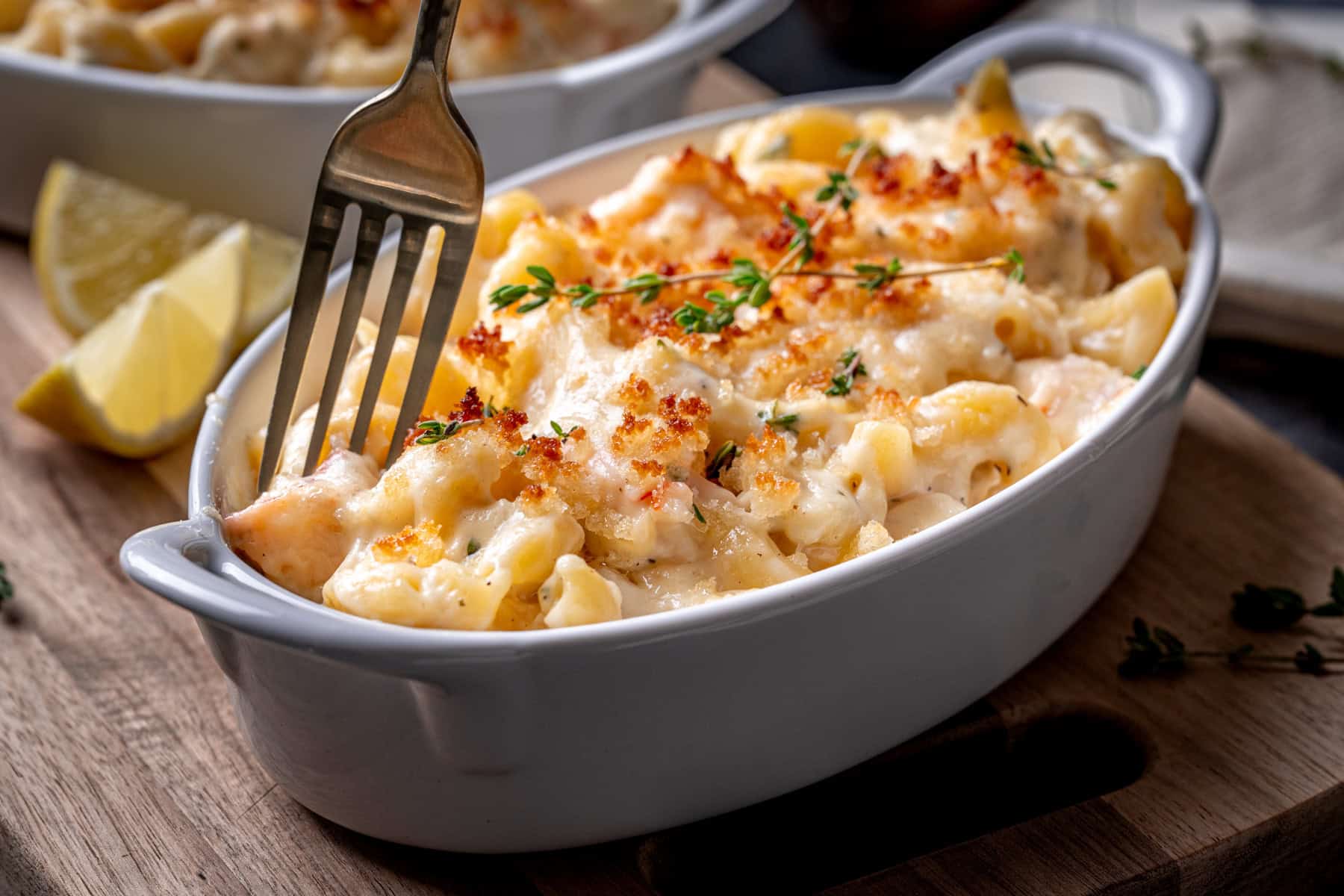
This decadent lobster and shrimp mac and cheese is one of those dishes that boggles the mind. It's comfort food dressed up in its fanciest clothes, the kind of thing that makes a Tuesday night feel like a celebration. Rich, creamy, indulgent, with sweet chunks of shellfish folded into a sauce that's simply amazing.
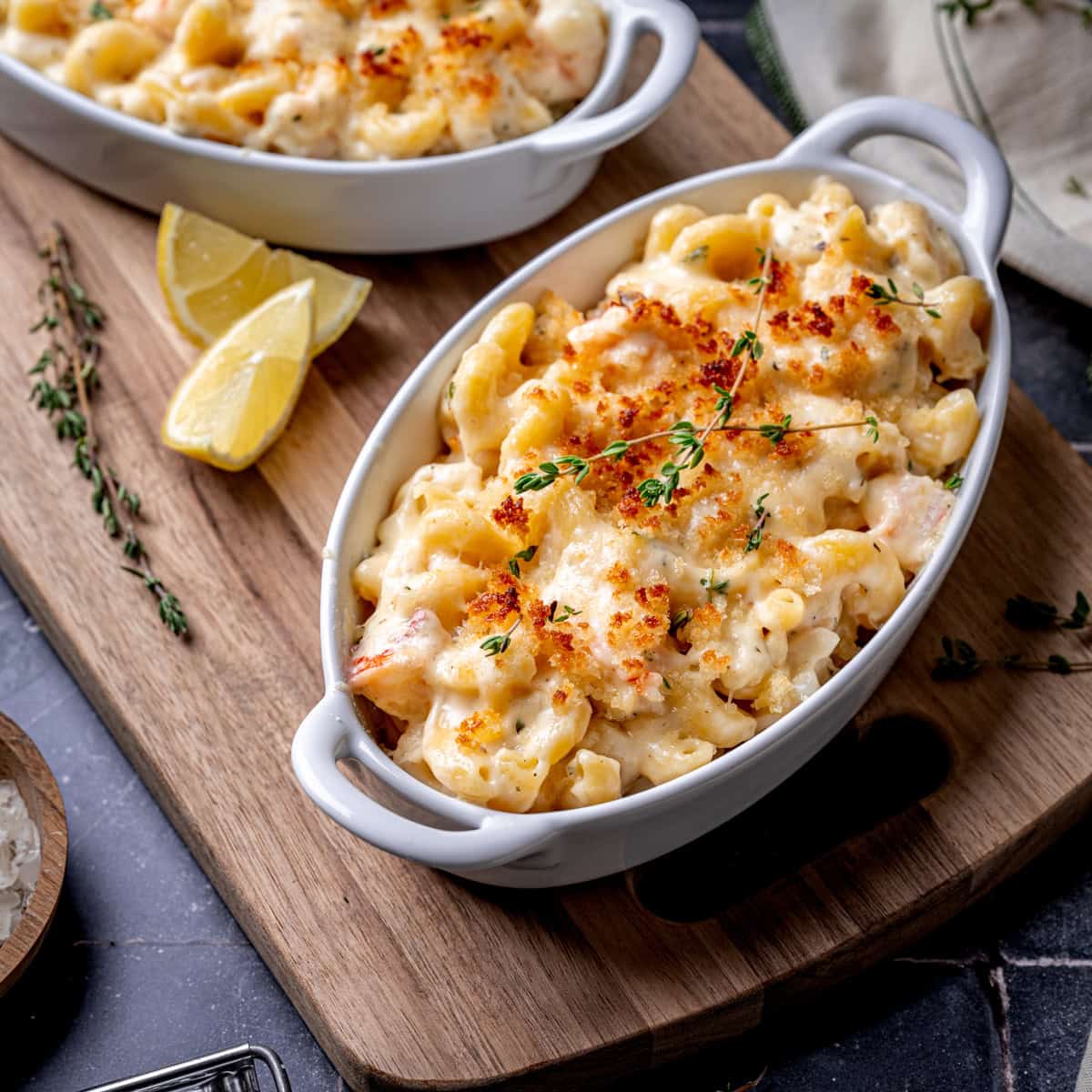
This version of a Lobster and Shrimp Mac and Cheese recipe isn't your average comfort food. Rich seafood meets a quadruple-cheese sauce with techniques that separate luxury from lazy. Save this one for your next dinner party.
This definitely is not the stuff from a box with seafood thrown on top. This is vermouth-poached lobster and shrimp with a triple-cheese mornay sauce with a touch of sherry and thyme, all of it crowned with buttery, crunchy panko crust and parmesan cheese. AND…It's very doable for a home cook.
Looking for more dishes like this? Here are more of our favorite comfort food recipes: Creamy Lobster Pasta with Champagne Sauce or Creamy Cajun Fettuccine Alfredo with Chicken and Shrimp.
Jump to:
- Why You'll Love this Recipe
- Seafood Mac and Cheese History and Origin
- Why This Recipe Works
- How to Make Lobster and Shrimp Mac and Cheese
- Ingredients
- Equipment
- Step-by-Step Instructions
- How to Know When It's Done
- Variations and Substitutions
- Storage
- Leftover Transformations
- Top Tips from the Pros
- What to serve with Lobster and Shrimp Mac and Cheese
- What Wines To Drink with Lobster and Shrimp Mac and Cheese
- FAQ
- Related
- Pairing
- 📖 Recipe
Why You'll Love this Recipe
- It is rich without being "heavy"
- Fantastic for a special occasion or date night, but easy enough to make anytime!
- The lobster and shrimp combination makes this fancy without breaking the bank.
- It doesn't take a ton of time or effort to make this stunning dish
- You can modify this dish with endless combinations of cheeses
Seafood Mac and Cheese History and Origin
Mac and cheese has been around since the 18th century, but the seafood version is a much more recent development. It likely emerged in coastal American cities during the late 20th century when chefs started playing with comfort classics and adding posh seafood ingredients to justify higher menu prices.
Lobster mac became a steakhouse staple, a way to turn a $4 pasta dish into a $38 indulgence. The addition of shrimp came later, stretching the seafood presence without completely destroying your grocery budget. Today, it's a mainstay at upscale, casual spots and brunch menus, but it translates beautifully to home kitchens if you respect the technique.
The key is treating the shellfish gently and building a sauce with enough backbone to support all that richness without turning into a bland mess. And, of course, not overcooking the pasta.
Why This Recipe Works
We gently poach the seafood in a spiced water bath that also has some dry vermouth. That step seasons the seafood and keeps it tender instead of rubbery.
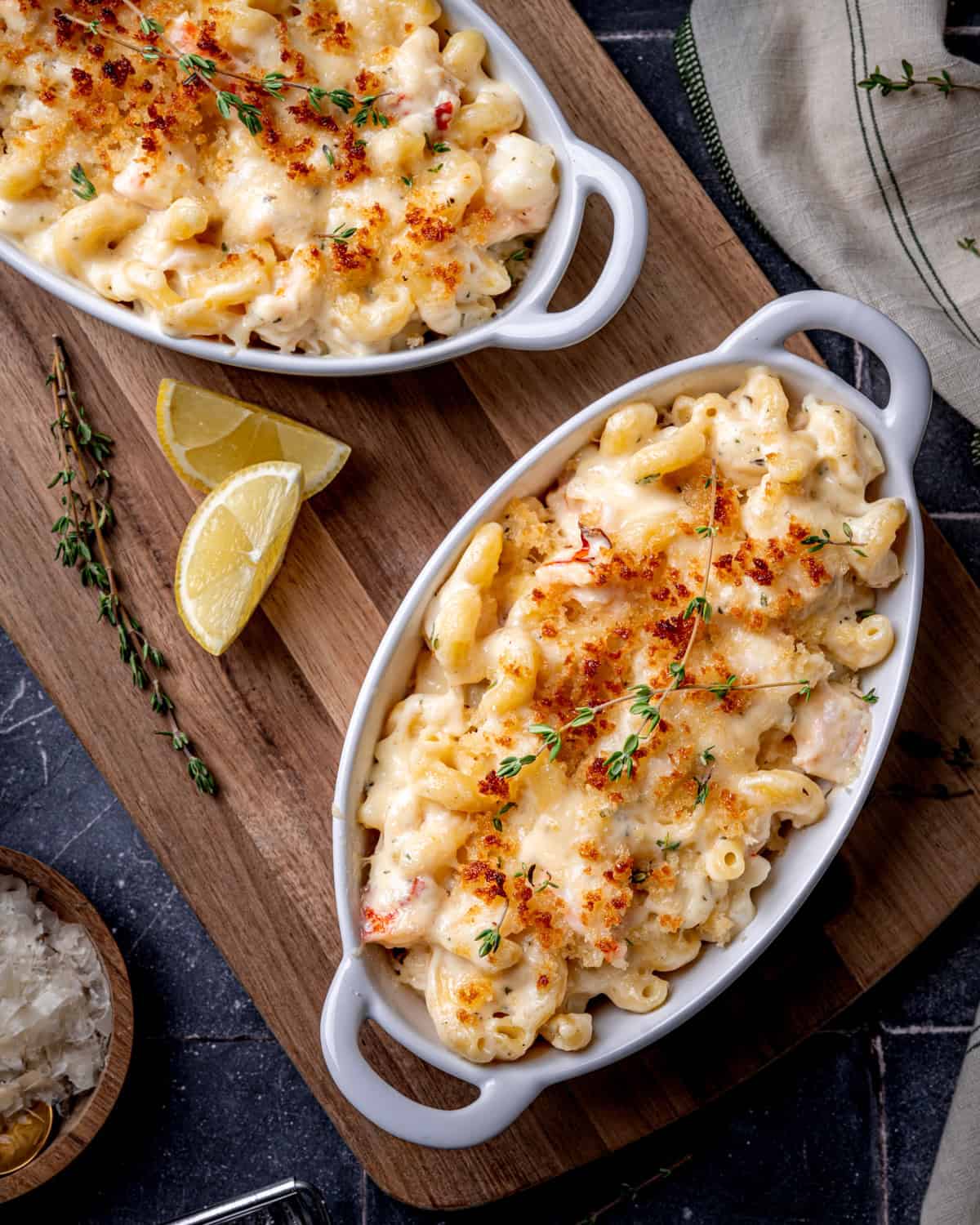
The creamy cheese sauce starts as a bechamel built on a shallot-wine reduction, which gives it a savory depth. You're deglazing with white wine and sherry before you even start the roux, layering flavor at every step. The blonde roux (not too dark, just cooked enough to lose the raw flour taste) thickens the cream without adding color.
Then there's the cheese mixture: fontina for melt, gruyere for nuttiness, mascarpone for silkiness, and parmesan for a salty finish. Each one plays a role. This combination creates a sauce that coats every piece of pasta and clings to the seafood without breaking or turning grainy.
The ice bath for the pasta stops carryover cooking so you don't end up with mushy noodles after the broiler step. And broiling individual portions instead of baking one giant casserole gives you control over texture and ensures that everyone gets some of the crispy topping, not just the corner pieces.
How to Make Lobster and Shrimp Mac and Cheese
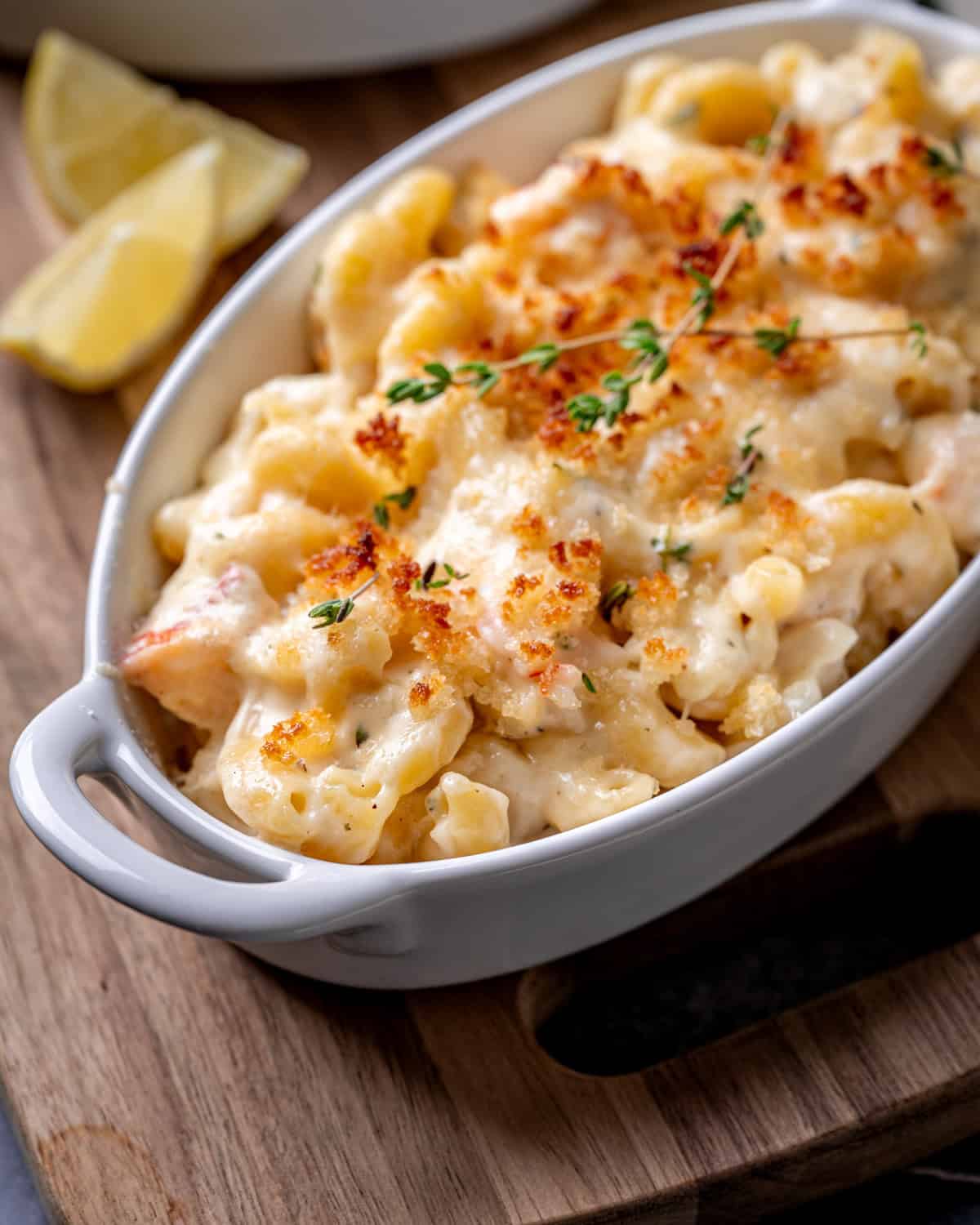
This really is a simple recipe and some steps can be done in advance. The pasta can be cooked and held as can the seafood. Building the sauce is a snap and then everything is mixed together and topped with panko and parmesan cheese. Into the broiler until the top is deep golden brown and you're there!
Ingredients
Here is what you need to make this recipe:
- Short tubed pasta: Shapes like cavatappi pasta, rigatoni or shells are perfect here. The ridges and hollow centers trap the cheese sauce instead of letting it slide off.
- Lobster tail (removed from shell): This is your star protein. Buy raw, not pre-cooked. Raw, flash frozen is a good option as well, just make sure you defrost in the fridge overnight before using in this recipe. Cooking it yourself in the poaching liquid keeps it tender and seasons it properly. If lobster's not something you can find or out of budget, you can use all shrimp and it'll still be fantastic.
- Medium shrimp (peeled and deveined): Medium size is key. Anything smaller disappears into the pasta. Anything larger takes too long to cook and can turn rubbery. Look for 31/40 or 41/50 count per pound at the seafood counter.
- Bay leaf, allspice berries, black peppercorns: These aromatics infuse the poaching liquid and subtly season the seafood from the inside. These spices add warmth and complexity without being obvious.
- Dry vermouth: This is what makes the poaching liquid interesting. Vermouth has herbal, slightly bitter notes that complement seafood better than plain water or even wine.
- Shallot: Shallots are sweeter and more delicate than onions. They build the base of the sauce without overpowering the seafood.
- Dry white wine and dry sherry: The wine deglazes and adds acidity to cut through all the cream and cheese. The sherry brings a nutty, almost savory richness. Don't use sweet sherry or the condiment labeled "cooking wine" in the vinegar aisle.
- Unsalted butter and all-purpose flour: This is your roux. Somewhat equal parts fat and flour create the thickening base for the béchamel. Unsalted butter lets you control the salt level. If you only have salted, cut the added salt in the recipe by half.
- Heavy cream: The backbone of the sauce. Heavy cream has enough fat to stay silky when you add cheese and won't break or curdle.
- Mustard powder: This is a classic mac and cheese secret weapon. It sharpens the flavor of the cheese and adds a subtle tang without tasting like mustard. If you don't have powder, use ½ teaspoon of Dijon, but add it with the cheeses, not the cream.
- Mascarpone: Italian cream cheese that's smoother, sweeter, and less tangy than American cream cheese. It makes the sauce insanely silky.
- Fontina, Gruyere, Parmesan: This triple threat is our favorite combo. Fontina melts like a dream and adds mild creaminess. Gruyere brings nutty, slightly sweet notes. Parmesan adds sharpness and salt. Grate them yourself from blocks. Pre-shredded cheese has anti-caking agents that make sauces grainy and weird. And use the real-deal parmigiano reggiano for best results.
- Fresh thyme: Earthy and aromatic without being overpowering. It pairs beautifully with seafood and cheese. Dried thyme works also (use 1 teaspoon), but fresh is our preference.
- Kosher salt and black pepper
- Panko breadcrumbs: Japanese breadcrumbs that stay crispier than regular breadcrumbs. Toasting them in butter before broiling gives them more flavor as well as makes the browning better when broiled.
- Lemon juice and fresh parsley or thyme for garnish: The acid from the lemon brightens everything right before serving. It cuts the richness and wakes up the seafood flavor. The herbs add color and a fresh finish.
See recipe card below for quantities.
Equipment
- Large pot for pasta: You need enough water to cook the pasta without crowding. A 6-quart pot minimum. If you're using something smaller, the pasta will stick and cook unevenly. This pot can also be used to make the cheese sauce base and should be big enough to add the pasta and seafood back in with the sauce to combine before adding to individual baking dishes or ramekins.
- Medium saucepan for poaching: Something with a lid that can hold the shellfish and poaching liquid comfortably. A 3 to 4-quart saucepan is perfect. If you don't have one, a deep skillet works.
- Whisk: You'll want a good whisk for the roux and béchamel. The whisk keeps lumps from forming as you add the cream.
- Oven-safe gratin dishes, ramekins or small baking dishes: Individual portions are our preference for this recipe. Individual gratin dishes or ramekins give you that restaurant presentation and ensure even broiling. If you only have one large baking dish, it'll still work.
- Baking sheet: To hold the ramekins under the broiler and catch any drips. Makes cleanup easier and keeps your oven from smoking.
- Small skillet for topping: Just for toasting the panko. Anything small works as long as you can stir the breadcrumbs without them flying everywhere.
Step-by-Step Instructions
Prepare the Pasta and Topping
- Bring a large pot of salted water to a boil, then add the pasta and cook per the package directions for al dente (no more than that). While the pasta is cooking, prepare a bowl of ice water to stop the pasta from continuing to cook once removed.
- When done, remove the cooked pasta and transfer to the ice water for a minute. Reserve a cup of pasta cooking water to use to thin out the béchamel if needed. Once the pasta has cooled, drain the pasta, transfer to a large bowl and set aside.
- For the topping, simply melt the butter in a small skillet over medium heat, then add the panko breadcrumbs and stir. Once the breadcrumbs have absorbed the butter and just start to get the slightest bit of a golden brown color, remove from the heat and set aside.
Poach the Lobster and Shrimp
- Add the bay leaf, allspice, peppercorns, and vermouth to a medium pot of water over medium heat until gently simmering. Reduce the heat to low, then add the lobster tails and poach for 2 minutes, then add the shrimp. Poach for an additional 4 minutes (6 total minutes). When done, the flesh should be opaque all the way through and it should have firmed up a bit without the tails curling tight. If it's not quite done, add it back into the simmering water for another 1-2 minutes until fully cooked.
- Transfer the cooked shrimp and lobster to a cutting board and cut the lobster meat and shrimp into manageable bite-sized pieces. Add the lobster and shrimp to the large bowl with the pasta while you make the sauce.
Prepare the Cheese Sauce Base
- In the same pot used to cook the pasta over medium heat, add the shallot, white wine, and sherry. Cook for several minutes until there is only about 2 teaspoons of liquid left.
- Next, add the butter and stir until melted. While whisking, slowly add the flour. Bring all of this together, making a roux. You want a blonde roux so keep the heat down and just cook until the smell of raw flour is gone but the mixture isn't brown. This will take just a few minutes. Slowly add the cream while whisking constantly and once combined whisk in the mustard powder, creating a béchamel sauce.
- Finally, stir in the fontina, gruyere and mascarpone cheeses, thyme, salt and pepper. Continue to stir until the cheeses are completely melted and you have a nice smooth sauce. If it seems too thick, add a little water to thin it out. You want the sauce to be thick and creamy but still saucy enough to coat the pasta and seafood.
Combine, Portion and Broil
- Add the cooked seafood and pasta to the large pot of warm cheese sauce and gently mix with a spatula to combine. The seafood and pasta will gently warm up once combined with the warm cheese sauce, but you can turn the heat up to low if the sauce cools down too much and doesn't stay smooth and creamy.
- Make sure the oven rack is positioned at the top of the oven with enough room for the baking dishes to fit and set the oven to broil.
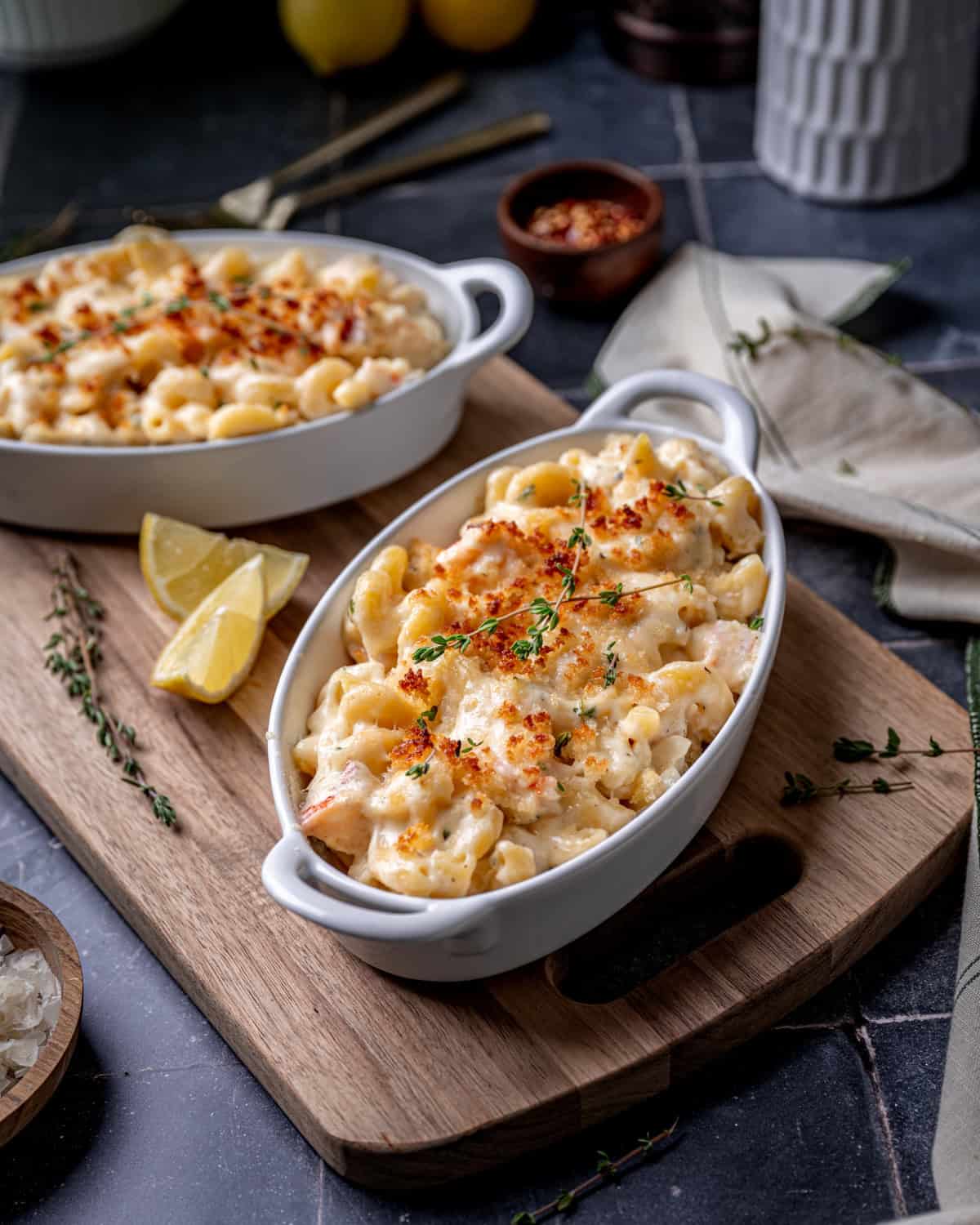
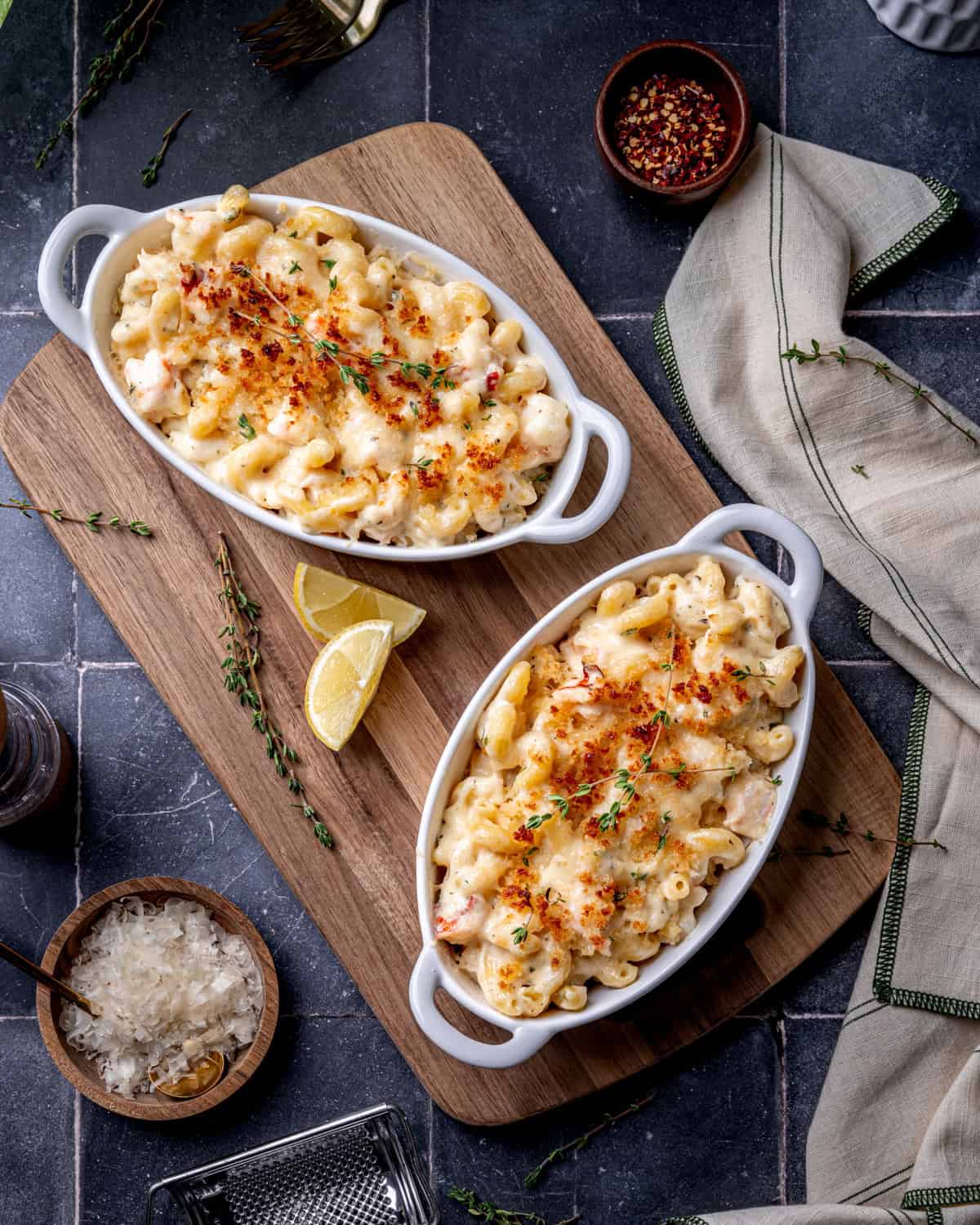
- Place the gratin dishes, ramekins or other oven-safe dishes on a baking sheet. Divide the pasta mixture among each of the dishes. Sprinkle the top with the parmesan cheese then the buttered, toasted breadcrumbs. Place in the oven for a couple minutes or so, keeping a close eye on the breadcrumb topping. Once nicely browned, remove immediately from the oven.
Garnish And Serve
- On each individual bowl, add a spritz of lemon juice and a sprinkle of parsley and/or thyme and serve.
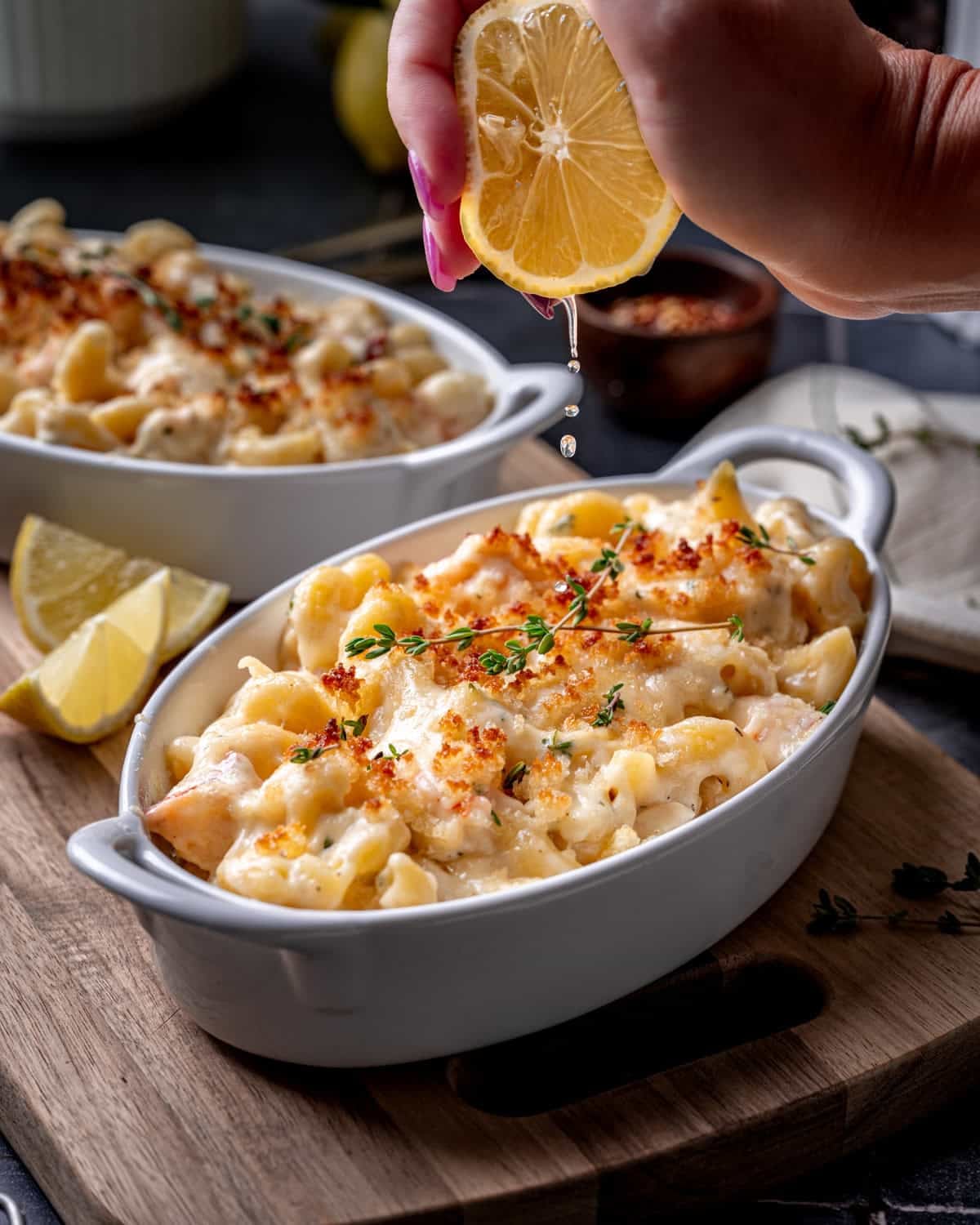
How to Know When It's Done
This dish has a few key checkpoints that tell you everything's on track.
- Pasta: It should be al dente when it comes out of the boiling water, with a slight firmness when you bite into it. If it's soft all the way through, you've overcooked it and it'll turn to mush under the broiler.
- Poached seafood: The lobster should be opaque and firm but not tight or curled into a ball. The shrimp should be pink and just cooked through, with a slight curve. If they're tightly curled into a very tight C-shape, they're overcooked. If they're still translucent in the center, give them another minute in the poaching liquid.
- Roux: Your blonde roux should smell nutty and toasted, not raw or doughy. It should be a pale golden color, not white and definitely not brown. If it smells like raw flour it's not done. If it's turning brown, you've gone too far and the sauce will taste bitter (not to mention how the mac and cheese will look!)
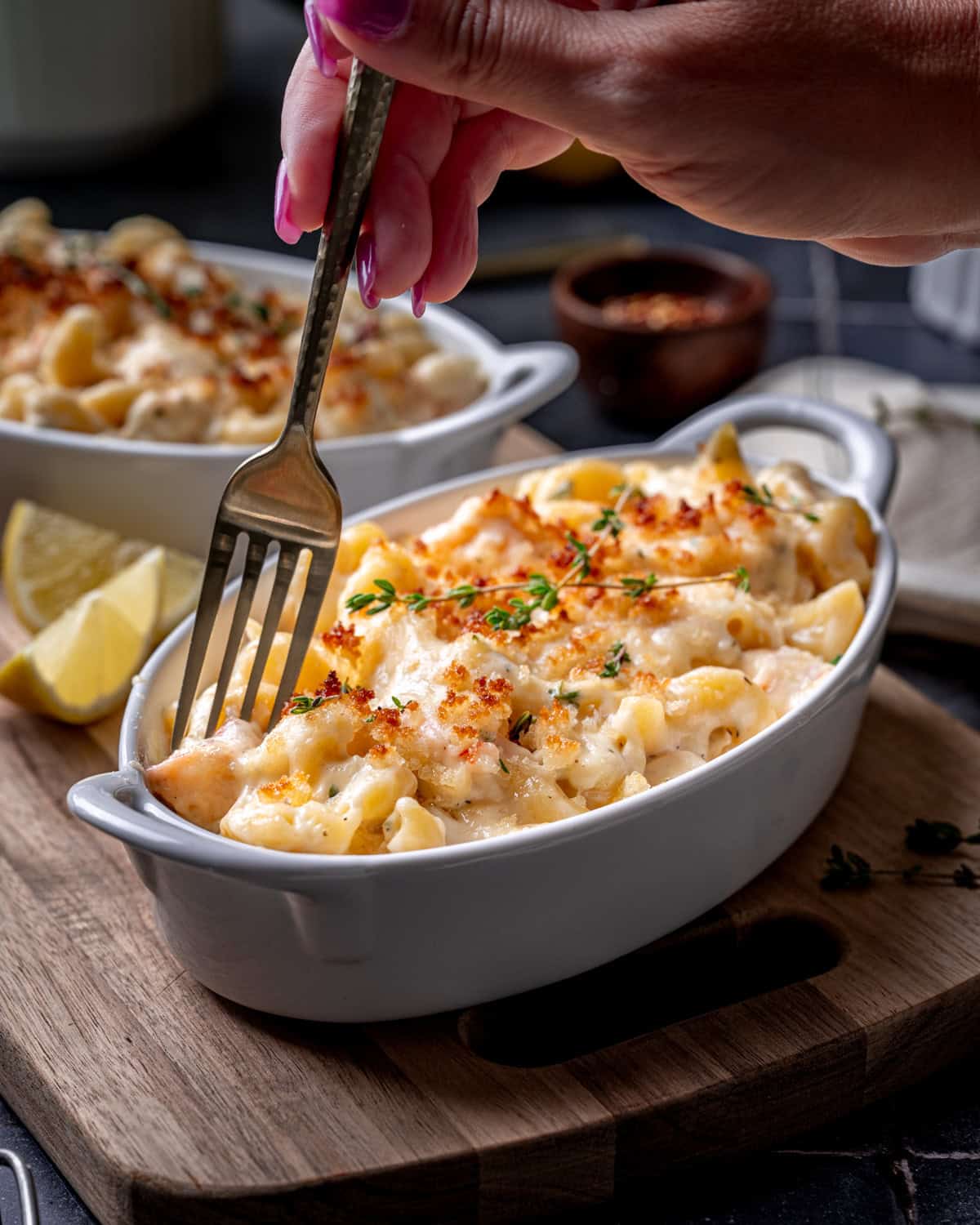
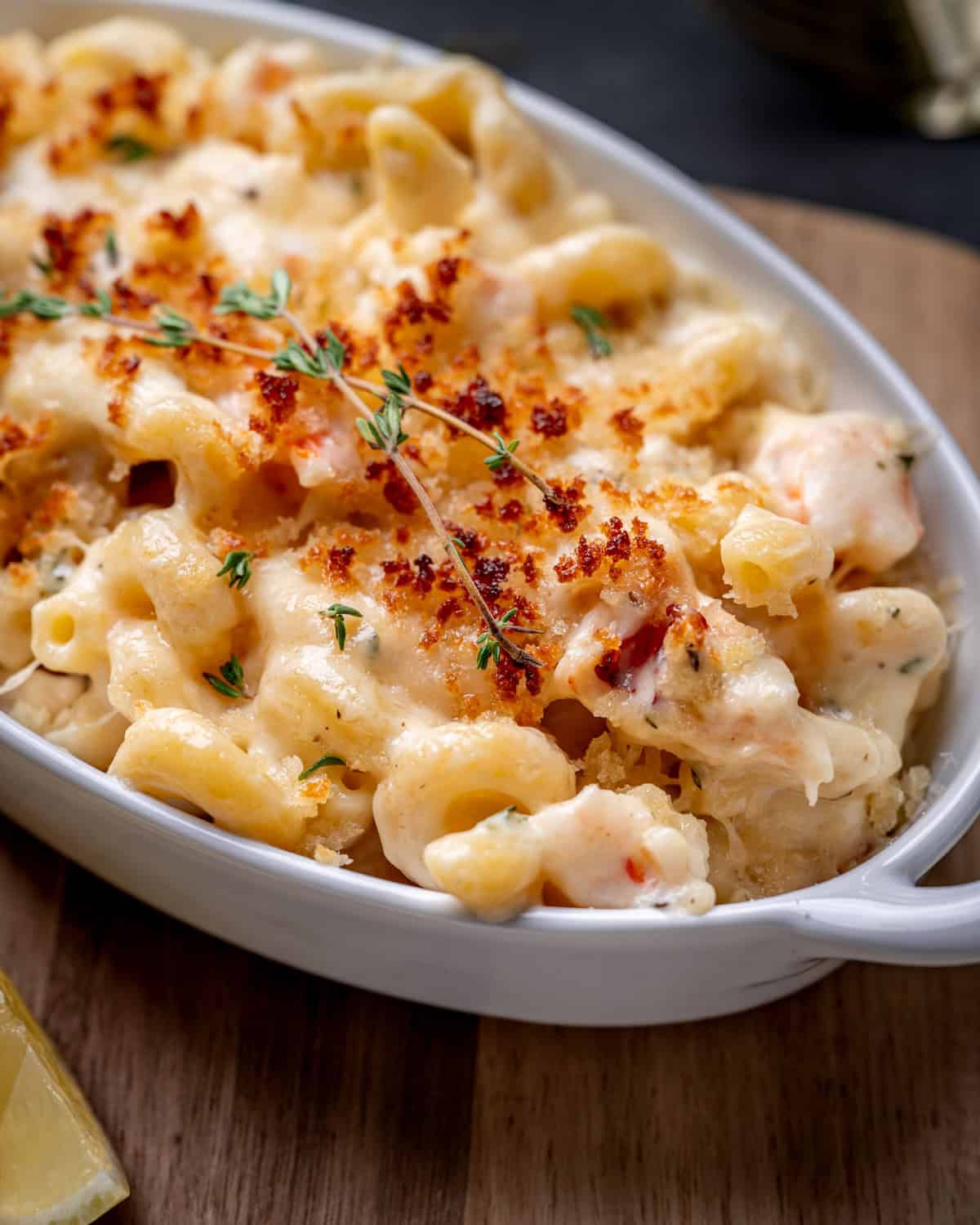
- Broiled topping: The panko should be deeply golden brown with darker edges, and the cheese underneath should be bubbling around the sides of the ramekin. If the breadcrumbs are still pale, give it another minute. If they're black, you've burned it and there's no coming back.
Trust your eyes and your nose more than a timer. Ovens and stovetops vary wildly, and the visual and aromatic cues will never lie to you.
Variations and Substitutions
This recipe is flexible once you understand the core technique.
- All shrimp version: Use 6.5 oz of shrimp total and skip the lobster. It's still luxurious and way more budget-friendly.
- Crab instead of lobster: Lump crab meat is sweet, delicate, and easier to find than lobster in some areas. Use 3.25 oz of lump crab and fold it in gently at the very end so it doesn't break apart. Don't poach it. Just warm it through in the sauce.
- Spicy kick: Add ½ teaspoon of cayenne pepper or a pinch of red pepper flakes to the béchamel. Or fold in a tablespoon of Calabrian chili paste with the cheese for a smoky, spicy undertone that plays surprisingly well with seafood.
- Seasonal swap: In the fall, add ½ cup of roasted butternut squash or pumpkin cubes folded in with the pasta. The sweetness complements the seafood and adds a pop of color. In summer, toss in blanched peas or corn kernels for a lighter, brighter feel.
- Different types of cheese: Swap the fontina for white cheddar (sharp, aged stuff, not mild). Replace the gruyere with aged gouda for a smokier, sweeter profile. The mascarpone and parmesan should stay, they're the glue.
- Gluten-free: Use a gluten-free short pasta like Banza chickpea shells or Jovial brown rice penne. For the roux, substitute the all-purpose flour with a 1:1 gluten-free flour blend or sweet rice flour. The texture will be slightly different but still creamy and delicious.
Whatever direction you go, keep the technique the same and you'll land on something great.
Storage
Although leftover mac and cheese still tastes great, you will generally lose the creamy texture of the cheese, which is highly likely to break and get oily when reheating. We recommend eating this the day of, but if you do have leftovers, here are some storage and reheating tips.
How to store leftover lobster and shrimp mac and cheese:
- Let the mac cool to room temperature, then transfer to an airtight container. It'll keep for up to 3 days in the fridge. The sauce will thicken as it cools, which is normal.
How to reheat leftover lobster and shrimp mac and cheese:
- The best move is to reheat in a 350-degree oven. Transfer the mac to an oven-safe dish, cover loosely with foil, and bake for 15 to 20 minutes until warmed through. Add a splash of cream or milk before reheating if the sauce looks dry.
Can you freeze leftover lobster and shrimp mac and cheese?
- You can freeze this, but the texture of the seafood won't be quite as good after thawing. If you're going to freeze it, do it before broiling. Assemble the mac in freezer-safe containers, cover tightly, and freeze for up to 2 months. Thaw overnight in the fridge, then top with parmesan and panko and broil as directed. Again, you may see the creamy texture break down and get a bit oily, but the flavor will still be there.
Leftover Transformations
If you're staring at a container of leftover lobster mac, here's how to turn it into something new instead of just reheating the same thing.
- Mac and cheese cakes: Mix cold mac with a beaten egg, form into patties, coat in panko, and pan-fry in butter until golden and crispy on both sides. Serve with a lemony aioli or hot sauce.
- Stuffed mushrooms: Remove the stems from large portobello caps, fill with leftover mac, top with extra parmesan, and bake at 375 degrees for 20 minutes. The mushrooms add an earthy, meaty contrast.
- Seafood mac grilled cheese: Spread leftover mac between two slices of sourdough, butter the outsides, and griddle until the bread is golden and the mac is hot and gooey inside. Serve with tomato soup if you're feeling nostalgic.
- Seafood mac soup: Thin out leftover mac with seafood stock or chicken broth, add a handful of fresh spinach, and simmer until warmed through. Finish with a squeeze of lemon and serve with crusty bread.
Leftovers don't have to be boring. A little creativity turns yesterday's dinner into something you'd actually look forward to eating.
Top Tips from the Pros
- Undercook the pasta slightly. Even if you're shocking it in ice water, pull it 30 seconds before the package says al dente. It'll warm up right before broiling and finish cooking under the broiler, and this insurance policy keeps it from turning mushy.
- Save a cup of pasta water before draining. If your sauce seems too thick when you're folding everything together, a splash of starchy pasta water will loosen it up without diluting the flavor the way plain water or cream would.
- Grate your own cheese and do it at the last minute. Pre-shredded cheese is coated in cellulose to prevent clumping, and it makes your sauce grainy and broken. Freshly grated cheese melts clean and smooth every time.
- Don't add the cheese while the pan is still on the heat. Pull the béchamel off the burner before stirring in the mascarpone, fontina, and gruyere. High heat can cause the proteins in cheese to seize up and turn the sauce greasy or grainy.
- Rotate the baking sheet halfway through broiling. Most broilers have hot spots. Rotating ensures even browning across all four ramekins so nobody gets a pale, sad portion.
- Let it rest for 60 seconds after broiling. This isn't a long rest, but it lets the bubbling cheese calm down so you don't burn the roof of your mouth on the first bite.
What to serve with Lobster and Shrimp Mac and Cheese
If serving this as a side dish, we like to lean into the steakhouse vibe and serve this alongside a beautiful filet mignon or ribeye. It is also a great option for an elevated (yet easy) chicken dish or pork tenderloin.
If serving this as a main course, keep side dishes simple and sharp. A bitter greens salad with arugula, endive, and radicchio dressed in lemon vinaigrette is the perfect contrast. Or go with sautéed asparagus finished with lemon zest and flaky salt. Both add a bitterness and acidity that balance the dish.
What Wines To Drink with Lobster and Shrimp Mac and Cheese
Wine Pairings: Go with a crisp, high-acid white that won't get buried under all that cream and cheese. A Chablis or unoaked Chardonnay from Burgundy is perfect. Both have enough body to stand up to the richness but enough acidity to cleanse your palate between bites. If you want something a little more aromatic, try a dry Alsatian Riesling.
If you are planning to serve this mac and cheese as a side dish like you would order in a high-end steakhouse, then you will want to pair your wines with the main course instead. For steaks, go with medium to full-bodied red wines such as Cabernet Sauvignon, Merlot or Zinfandel.
Cocktails: Not a wine fan? A classic gin martini, very cold and very dry, works well with the mac and cheese. The botanicals and the slight brine from a good olive cut through the fat and refresh your palate. If you're not a martini person, a French 75 (gin, lemon, champagne, simple syrup) is a nice cocktail for this dish.
FAQ
Something that melts well (like gruyere and fontina as we have here) will work. From there it is really about flavor and your preference. Gouda, havarti, provolone and muenster are all great options as well.
This is highly discouraged. The anti-caking on the cheese to keep it from sticking together will also hurt the texture and will prevent the cheese from melting properly.
You can certainly eat it straight from the stovetop if you prefer. It just won't have that delightful crunchy topping.
Related
Looking for other recipes like this? Try these:


Pairing
These are our favorite main dishes to serve with this restaurant quality lobster and shrimp mac and cheese:


📖 Recipe
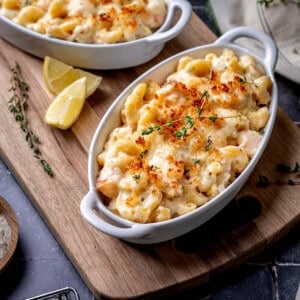
Lobster and Shrimp Mac and Cheese (Restaurant Quality)
Equipment
- Large pot (6-8qt) to cook the pasta and make the cheese sauce
- medium pot (3-4qt) to poach the shellfish
- whisk
- Gratin dishes ramekins, or other baking dish
Ingredients
For the Pasta
- 6.5 oz short tubed pasta (188g) cavatappi or similar
- 1 teaspoon kosher salt
For the Breadcrumb Topping
- 2 Tablespoons panko bread crumbs
- 1 Tablespoon unsalted butter
For the Poached Shrimp and Lobster
- 3.25 oz lobster tail removed from the shell (94g)
- 3.25 oz medium shrimp peeled and deveined (94g)
- 1 bay leaf
- 10 allspice berries
- 10 black peppercorns
- ½ cup dry vermouth
For the Cheese Sauce
- ½ small shallot finely diced
- ¼ cup dry white wine
- 1 Tablespoon dry sherry
- 3 Tablespoons unsalted butter
- 3 Tablespoons all-purpose flour
- 1 cup + 2 Tablespoons heavy cream
- 1 teaspoon mustard powder
- 3 Tablespoons mascarpone cheese (40g)
- ¼ cup fontina cheese freshly grated
- ¼ cup gruyere cheese freshly grated
- 2 teaspoons fresh thyme leaves chopped
- 1 teaspoon kosher salt
- Pinch black pepper
- ¼ cup Parmesan cheese freshly grated
For Garnish
- ½ lemon - juice only
- Finely chopped parsley and/or thyme for garnish

Instructions
Prepare the Pasta and Topping
- Bring a large pot of salted water to a boil, then add the pasta and cook per the package directions for al dente (no more than that). While the pasta is cooking, prepare a bowl of ice water to stop the pasta from continuing to cook once removed.6.5 oz short tubed pasta, 1 teaspoon kosher salt
- When done, remove the cooked pasta and transfer to the ice water for a minute. Reserve a cup of pasta cooking water to use to thin out the béchamel if needed. Once the pasta has cooled, drain the pasta, transfer to a large bowl and set aside.
- For the topping, simply melt the butter in a small skillet over medium heat, then add the panko breadcrumbs and stir. Once the breadcrumbs have absorbed the butter and just start to get the slightest bit of a golden brown color, remove from the heat and set aside.2 Tablespoons panko bread crumbs, 1 Tablespoon unsalted butter
Poach the Lobster and Shrimp
- Add the bay leaf, allspice, peppercorns, and vermouth to a medium pot of water over medium heat until gently simmering.1 bay leaf, 10 allspice berries, 10 black peppercorns, ½ cup dry vermouth
- Reduce the heat to low, then add the lobster tails and poach for 2 minutes, then add the shrimp. Poach for an additional 4 minutes (6 total minutes). When done, the flesh should be opaque all the way through and it should have firmed up a bit without the tails curling tight. If it's not quite done, add it back into the simmering water for another 1-2 minutes until fully cooked.3.25 oz lobster tail, 3.25 oz medium shrimp
- Transfer the cooked shrimp and lobster to a cutting board and cut the lobster meat and shrimp into manageable bite-sized pieces. Add the lobster and shrimp to the large bowl with the pasta while you make the sauce.
Prepare the Cheese Sauce Base
- Discard the remaining pasta cooking water from the large pot used to cook the pasta to use for the cheese sauce. Over medium heat, add the shallot, white wine, and sherry. Cook for several minutes until there is only about 2 teaspoons of liquid left.½ small shallot, ¼ cup dry white wine, 1 Tablespoon dry sherry
- Next, add the butter and stir until melted. While whisking, slowly add the flour. Bring all of this together, making a roux. You want a blonde roux so keep the heat down and just cook until the smell of raw flour is gone but the mixture isn't brown. This will take just a few minutes.3 Tablespoons unsalted butter, 3 Tablespoons all-purpose flour
- Next, slowly add the cream while whisking constantly and once combined whisk in the mustard powder, creating a béchamel sauce.1 cup + 2 Tablespoons heavy cream, 1 teaspoon mustard powder
- Finally, stir in the fontina, gruyere and mascarpone cheeses, thyme, salt and pepper. Continue to stir until the cheeses are completely melted and you have a nice smooth sauce. If it seems too thick, add a little water to thin it out. You want the sauce to be thick and creamy but still saucy enough to coat the pasta and seafood.3 Tablespoons mascarpone cheese, ¼ cup fontina cheese, ¼ cup gruyere cheese, 2 teaspoons fresh thyme leaves, 1 teaspoon kosher salt, Pinch black pepper
Combine, Portion and Broil
- Add the cooked seafood and pasta to the large pot of warm cheese sauce and gently mix with a spatula to combine. The seafood and pasta will gently warm up once combined with the warm cheese sauce, but you can turn the heat up to low if the sauce cools down too much and doesn't stay smooth and creamy.
- Make sure the oven rack is positioned at the top of the oven with enough room for the baking dishes to fit and set the oven to broil.
- Place the gratin dishes, ramekins or other oven-safe dishes on a baking sheet. Divide the pasta mixture among each of the dishes. Sprinkle the top with the parmesan cheese then the buttered, toasted breadcrumbs. Place in the oven for a couple minutes or so, keeping a close eye on the breadcrumb topping. Once nicely browned, remove immediately from the oven.¼ cup Parmesan cheese
Garnish And Serve
- On each individual bowl, add a spritz of lemon juice and a sprinkle of parsley and/or thyme and serve.½ lemon - juice only, Finely chopped parsley and/or thyme for garnish
Notes
- All shrimp version: Use 6.5 oz of shrimp total and skip the lobster. It's still luxurious and way more budget-friendly.
- Crab instead of lobster: Lump crab meat is sweet, delicate, and easier to find than lobster in some areas. Use 3.25 oz of lump crab and fold it in gently at the very end so it doesn't break apart. Don't poach it. Just warm it through in the sauce.
- Spicy kick: Add ½ teaspoon of cayenne pepper or a pinch of red pepper flakes to the béchamel. Or fold in a tablespoon of Calabrian chili paste with the cheese for a smoky, spicy undertone that plays surprisingly well with seafood.
- Seasonal swap: In the fall, add ½ cup of roasted butternut squash or pumpkin cubes folded in with the pasta. The sweetness complements the seafood and adds a pop of color. In summer, toss in blanched peas or corn kernels for a lighter, brighter feel.
- Different types of cheese: Swap the fontina for white cheddar (sharp, aged stuff, not mild). Replace the gruyere with aged gouda for a smokier, sweeter profile. The mascarpone and parmesan should stay, they're the glue.
- Gluten-free: Use a gluten-free short pasta like Banza chickpea shells or Jovial brown rice penne. For the roux, substitute the all-purpose flour with a 1:1 gluten-free flour blend or sweet rice flour. The texture will be slightly different but still creamy and delicious.
- How to store leftover lobster and shrimp mac and cheese:
- Let the mac cool to room temperature, then transfer to an airtight container. It'll keep for up to 3 days in the fridge. The sauce will thicken as it cools, which is normal.
- How to reheat leftover lobster and shrimp mac and cheese:
- The best move is to reheat in a 350-degree oven. Transfer the mac to an oven-safe dish, cover loosely with foil, and bake for 15 to 20 minutes until warmed through. Add a splash of cream or milk before reheating if the sauce looks dry.
- Can you freeze leftover lobster and shrimp mac and cheese?
- You can freeze this, but the texture of the seafood won't be quite as good after thawing. If you're going to freeze it, do it before broiling. Assemble the mac in freezer-safe containers, cover tightly, and freeze for up to 2 months. Thaw overnight in the fridge, then top with parmesan and panko and broil as directed. Again, you may see the creamy texture break down and get a bit oily, but the flavor will still be there.
- Undercook the pasta slightly. Even if you're shocking it in ice water, pull it 30 seconds before the package says al dente. It'll warm up right before broiling and finish cooking under the broiler, and this insurance policy keeps it from turning mushy.
- Save a cup of pasta water before draining. If your sauce seems too thick when you're folding everything together, a splash of starchy pasta water will loosen it up without diluting the flavor the way plain water or cream would.
- Grate your own cheese and do it at the last minute. Pre-shredded cheese is coated in cellulose to prevent clumping, and it makes your sauce grainy and broken. Freshly grated cheese melts clean and smooth every time.
- Don't add the cheese while the pan is still on the heat. Pull the béchamel off the burner before stirring in the mascarpone, fontina, and gruyere. High heat can cause the proteins in cheese to seize up and turn the sauce greasy or grainy.
- Rotate the baking sheet halfway through broiling. Most broilers have hot spots. Rotating ensures even browning across all four ramekins so nobody gets a pale, sad portion.
- Let it rest for 60 seconds after broiling. This isn't a long rest, but it lets the bubbling cheese calm down so you don't burn the roof of your mouth on the first bite.
Nutrition
Leave a Reply