
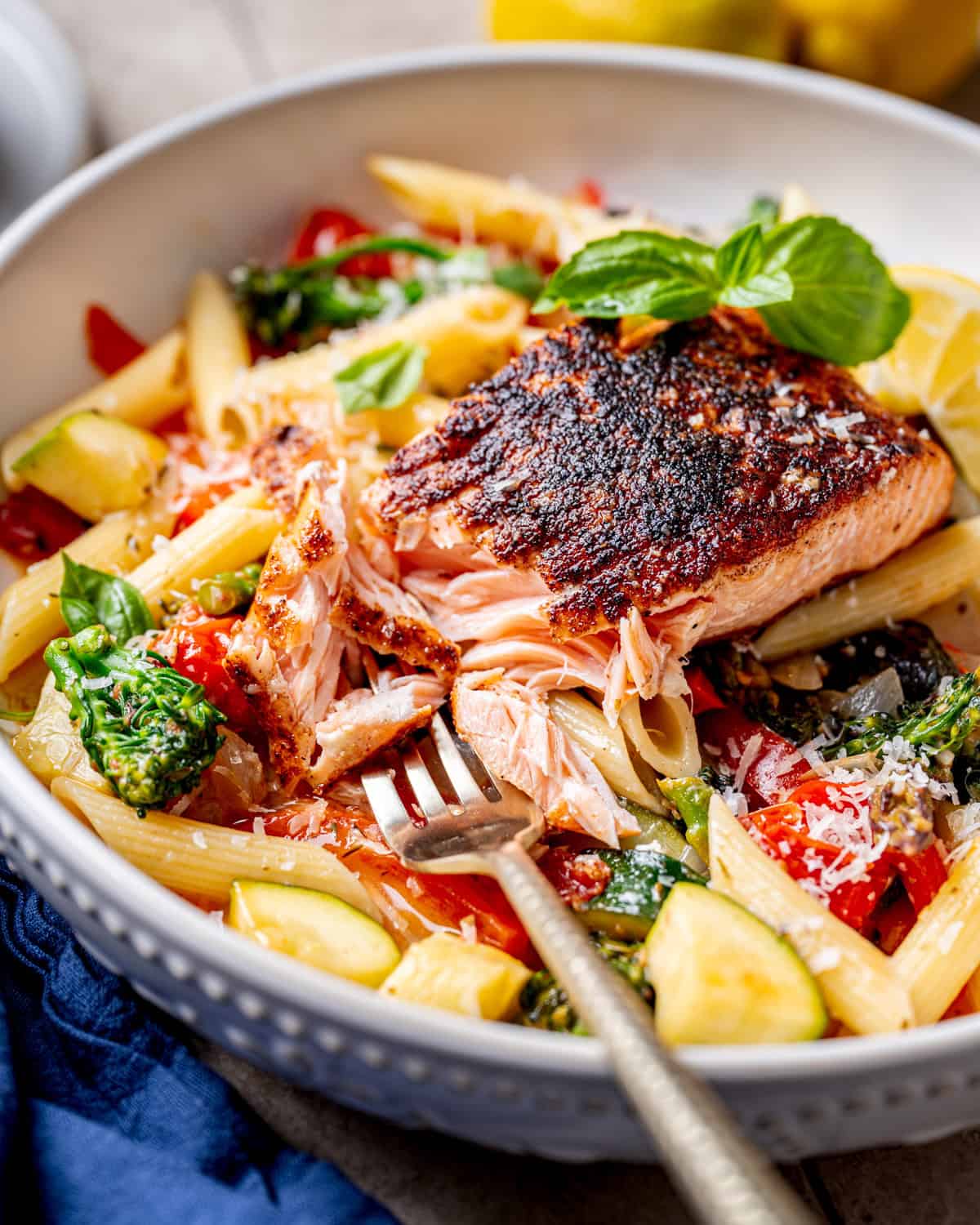
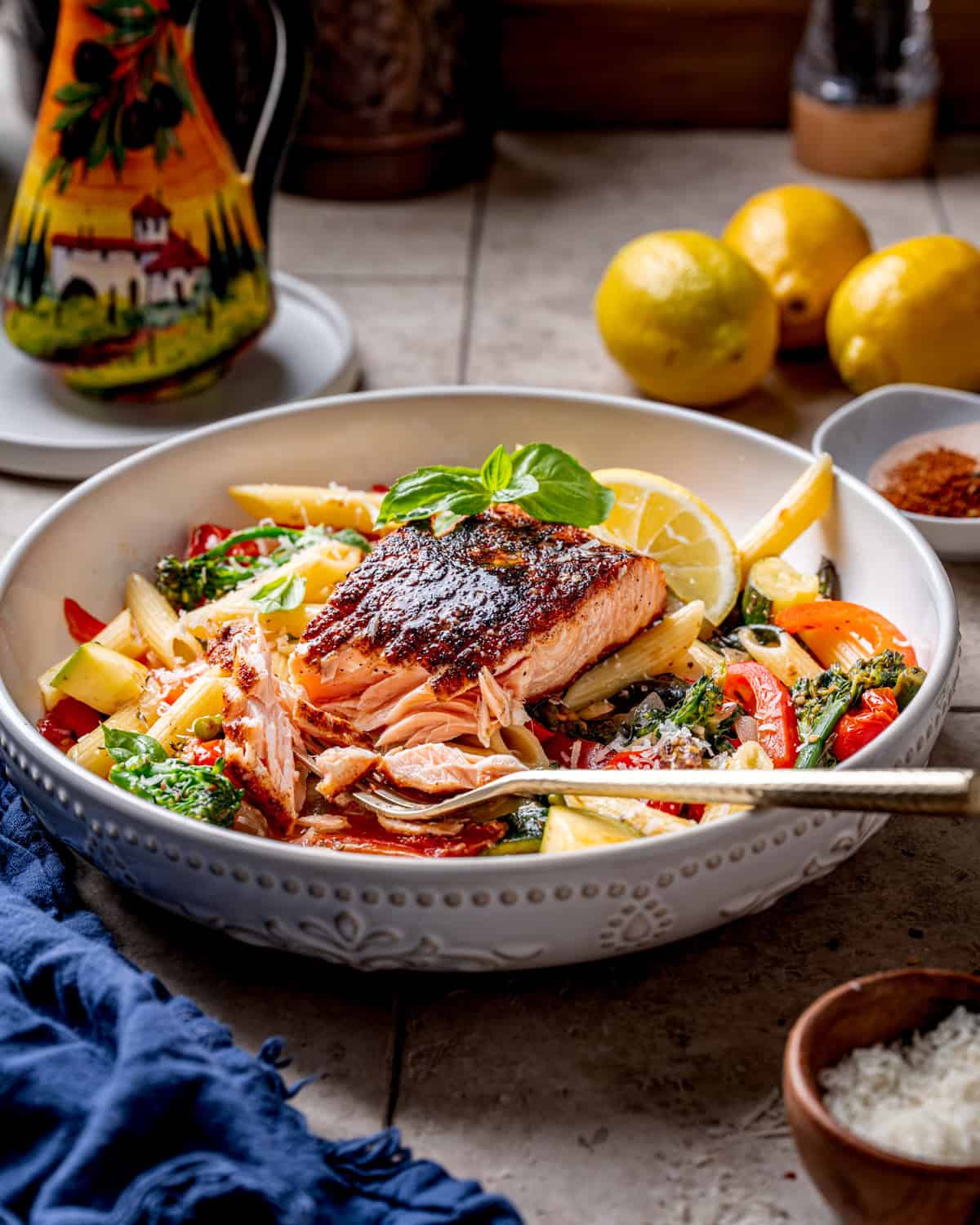
This is a pretty simple and flavorful dish that can be made on a weeknight. Spice-crusted salmon, silky butter sauce, fresh vegetables that still have some snap, and pasta that holds it all together creates this beautiful dinner.
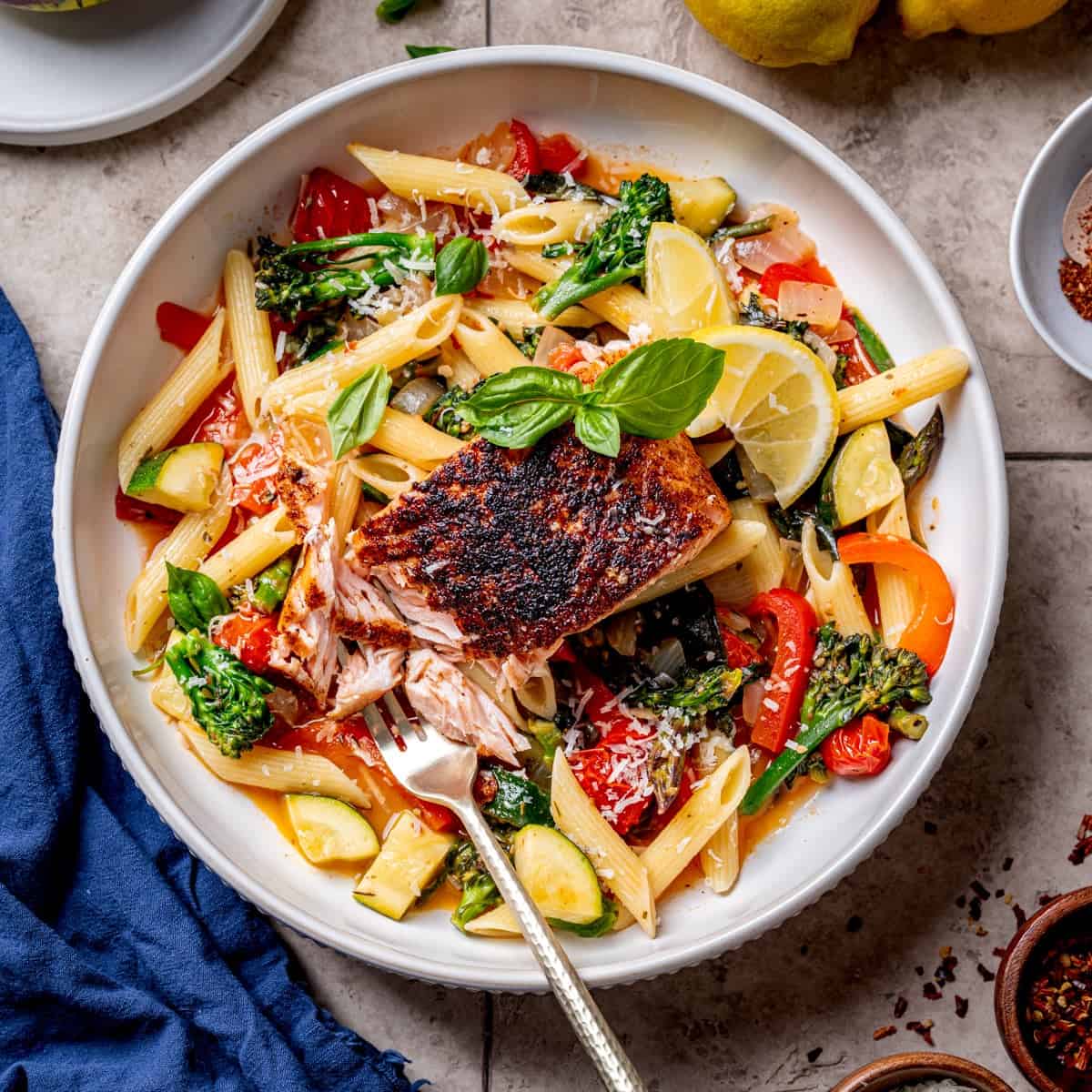
It's not fussy and it doesn't require you to do anything crazy to pull it off. The blackening seasoning does the heavy lifting on flavor. Some of the vegetables get a quick blanch so they stay bright and crisp. The sauce is built from white wine, butter, and pasta water, which means it clings to every piece of penne without feeling heavy. The salmon cooks in under ten minutes and is delicious.
Jump to:
- Why You'll Love this Recipe
- Origins of This Dish
- Why This Version Actually Works
- How to Make Blackened Salmon Penne Primavera
- Ingredients
- Equipment
- Step-by-Step Instructions
- How to Tell It's Done Right
- Variations and Substitutions
- Storage
- Top Tips from the Pros
- What to serve with Blackened Salmon Penne Primavera
- Drink Pairings for Penne Pasta Primavera
- Best Wines For Cooking (And When to Use Them)
- FAQ
- Related
- Pairing
- 📖 Recipe
Why You'll Love this Recipe
- Easily customizable depending on what veggies or fish you can get
- Easy preparation
- Great way to cook salmon
- Light but flavorful preparation of pasta
- Great way to enjoy a number of vegetables
Origins of This Dish
Penne primavera is classic Italian-American cooking and the preparation was first seen in the late '70s in New York. It was never meant to be drowning in cream or cheese. The original was light, olive oil-based, and packed with whatever veggies looked good at the market.
Pairing blackened salmon with a butter-based primavera creates this perfect contrast: the spice hits first, then the vegetables and sauce cool it down, and the pasta makes it all perfect.
This version takes the best of both worlds and keeps it light. No cream, no flour-thickened sauce, no overdone vegetables. Just clean technique and ingredients doing what they're supposed to do. It's Italian-American comfort food with a little Cajun spice that works so well!
Why This Version Actually Works
Most primavera recipes fail because they treat vegetables like an afterthought, letting them turn to mush in a heavy cream sauce. This one blanches the asparagus and broccoli separately, then shocks them in ice water to lock in color and texture. These take a bit more time to cook and blanching also brightens up these two green veggies.
The sauce builds flavor in stages by softening the onions and peppers first to release their natural sweetness. Then comes the tomatoes and white wine, which adds acidity and keeps the dish from tasting flat. The tomatoes cook down just enough to release their juices. Zucchini gets added to simmer for a while. When you toss the pasta in with some reserved pasta water, the starch emulsifies with the butter and parmesan, creating a light sauce that coats every piece without pooling at the bottom of the bowl.
The salmon gets its own pan so you can control the heat and the crust without worrying about the vegetables or pasta. Our homemade blackening seasoning is what we use and you can make your own HERE. A tablespoon gives you that charred, smoky crust without any bitterness.
Everything comes together at the end, which means you're not juggling five things on the stove at once. The vegetables stay warm in the sauce on low heat while the pasta cooks. The salmon finishes and when you plate it, everything is still hot.
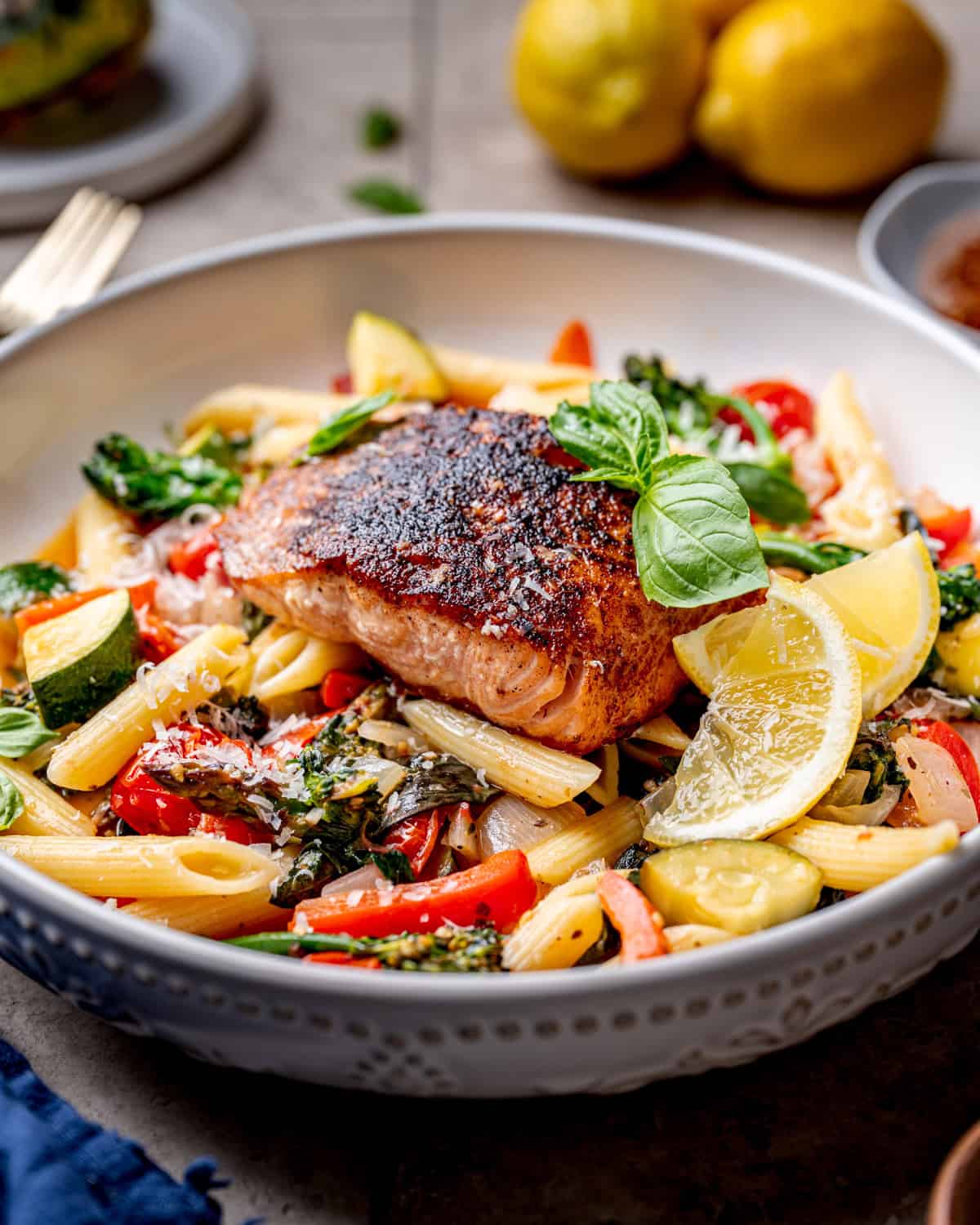
How to Make Blackened Salmon Penne Primavera
This is a pretty simple dish to make and requires just a bit of timing. You blanch the asparagus and broccoli first. Then you start building the base vegetables and the sauce together. Once you add the zucchini, it simmers on low while you cook the pasta and salmon. Then you just put it together and serve!
Ingredients
Here is what you need to make this recipe:
For the Pasta and Sauce:
- Asparagus and broccoli: These bring a bright green color and some texture. The sweet and slightly bitter edge balances the richness of the butter and salmon.
- Olive oil: You don't need any fancy olive oil here, the heat will destroy complex flavors, so use your favorite basic cooking olive oil.
- Onion and bell pepper: These create the vegetable backbone of the sauce. Large dice for the onions means they stay chunky instead of disappearing into the background. Any color bell pepper works, but orange or red bell pepper look best and are sweeter.
- Garlic: The garlic stays whole so it perfumes the sauce without overpowering it. You're not mincing it because you don't want much garlic flavor, just a gentle background note. If you love garlic, then you can certainly mince it or use more. You can fish it out before serving if you want, or leave it in for anyone who wants to eat it.
- White wine: Dry white wine adds acidity and brightness that keeps the sauce from feeling heavy. Sauvignon Blanc, Pinot Grigio, or unoaked Chardonnay all work.
- Cherry or grape tomatoes: The tomatoes are halved, which helps them to release juices that mix with the wine and create the base of your sauce. They add a pop of sweetness and acidity without making the sauce tomatoey.
- Italian seasoning, black pepper, and red pepper flakes: These 3 spices bring warmth and a little complexity but are also subtle. Italian seasoning usually includes basil, oregano, thyme, and rosemary, which all play well with tomatoes and butter. Black pepper adds sharpness. Red pepper flakes give a gentle heat that compliments the blackening seasoning on the salmon.
- Zucchini: The zucchini goes in at the end because it cooks fast and you definitely want them to keep their firmness. We try to use zucchini that is smaller and skinnier. Larger ones are watery and full of seeds and also less sweet.
- Parmesan cheese: The real Parmigiano-Reggiano adds saltiness and umami, and makes the sauce taste more complex. Freshly grated melts into the pasta water and emulsifies with the butter to create that glossy coating.
- Unsalted butter: The butter finishes the sauce and adds richness without cream. Five tablespoons sounds like a lot, but two go in the salmon pan and three get stirred into the pasta at the end.
- Fresh basil: The heat of the dish will somewhat wilt the basil down and the flavor will be a bright, peppery note that brightens the whole dish. Add it at the very end so it doesn't cook and lose its punch.
- Penne: Penne pasta holds onto the sauce as the ridges and hollow center trap the butter and vegetables. Cook it until it's al dente, which means it still has a little bite in the center. Just make sure to reserve at least a cup of pasta water as that starchy water is what will give the sauce body.
For the Salmon:
- Salmon fillets: Look for salmon fillets of about four ounces each, skinless is best or you can slice it off before cooking.
- Blackening seasoning: This is a blend of paprika, cayenne, garlic powder, onion powder, thyme, and oregano. You can make your own like we do (HERE) or buy a pre-made blend. A tablespoon gives you a dark, spicy crust without overpowering the fish. Just be careful with the salt content in store-bought seasonings so that you don't over-salt your salmon. Taste the dry seasoning blend before adding extra salt to your salmon fillets.
- Lemon juice: A squeeze of lemon at the end brightens everything and cuts through the richness of the butter. Half a lemon is all you need and squeeze it over the plated dish right before serving.
See recipe card below for quantities.
Equipment
Here is what you need to make this spring pasta dish:
- Two pots and two pans: This sounds like a lot until you realize how much easier it makes everything. A medium pot handles the vegetable blanching. A large pot takes care of the pasta. A large sauté pan with high sides gives you room to build the sauce and toss the pasta. A cast iron skillet or heavy-bottomed pan is what you want for the salmon.
- Spider spatula or slotted spoon: For pulling the vegetables out of boiling water without fishing around with tongs.
- Fish spatula for the salmon.
- A microplane or fine grater for the parmesan.
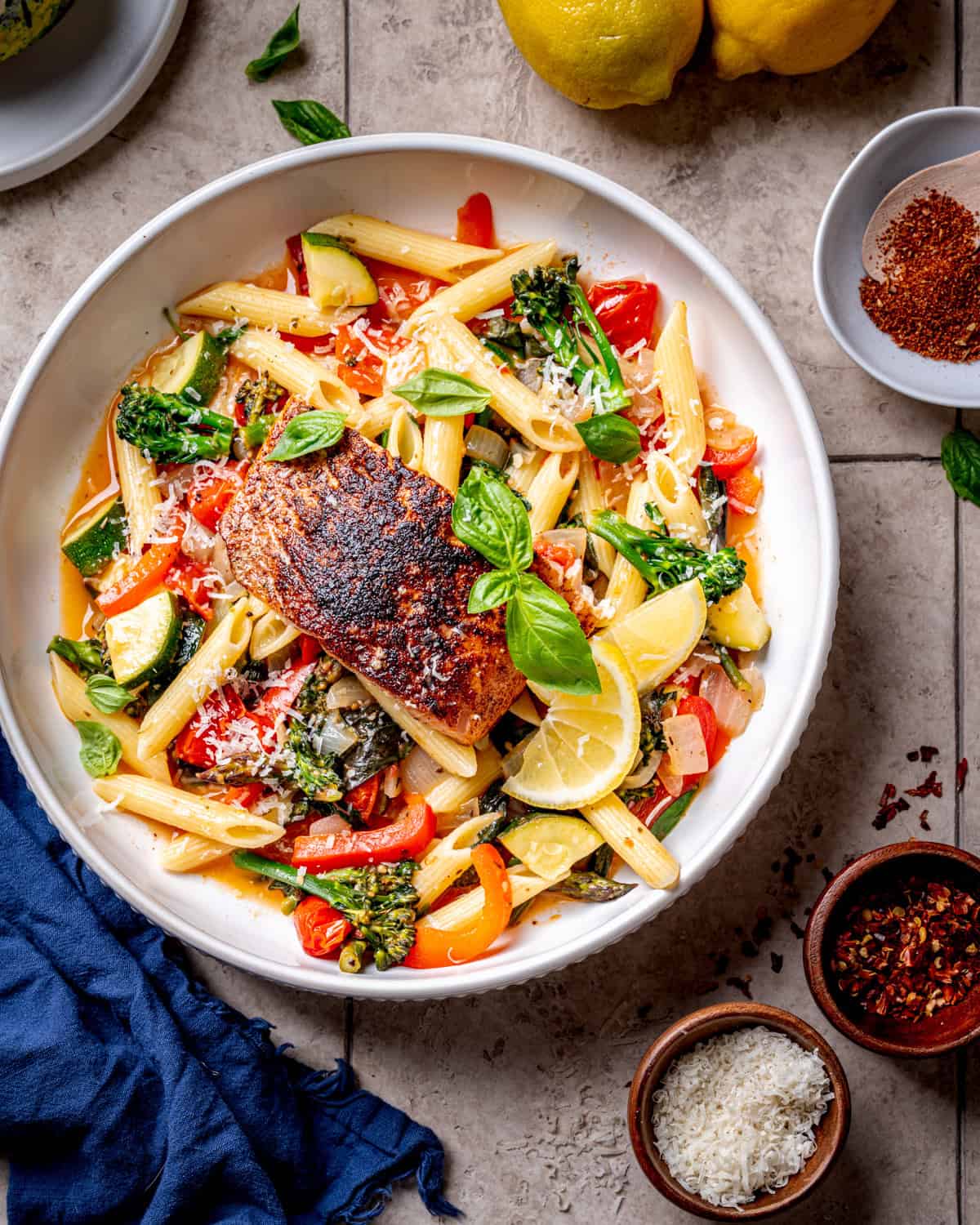
Step-by-Step Instructions
Blanch the Vegetables
- Prepare a medium pot of salted water and bring it to a boil over high heat. While waiting for it to boil, prepare a medium bowl of ice water to shock the vegetables.
- Once the water is boiling, add the asparagus and broccoli. Blanch for 1 minute, then remove with a slotted spoon or spider and dunk into the ice water to prevent further cooking. They can be removed after a few minutes to some paper towels to dry.
Prep the Pasta Pot and Start the Sauce
- Prepare a large pot of salted water for the pasta and bring to a boil.
- Meanwhile, start the sauce by adding 2 tablespoons of olive oil to a large pan. Add the onion, bell pepper, the whole garlic clove, and ½ teaspoon salt. Cook until softened - about 2 minutes over medium heat. Then add the wine and reduce for a minute. Add the tomatoes, Italian seasoning, black pepper, an additional ½ teaspoon salt, and red pepper flakes. Turn the heat to medium low and gently cook for 5 minutes. Next, turn the heat to low and add the zucchini, and blanched asparagus and broccoli.
- Cook the pasta while the sauce simmers on low according to package directions to al dente. Simmer the sauce for 7-10 minutes on low. At this point, the pasta should be cooked.
- Next, add the parmesan to the sauce, then transfer the cooked pasta into the pan with the sauce (reserve some pasta water). Add some pasta water a few tablespoons at a time for a total of between ¼ and ½ cup while stirring to create a sauce. Remove the sauce from the heat, stir in 3 tablespoons of butter and the basil leaves.
Cook the Salmon and Finish the Dish
- While the pasta cooks, make the salmon. Season both sides of the salmon with 2 teaspoons of olive oil, then a pinch of salt per fillet and the blackening seasoning.
- Heat a cast iron skillet or heavy pan over medium-high heat. Once the pan is hot, add the remaining 2 teaspoons of olive oil. Place the salmon fillets gently into the pan and cook for about 4 minutes. Then add the remaining 2 tablespoons of butter, flip the fish and cook an additional 3-4 minutes depending on the thickness of the salmon and how well you like it done. Remove the salmon and either keep warm in a 170°F oven or serve on top of the pasta immediately if you made the fish last.
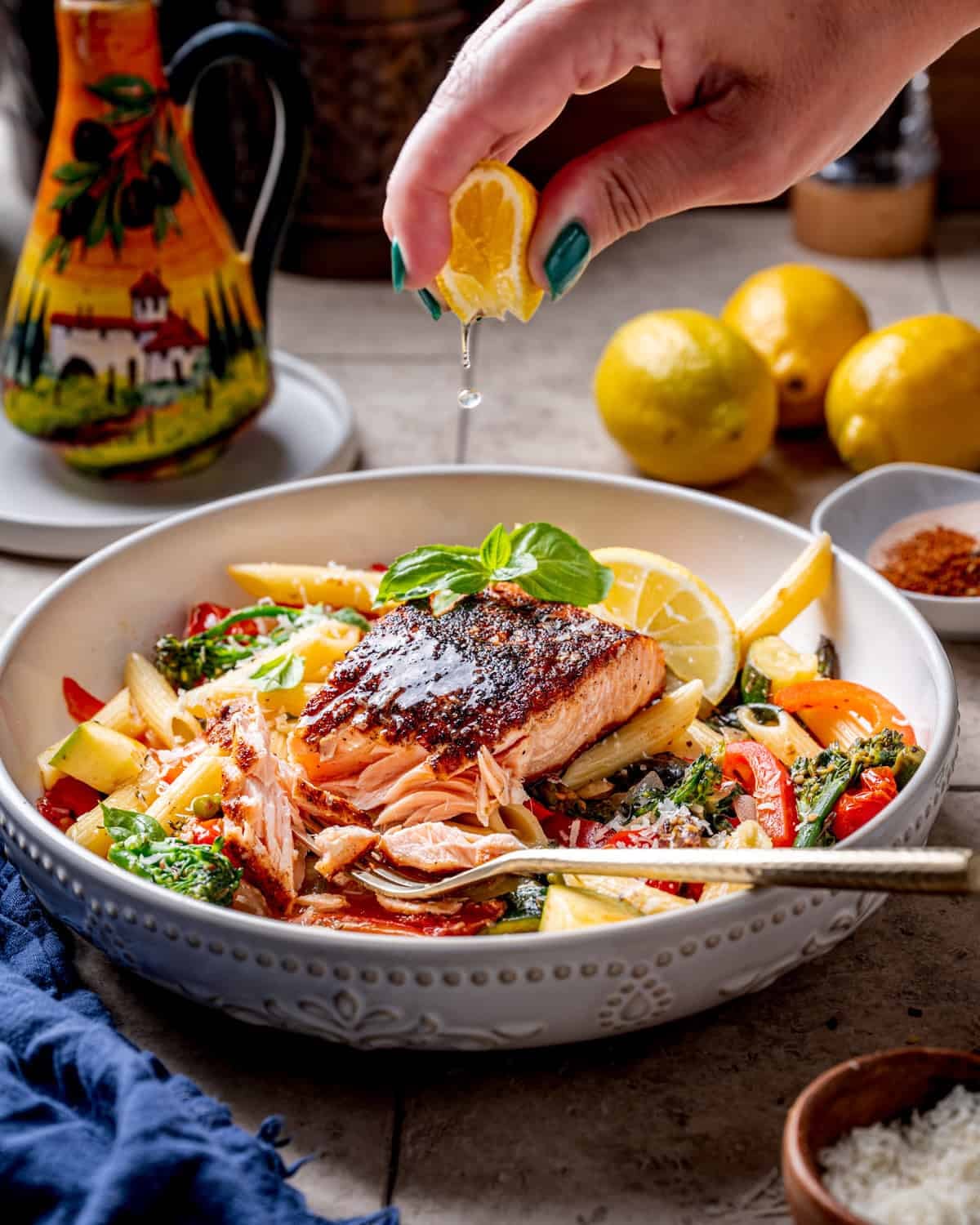
- Once plated, drizzle everything with some lemon juice and serve with extra Parmesan and basil if desired.
How to Tell It's Done Right
The asparagus and broccoli should still have some body when you bite into them, not soft or mushy. They should be bright green, not drab. They will cook some more in the sauce so it is key to just blanch for a minute and then transfer to an ice bath.
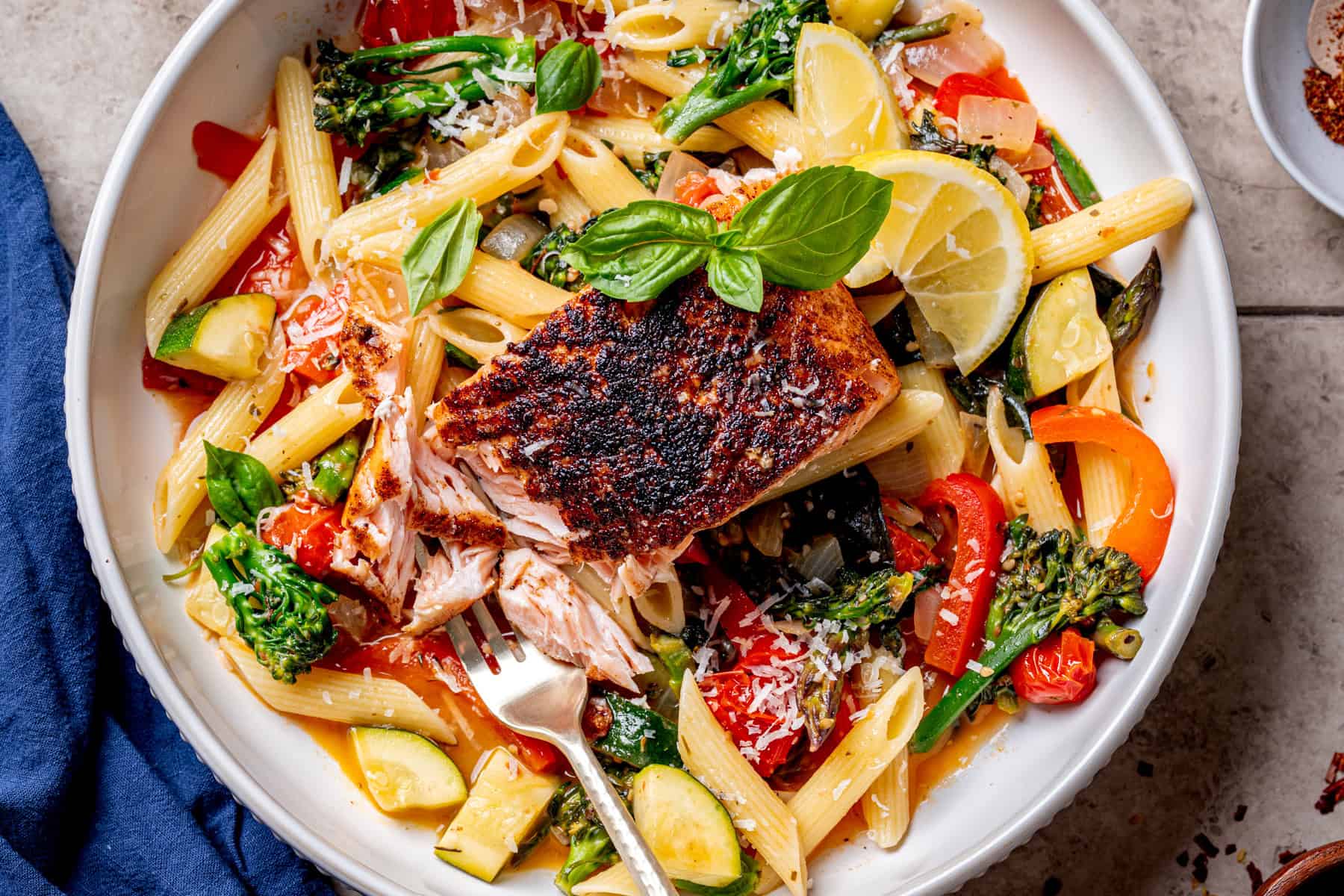
The salmon should have a dark, almost black crust that smells smoky and a little spicy. When you press on the flesh gently with your finger, it should give a little but spring back. We like the inside to be opaque with just a hint of translucence in the very center. If you prefer it cooked through, it should flake easily with a fork but still feel moist, not chalky.
The pasta should have a slight resistance when you bite into it and the zucchini should be tender but still have a bit of bite.
Variations and Substitutions
Here are a couple of common substitutions for the ingredients in this recipe:
- Vegetables: You can really go for any combination of green vegetables or bell peppers in this dish. Fresh spinach, green peas or sugar snap peas are all great spring vegetables that can be used in this pasta.
- White Wine: If you don't drink wine or don't want to open a bottle, use chicken or vegetable stock with a squeeze of lemon juice.
- Parmigiano-Reggiano: Grana Padano or pecorino are good replacements for Parmesan and work well in this dish.
- Penne: Swap the penne for any short pasta that has ridges or texture. Rigatoni, ziti, farfalle and cavatappi all work.
- Basil: Swap the basil for fresh parsley or dill if you want a different herb profile. Dill is especially good with salmon.
- Salmon: Cod or halibut will work as will shrimp and they all like blackened seasoning.
Here are a couple ways to change up this recipe:
- Swap the salmon for chicken breasts or thighs if fish isn't your thing. Use boneless, skinless and still coat them in blackening seasoning, and cook them the same way. They'll take a little longer (about 6-7 min per side).
- For a creamy sauce, stir in a quarter cup of heavy cream or mascarpone after you add the butter. This turns it into a richer, more indulgent version without losing the too much brightness from the wine and lemon.
- Add sun-dried tomatoes for a sweet, concentrated tomato flavor. Toss in a handful when you add the fresh tomatoes.
- Add capers for a briny, salty punch that works well with the salmon. Stir in a tablespoon right before you add the basil.
- Add toasted pine nuts for a bit of texture and added flavor.
Storage
How to store leftover penne primavera:
- Store the pasta and vegetables separately from the salmon if you can. The pasta will absorb moisture overnight and the sauce will thicken up, which is fine. Put the pasta in an airtight container and the salmon in a separate one. Both will keep in the fridge for up to three days.
How to reheat leftover penne primavera:
- Reheat the pasta gently in a pan over low heat with a splash of water or stock. Stir it frequently so it doesn't stick or clump. The sauce will loosen up as it heats. If it's still too thick, add more liquid a tablespoon at a time.
- Reheat the salmon in a 300°F oven for about five minutes, just until it's warmed through.
Can you freeze leftover penne primavera?
- We do not recommend this as the vegetables will turn mushy and the sauce will break when you thaw it. The pasta will get waterlogged and the salmon will lose its texture.
What to Do With Leftovers
- Flake the salmon and mix it into scrambled eggs with a little butter and whatever you like. It's a nice breakfast that takes five minutes.
- Use the pasta as a base for a cold pasta salad. Add chopped cucumbers, more cherry tomatoes, feta cheese, and a red wine vinaigrette. It's completely different from the original dish but still delicious. The blackened salmon works great on top.
- Stuff the pasta into bell peppers, top with mozzarella, and bake until the cheese melts.
- If you have just a little bit left, toss it into chicken or vegetable stock with some white beans for a quick soup. The pasta will soak up the broth and the vegetables will add body.
Top Tips from the Pros
- Blanch the veggies in advance. Blanch your asparagus and broccoli in nicely salted water hours ahead, dry them off, and keep them in the fridge. When you're ready to cook, they go straight into the sauce and heat through nicely.
- Adding butter at the end instead of stirring it in while the pan is on the heat keeps the sauce from breaking. Cold butter emulsifies better than room-temperature butter because it melts slowly and incorporates into the starchy pasta water.
- Adding pasta water in stages instead of dumping it all in at once gives you control over the sauce consistency. Taste as you go and adjust.
- Do not rinse the pasta after draining. That starchy coating is what makes the sauce stick. When you rinse pasta, you wash away the starch and end up with slippery noodles that won't hold onto anything.
What to serve with Blackened Salmon Penne Primavera
A side of crusty bread to soak up the extra sauce is always recommended. If you want to serve this as a main course, we recommend a lighter appetizer such as a tomato bruschetta.
Drink Pairings for Penne Pasta Primavera
White Wines: You already used white wine in the sauce, so pour yourself a glass of the same thing. Sauvignon Blanc works beautifully because it has enough acidity to cut through the butter and enough citrus notes to play nicely with the lemon and basil. A crisp Pinot Grigio from northern Italy brings a clean, mineral edge that doesn't fight with the vegetables.
Red Wines: If you want to go red, choose something light. A Pinot Noir from Oregon or Burgundy has enough fruitiness to complement the tomatoes without overpowering the fish. Beaujolais works for the same reason, bright and fruity with low tannins.
If you're skipping alcohol or serving this for a dinner party, sparkling water with a squeeze of lemon is perfect.
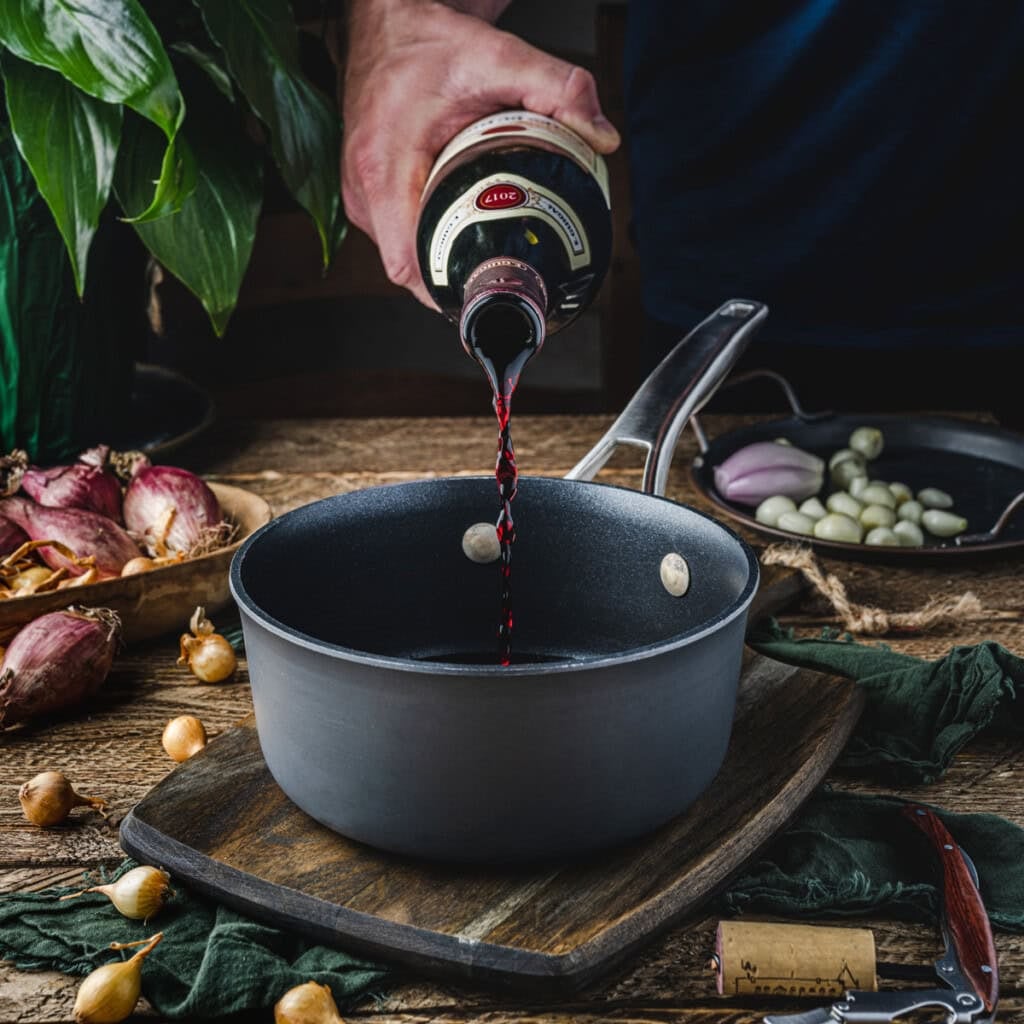
Read our Cooking with Wine Guide:
Best Wines For Cooking (And When to Use Them)
Wrong wine ruins the dish. These simple rules match each bottle to the right meal so you never waste money or flavor again.
FAQ
Blackening seasoning is most often characterized by having a spicy and smoky quality. The blend of spices varies widely, but most often include cayenne pepper and smoked paprika. Onion, garlic, black pepper and other herbs are common as well.
In this one, it is simply a light semi-emulsion of butter cheese and starchy water.
Primavera means "Spring" as in the season. Thus, spring vegetables are associated with primavera in the culinary sense
Related
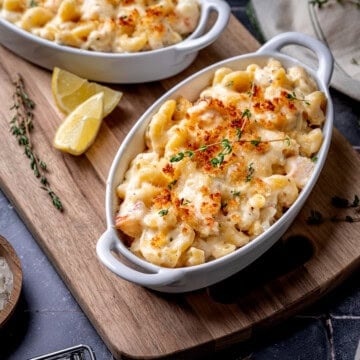
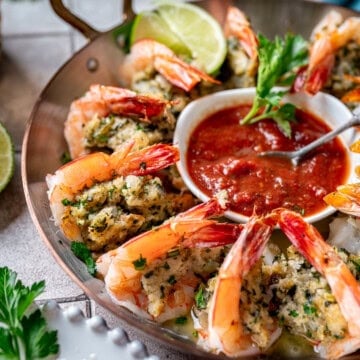
Looking for other seafood recipes like this? Try these:

Pairing
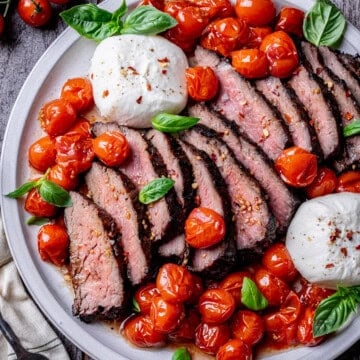
These are my favorite appetizers to serve with Blackened Salmon Penne Primavera:


📖 Recipe

Blackened Salmon Penne Primavera Worth Making Tonight
Equipment
- Large pot to cook the pasta
- medium pot to blanch the vegetables
- large skillet to make the primavera sauce
- Large cast iron skillet or heavy bottomed skillet, to cook the salmon
Ingredients
For the Pasta and Vegetables:
- ½ cup asparagus tips
- 3 teaspoons kosher salt divided
- 1 cup broccoli tips
- 2 tablespoon olive oil
- 1 small onion large dice
- 1 small red bell pepper cut in strips
- 1 clove garlic
- ⅓ cup dry white wine pinot grigio or sauvignon blanc
- 12-15 cherry or grape tomatoes halved
- 1 ½ teaspoons Italian seasoning
- Pinch black pepper
- Pinch red pepper flakes
- 1 small zucchini cut into bite sized pieces
- ¼ cup grated parmesan
- 3 Tablespoons unsalted butter
- ¾ cup torn basil leaves
- 6 ounces penne pasta
For the Salmon:
- 2 salmon fillets 4 oz each, skin removed
- 4 Teaspoons olive oil divided
- ½ teaspoon kosher salt decrease salt amount by half if your blackening seasoning already has salt in it
- 1 Tablespoon blackening seasoning
- 2 Tablespoons Unsalted Butter
- ½ lemon

Instructions
Blanch the Vegetables
- Prepare a medium pot of water with 1 teaspoon of salt and bring it to a boil over high heat. While waiting for it to boil, prepare a medium bowl of ice water to shock the vegetables.3 teaspoons kosher salt
- Once the water is boiling, add the asparagus and broccoli. Blanch for 1 minute, then remove with a slotted spoon or spider and dunk into the ice water to prevent further cooking. They can be removed after a few minutes to some paper towels to dry.1 cup broccoli tips, ½ cup asparagus tips
Prep the Pasta Pot and Start the Sauce
- Prepare a large pot of water with the remaining 1 teaspoon of salt for the pasta and bring to a boil.3 teaspoons kosher salt
- Meanwhile, start the sauce by adding 2 tablespoons of olive oil to a large pan. Add the onion, bell pepper, the whole garlic clove, and ½ teaspoon salt. Cook until softened, about 2 minutes over medium heat. Then add the wine and reduce for a minute. Add the tomatoes, Italian seasoning, black pepper, an additional ½ teaspoon salt, and red pepper flakes. Turn the heat to medium-low and gently cook for 5 minutes. Next, turn the heat to low and add the zucchini, and blanched asparagus and broccoli.3 teaspoons kosher salt, 2 tbsp olive oil, 1 small onion, 1 small red bell pepper, 1 clove garlic, ⅓ cup dry white wine, 12-15 cherry or grape tomatoes, 1 ½ teaspoons Italian seasoning, Pinch black pepper, Pinch red pepper flakes, 1 small zucchini
- Cook the pasta while the sauce simmers on low according to package directions to al dente. Simmer the sauce for 7-10 minutes on low. At this point, the pasta should be cooked.6 ounces penne pasta
- Next, add the parmesan to the sauce, then transfer the cooked pasta into the pan with the sauce (reserve some pasta water). Add some pasta water a few tablespoons at a time for a total of between ¼ and ½ cup while stirring to create a sauce. Remove the sauce from the heat, stir in 3 tablespoons of butter and the basil leaves.¼ cup grated parmesan, 3 Tablespoons unsalted butter, ¾ cup torn basil leaves
Cook the Salmon and Finish the Dish
- While the pasta cooks, make the salmon. Season both sides of the salmon with 2 teaspoons of olive oil, then a pinch of salt per fillet and the blackening seasoning.2 salmon fillets , 4 Teaspoons olive oil, ½ teaspoon kosher salt, 1 Tablespoon blackening seasoning
- Heat a cast iron skillet or heavy pan over medium-high heat. Once the pan is hot, add the remaining 2 teaspoons of olive oil. Place the salmon fillets gently into the pan and cook for about 4 minutes. Then add the remaining 2 tablespoons of butter, flip the fish and cook an additional 3-4 minutes depending on the thickness of the salmon and how well you like it done. Remove the salmon and either keep warm in a 170°F oven or serve on top of the pasta immediately if you made the fish last.4 Teaspoons olive oil, 2 Tablespoons Unsalted Butter
- Once plated, drizzle everything with some lemon juice and serve with extra Parmesan and basil if desired.½ lemon
Notes
- Vegetables: You can really go for any combination of green vegetables or bell peppers in this dish. Fresh spinach, green peas or sugar snap peas are all great spring vegetables that can be used in this pasta.
- White Wine: If you don't drink wine or don't want to open a bottle, use chicken or vegetable stock with a squeeze of lemon juice.
- Parmigiano-Reggiano: Grana Padano or pecorino are good replacements for Parmesan and work well in this dish.
- Penne: Swap the penne for any short pasta that has ridges or texture. Rigatoni, ziti, farfalle and cavatappi all work.
- Basil: Swap the basil for fresh parsley or dill if you want a different herb profile. Dill is especially good with salmon.
- Salmon: Cod or halibut will work as will shrimp and they all like blackened seasoning.
- How to store leftover penne primavera:
- Store the pasta and vegetables separately from the salmon if you can. The pasta will absorb moisture overnight and the sauce will thicken up, which is fine. Put the pasta in an airtight container and the salmon in a separate one. Both will keep in the fridge for up to three days.
- How to reheat leftover penne primavera:
- Reheat the pasta gently in a pan over low heat with a splash of water or stock. Stir it frequently so it doesn't stick or clump. The sauce will loosen up as it heats. If it's still too thick, add more liquid a tablespoon at a time.
- Reheat the salmon in a 300°F oven for about five minutes, just until it's warmed through.
- Can you freeze leftover penne primavera?
- We do not recommend this as the vegetables will turn mushy and the sauce will break when you thaw it. The pasta will get waterlogged and the salmon will lose its texture.
- Blanch the veggies in advance. Blanch your asparagus and broccoli in nicely salted water hours ahead, dry them off, and keep them in the fridge. When you're ready to cook, they go straight into the sauce and heat through nicely.
- Adding butter at the end instead of stirring it in while the pan is on the heat keeps the sauce from breaking. Cold butter emulsifies better than room-temperature butter because it melts slowly and incorporates into the starchy pasta water.
- Adding pasta water in stages instead of dumping it all in at once gives you control over the sauce consistency. Taste as you go and adjust.
- Do not rinse the pasta after draining. That starchy coating is what makes the sauce stick. When you rinse pasta, you wash away the starch and end up with slippery noodles that won't hold onto anything.
Nutrition
Leave a Reply