
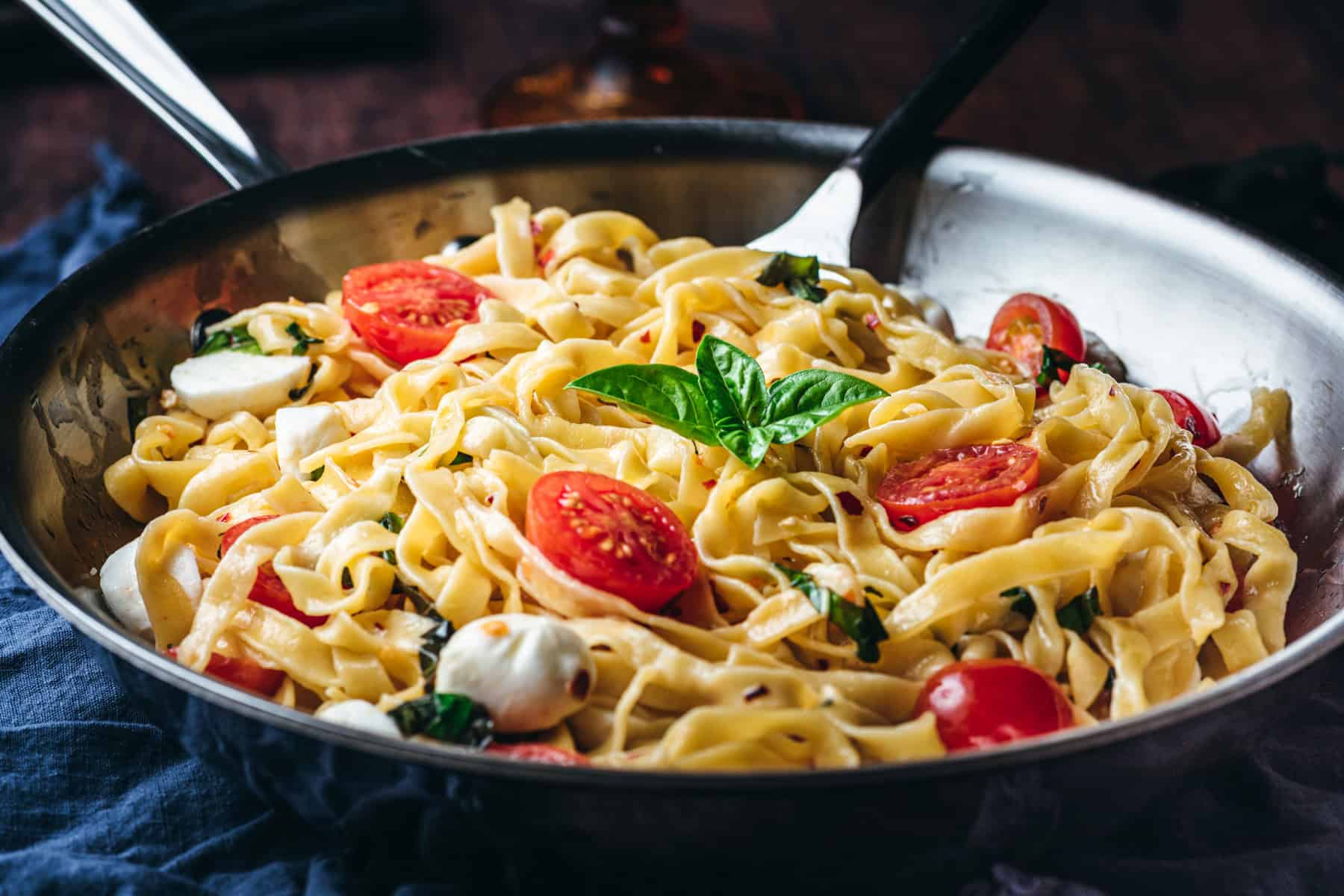
This is the pasta you make when tomatoes are at their peak and taste intense and sweet. It's called pasta d'estate, which translates to "summer pasta," and it's one of those Italian classics that sounds too simple to be interesting until you taste it. The technique is a bit different because you toss hot pasta with ripe cherry tomatoes, fresh basil and mozzarella so you get this incredible contrast of temperatures and textures.
There are no heavy sauces, cream, or simmering for hours. Just ripe tomatoes, good olive oil, basil, mozzarella, a little spice, and hot pasta that warms the tomatoes and cheese. Add some Parmigiano Reggiano and it's simplistic perfection!

This is one of our summer favorites and we hope you love its simplistic deliciousness!
Looking for more dishes like this? Try out our 20-Minute Spaghetti Aglio e Olio with Blistered Tomatoes or Spaghetti Carbonara with Asparagus.
Jump to:
- History and Origin
- Why This Recipe Works
- How to Make Summer Pasta
- Ingredients
- Equipment
- Step-by-Step Instructions
- How to Know When It's Done
- Variations and Substitutions
- Storage
- Top Tips from the Pros
- What to serve with this Summer Pasta
- What Wines To Drink with Italian Summer Pasta
- FAQ
- Related
- Pairing
- 📖 Recipe
- Shop all our favorite pasta-making equipment and kitchen essentials in our Amazon Store by clicking HERE!
Why You'll Love this Recipe
- It's minimalistic but packed with flavor
- You can make this in just 20 minutes!
- An excellent way to take advantage of tomatoes at their absolute best
- Mozzarella, tomatoes and basil are one of the best flavor trifectas ever
- It's a beautiful dish!
History and Origin
Pasta d'estate isn't a dish with a single inventor or a Michelin-starred origin story. It's southern Italian home cooking at its most practical and seasonal, the kind of thing nonnas have been making for generations. The concept is brilliantly simple: let the heat of the pasta do the cooking while the sauce stays raw and vibrant. It's a celebration of what summer produce can do when you don't overthink it.
You'll find regional variations across southern Italy, from Puglia to Campania, but the core stays the same: raw tomato, olive oil, basil, hot pasta. Some versions add garlic, or capers and olives for brininess, others toss in fresh mozzarella that melts slightly from the residual heat. Nearly any summer vegetable can be used, but the magic is always in the contrast and the respect for the tomato itself. This is summer eating at its most simple, honest, and best.

Why This Recipe Works
The genius of pasta d'estate is in the method, not just the ingredient list.
When you toss the hot pasta with the fresh basil, tomatoes and mozzarella, the heat wilts the basil, warms the tomatoes, and brings the bright summery flavors out of the ingredients. It's basically a raw tomato pasta that tastes cooked because the hot pasta does the work.
With a generous glug of high-quality olive oil, the pasta stays silky and slick, the tomatoes stay bright and juicy, the olive oil expresses its own flavor, and you get this incredible textural thing happening where every bite feels both comforting and refreshing. If you cooked the tomatoes down, you'd lose that fresh snap and end up with a tomato sauce.
The other reason this works so well is the quality of the ingredients. There's nowhere to hide in a dish this simple. You need tomatoes that actually taste like something, olive oil you'd want to dip bread in, and basil that smells like summer. Mediocre tomatoes will give you a mediocre dish. Peak-season farmers' market tomatoes will make you want to eat this three nights in a row.
One more thing: this dish is almost impossible to screw up. There's no tricky emulsion, no precise timing, no delicate sauce that can break. You boil, you toss, you eat. It's weeknight-friendly and dinner-party-worthy at the same time.

How to Make Summer Pasta
This dish comes together faster than you think, and the process is as simple as it gets.
There's no fancy technique, no hard-to-find ingredients, just good tomatoes, good oil, and the confidence to let them shine. Make it once and it'll become part of your summer rotation, the thing you crave when the tomatoes are ripe and you want dinner in 20 minutes.
Ingredients
Every ingredient in pasta d'estate has a job, and because the list is short, each one matters more than usual.
- Ripe cherry tomatoes: The star of the dish. You want tomatoes that are sweet, juicy, and deeply flavorful. Ripe cherry tomatoes work beautifully, especially if you can buy the ones that are still on the vine. Look for tomatoes that smell like tomatoes and give slightly when you press them.
- Extra virgin olive oil: This isn't just a cooking fat, it's a sauce base. Use something fruity and peppery that you'd actually want to taste or dip some bread in. The oil carries flavor from the basil and red pepper flakes and coats the pasta so every bite is luscious.
- Fresh basil: Adds a bright, peppery, slightly sweet flavor that screams summer. You want to use "sweet basil" here.
- Pasta: Long noodles tangle with the tomatoes and soak up the juices better than short shapes. Spaghetti is classic, but linguine, fettuccine, bucatini, or even angel hair will work. You want something with enough surface area to grab onto the olive oil and tomato mixture.
- Salt: For seasoning the pasta water and on the finished dish to taste. The pasta water should taste like the sea, which seasons the noodles from the inside out.
- Red pepper flakes: For added heat that cuts through the richness. If you like spicy food, add more. If not, you can leave it out entirely.
- Fresh mozzarella balls: Adds creaminess and a slight tang that rounds out the dish. Fresh mozzarella will melt slightly from the heat of the pasta, creating little pockets of creamy richness. Get the ones called "ciliegine," which are roughly the same size of cherry tomatoes!
Equipment
- Large pot for boiling pasta: You want at least 6 quarts so the pasta has room to move and cook evenly. A smaller pot means starchy, sticky noodles. If you don't have a big pot, cook the pasta in batches or use a wider, shallower pot like a sauté pan with high sides.
- Sharp knife: For dicing tomatoes and slicing basil. A dull knife will crush the tomatoes and bruise the basil, which means less flavor and a messier prep. If you don't have a sharp chef's knife, a serrated knife works surprisingly well on tomatoes.
- Large pan: To gently heat the olive oil with the red pepper flakes and toss the pasta with the tomatoes, basil, and mozzarella.
- Colander: For draining pasta. Nothing fancy needed here, just make sure it's sturdy enough to handle a pound of hot noodles and boiling water without tipping over in the sink.
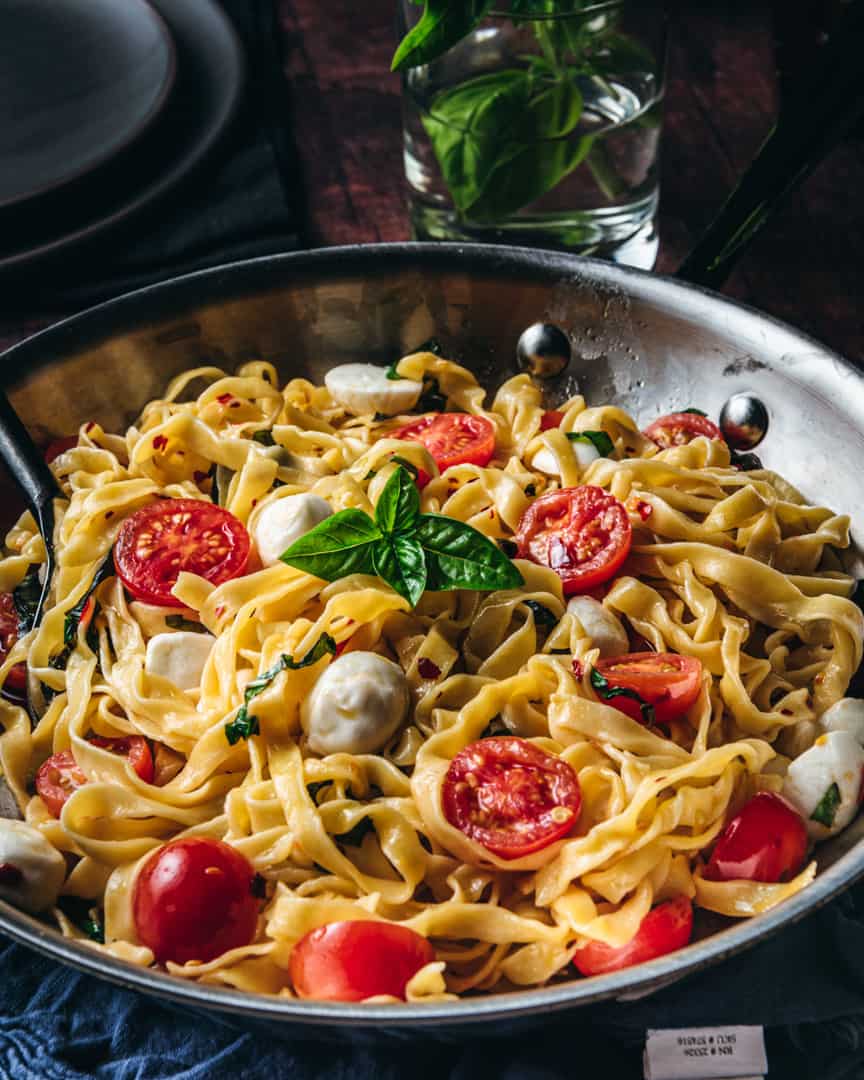
Step-by-Step Instructions
Cook the Pasta
- Cook the pasta in salted water (2 tablespoon of salt for 6-8oz of water). Follow the package directions but cook for 1 minute less than the package says for al dente.
Infuse the Oil and Combine
- Meanwhile, preheat a large skillet on medium heat.
- Add 1 tablespoon of the olive oil in the preheated skillet, then add the crushed red pepper flakes and allow them to infuse in the oil for about 10 seconds.
- Once pasta is just below al dente, remove pasta from water and transfer to the skillet with the oil and red pepper flakes. Add a few tablespoons of the pasta cooking water to the pan with the pasta. Stir frequently to coat the pasta completely.
- Add tomatoes and heat through on medium-low heat for about 2 minutes. The pasta should be perfectly al dente at this point.
Finish the Dish
- Remove from heat after tomatoes have heated through and add the mozzarella, basil, remaining 3 tablespoon of high quality extra virgin olive oil, freshly grated parmesan cheese, and salt directly to the pan and toss to combine. Immediately transfer to a serving bowl or plates and serve.
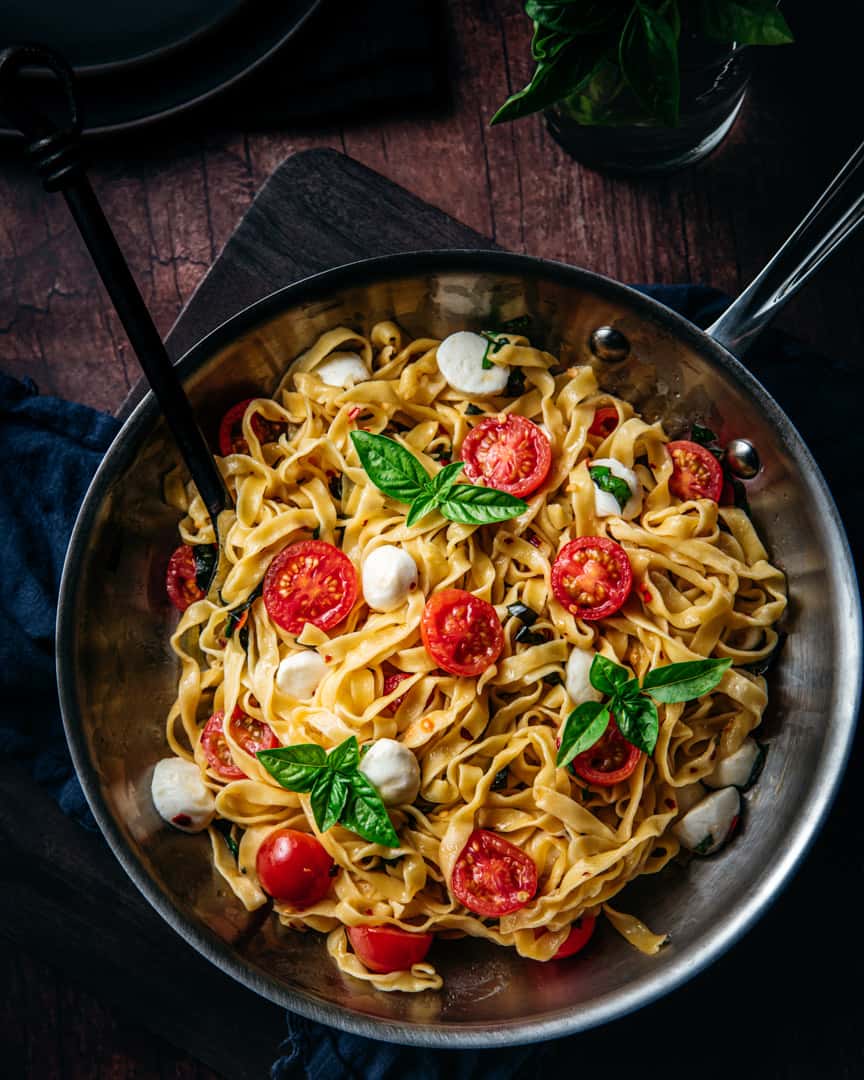
How to Know When It's Done
This dish doesn't have a lot of visual cues because there's no actual cooking happening with the sauce, but there are a few things to look for.
The pasta should be al dente. When you bite into a strand, it should have a slight resistance in the center, not mushy or soft all the way through. If you overcook it, the noodles will turn limp and soggy when you toss them with the tomatoes, and the dish will lose its structure. We recommend removing it from the pasta cooking water and transferring it to the pan 1 minute less than what the package says for al dente. It will finish cooking in the pan.
The basil should be wilted but still green. When you toss the hot pasta with the basil leaves, they will wilt and darken slightly, but they shouldn't turn black or slimy. That means the pasta was too hot or you let it sit too long before serving. Wilted basil smells incredible and tastes sweeter than raw basil, which is exactly what you want.
Variations and Substitutions
Pasta d'estate is flexible enough to handle a few creative twists while still staying true to the original concept.
- Add protein. Toss in grilled shrimp, seared scallops, or shredded rotisserie chicken to make this more of a complete meal. Cook the protein separately and add it at the end so it doesn't interfere with the simplicity of the tomato and mozzarella mixture.
- Make it vegan. Skip the cheese and make sure your pasta is egg-free. The dish is naturally plant-based and will be satisfying without cheese.
- Add olives or capers. A small handful of chopped Kalamata olives or a tablespoon of capers adds a briny, salty kick that plays well with the sweetness of the tomatoes. This is common in southern Italian versions of the dish.
- Use different herbs. Basil is classic, but fresh mint, parsley, arugula or a combination of these can give the dish a different flavor profile. Mint is especially good if you're adding feta, pine nuts or aged ricotta.
- Make it spicier. Double the red pepper flakes, or add sliced fresh Calabrian chili peppers or paste to the pan with the oil. If you like heat, this dish can handle it without losing its brightness.
- Add lemon zest. A little finely grated lemon zest stirred into the pasta right before serving adds a citrusy brightness that amplifies the freshness of the dish. Don't use lemon juice, though, because the acidity can make the tomatoes taste too sharp.
- Try grape tomatoes. Grape tomatoes used to be a bit sweeter than cherry tomatoes but their skins were quite thick. We have found that's really not the case anymore, so for taste and texture, they can be used interchangeably with cherry tomatoes. We prefer the cherry tomatoes in this dish but that is purely personal preference.
The beauty of this dish is that it's forgiving and adaptable, so feel free to make it your own as long as you respect the core principle of raw tomatoes meeting hot pasta.

Storage
Pasta d'estate is best eaten right after you make it, but leftovers can still be delicious if you store them properly.
How to store leftover summer pasta:
- Transfer any leftovers to an airtight container and refrigerate for up to 2 days. The pasta will absorb the olive oil and tomato juices as it sits, so it'll be less glossy and more like a pasta salad the next day. That's not a bad thing, but it's a different dish. You can refresh it with a drizzle of fresh olive oil and a pinch of salt before eating.
How to reheat leftover summer pasta:
- You can eat leftovers cold, which is actually really good, or reheat them gently in a skillet over low heat with a splash of water or olive oil to loosen everything up. The cheese will tend to melt and get stringy, but it will still taste great. If you're eating it cold, let it come to room temperature for about 20 minutes first so the flavors wake up.
Can you freeze leftover summer pasta?
- This dish doesn't freeze well because the tomatoes turn watery and the texture of the pasta deteriorates.
Top Tips from the Pros
These small moves separate a good version of pasta d'estate from one that makes people ask for the recipe.
Tear or gently slice the basil. Tearing it by hand or gently rolling the leaves into a cigar and slicing it (chiffonade) keeps it bright green and aromatic longer. Plus, torn basil can look more rustic and appealing on the plate if you are going for that look.
Never store your tomatoes in the fridge. Fresh tomatoes lose their flavor fast when stored in the fridge. Keep them at room temp for best results.
Use more olive oil than you think you need. This isn't the time to be stingy. The oil is the sauce, and you want enough to coat every strand of pasta and pool slightly at the bottom of the bowl.
Toss the pasta while it's still dripping wet. Don't shake the colander too hard after you drain the pasta. A little bit of pasta water clinging to the noodles helps the sauce emulsify and stick better. Bone-dry pasta won't grab onto the oil and tomatoes as well.
What to serve with this Summer Pasta
This dish is all about bright, fresh, summery flavors, so you want wines and sides that match that energy without overpowering it.
Side Dishes:
- Grilled vegetables: Zucchini, eggplant, or bell peppers with olive oil and sea salt.
- Simple green salad: Arugula or mixed greens with a fresh basil vinaigrette.
- Crusty bread: For soaking up the tomatoey oil at the bottom of the bowl.
- Burrata: Serve it on the side or tear it over the pasta for extra richness.
What Wines To Drink with Italian Summer Pasta
Wine Pairings:
- Prosecco: If you're feeling festive, a dry Prosecco adds a celebratory vibe and its bubbles cut through the richness of the olive oil. It's a great choice for a summer dinner party.
- Vermentino: This Italian white wine is crisp, citrusy, and slightly herbal, which plays beautifully with the basil and tomatoes. It has enough body to handle the olive oil without getting lost. Look for bottles from Sardinia or Liguria.
- Pinot Grigio: A classic choice that's light, refreshing, and won't compete with the dish. Go for a high-quality Italian Pinot Grigio from Friuli or Alto Adige.
- Rosé: A dry, Provençal-style rosé is perfect here. It's fruity enough to complement the tomatoes, crisp enough to cut through the olive oil, and refreshing enough to drink all night.
- Chianti: If you prefer red wine, a young, fruity Chianti works surprisingly well. It has bright acidity and cherry notes that echo the tomatoes without overpowering them. Serve it slightly chilled, around 65 degrees, for a refreshing twist.
FAQ
Long shapes are best, such as spaghetti and linguine. As to which one, that is truly personal preference. Our preference is linguine, but do you!
The simple answer is that you'll taste it. Good, high quality olive oil from a reputable producer will taste amazing in the dish and is a major component.
Cherry tomatoes are the #1 but grape tomatoes are a decent replacement if needed or preferred.
Related
Looking for more pasta recipes? Try these:

Pairing
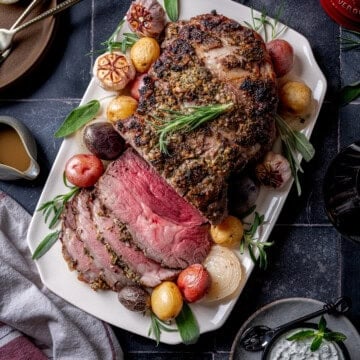
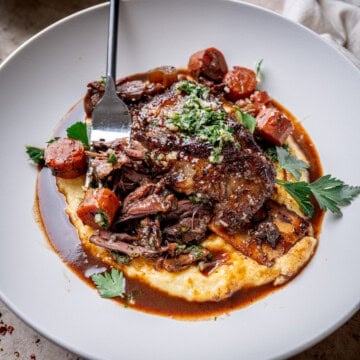
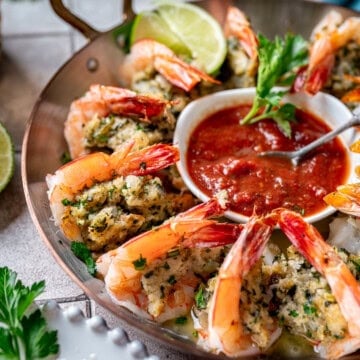
These are our favorite meat dishes to serve with this Summer Pasta:
📖 Recipe

Summer Pasta That Tastes Like the Italian Coast (Pasta d'Estate)
Ingredients
- 8 oz fettuccine or spaghetti, linguine or bucatini
- 4 tablespoon extra virgin olive oil
- 2 teaspoon crushed red pepper flakes (adjust to your preferred heat level, or leave them out if you don't like spicy food)
- 1 pint cherry tomatoes sliced in half
- 8 oz fresh mozzarella balls sliced in half (the cherry tomato-sized ones in water are perfect - ciliegine)
- 10 large basil leaves torn or gently sliced in ribbons (julienned)
- 3 tablespoon Parmesan freshly grated
- 1 teaspoon sea salt

Instructions
COOK THE PASTA
- Cook the pasta in salted water (2 tablespoon of salt for 6-8oz of water). Follow the package directions but cook for 1 minute less than the package says for al dente.8 oz fettuccine
Infuse the Oil and Combine
- Meanwhile, preheat a large skillet on medium heat.
- Add 1 tablespoon of the olive oil in the preheated skillet, then add the crushed red pepper flakes and allow them to infuse in the oil for about 10 seconds.2 tsp crushed red pepper flakes
- Once pasta is just below al dente, remove pasta from water and transfer to the skillet with the oil and red pepper flakes. Add a few tablespoons of the pasta cooking water to the pan with the pasta. Stir frequently to coat the pasta completely.
- Add tomatoes and heat through on medium-low heat for about 2 minutes. The pasta should be perfectly al dente at this point.1 pint cherry tomatoes
Finish the Dish
- Remove from heat after tomatoes have heated through and add the mozzarella, basil, remaining 3 tablespoon of high quality extra virgin olive oil, freshly grated parmesan cheese, and salt directly to the pan and toss to combine. Immediately transfer to a serving bowl or plates and serve.8 oz fresh mozzarella balls, 10 large basil leaves, 3 Tbsp Parmesan, 1 tsp sea salt
Notes
- Add protein. Toss in grilled shrimp, seared scallops, or shredded rotisserie chicken to make this more of a complete meal. Cook the protein separately and add it at the end so it doesn't interfere with the simplicity of the tomato and mozzarella mixture.
- Make it vegan. Skip the cheese and make sure your pasta is egg-free. The dish is naturally plant-based and will be satisfying without cheese.
- Add olives or capers. A small handful of chopped Kalamata olives or a tablespoon of capers adds a briny, salty kick that plays well with the sweetness of the tomatoes. This is common in southern Italian versions of the dish.
- Use different herbs. Basil is classic, but fresh mint, parsley, arugula or a combination of these can give the dish a different flavor profile. Mint is especially good if you're adding feta, pine nuts or aged ricotta.
- Make it spicier. Double the red pepper flakes, or add sliced fresh Calabrian chili peppers or paste to the pan with the oil. If you like heat, this dish can handle it without losing its brightness.
- Add lemon zest. A little finely grated lemon zest stirred into the pasta right before serving adds a citrusy brightness that amplifies the freshness of the dish. Don't use lemon juice, though, because the acidity can make the tomatoes taste too sharp.
- Try grape tomatoes. Grape tomatoes used to be a bit sweeter than cherry tomatoes but their skins were quite thick. We have found that's really not the case anymore, so for taste and texture, they can be used interchangeably with cherry tomatoes. We prefer the cherry tomatoes in this dish but that is purely personal preference.
- How to store leftover summer pasta:
- Transfer any leftovers to an airtight container and refrigerate for up to 2 days. The pasta will absorb the olive oil and tomato juices as it sits, so it'll be less glossy and more like a pasta salad the next day. That's not a bad thing, but it's a different dish. You can refresh it with a drizzle of fresh olive oil and a pinch of salt before eating.
- How to reheat leftover summer pasta:
- You can eat leftovers cold, which is actually really good, or reheat them gently in a skillet over low heat with a splash of water or olive oil to loosen everything up. The cheese will tend to melt and get stringy, but it will still taste great. If you're eating it cold, let it come to room temperature for about 20 minutes first so the flavors wake up.
- Can you freeze leftover summer pasta?
- This dish doesn't freeze well because the tomatoes turn watery and the texture of the pasta deteriorates.
- Never store your tomatoes in the fridge. Fresh tomatoes lose their flavor fast when stored in the fridge. Keep them at room temp for best results.
- Use more olive oil than you think you need. This isn't the time to be stingy. The oil is the sauce, and you want enough to coat every strand of pasta and pool slightly at the bottom of the bowl.
- Toss the pasta while it's still dripping wet. Don't shake the colander too hard after you drain the pasta. A little bit of pasta water clinging to the noodles helps the sauce emulsify and stick better. Bone-dry pasta won't grab onto the oil and tomatoes as well.
- Tear or gently slice the basil. Tearing it by hand or gently rolling the leaves into a cigar and slicing it (chiffonade) keeps it bright green and aromatic longer. Plus, torn basil can look more rustic and appealing on the plate if you are going for that look.
Nutrition

ML says
Holymoley! Check the redpepper potions. Should probably be teaspoons. Would have been good but WAY TOO HOT.
Angela and Mark says
We love the heat level in this dish as is, but if you don’t like it as spicy, we recommend cutting the red pepper flakes back to what you prefer. Since they are added in at the end, it is easy to adjust to your personal taste.
Jenie says
Hi I was just wondering if this was considered a healthy meal?
Angela and Mark says
Hello Jenie - You can find the nutritional info for the recipe at the bottom of the recipe card. How "healthy" it is/isn't will likely depend on your own personal goals and what nutritional info your goals are based on, but it is a lower calorie pasta dish compared to other pasta dishes out there with heavier sauces.