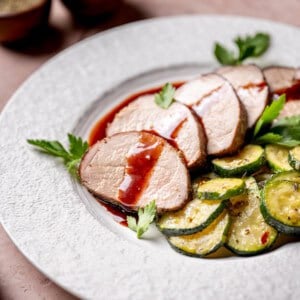
Dry-Rubbed Pork Tenderloin Recipe
A delicious dry-rubbed pork tenderloin for any night of the week with a flavorful combo of spices that is great alone or with a tasty sauce!
Equipment
- 1 Roasting pan with rack
Ingredients
- 1 pork tenderloin trimmed of silver skin, about 1-1.5 lbs
- 1 Tablespoon olive oil
- 1 ½ teaspoons kosher salt
- ½ teaspoon black pepper
- ½ teaspoon ground cinnamon
- 2 teaspoons dried marjoram

Instructions
Prepare the Pork
- Rub the pork tenderloin with the olive oil all over. Sprinkle the dry rub seasoning mix over the pork and gently rub it into the sides of the meat. Place pork on a roasting pan with a rack (or rack over a sheet pan) and place in the refrigerator for 1-2 hours.1 pork tenderloin, 1 Tablespoon olive oil, 1 ½ teaspoons kosher salt, ½ teaspoon black pepper, ½ teaspoon ground cinnamon, 2 teaspoons dried marjoram
Roast the Tenderloin
- Preheat the oven to 400°F.
- Remove the seasoned pork tenderloin from the refrigerator and place the roasting pan in the preheated oven. Let the pork cook for 20 minutes, then start checking the internal temperature at the thickest part of the tenderloin. The total cook time should be between 25 and 30 minutes, but when the thermometer reads 136°F, remove the tenderloin from the oven because there will be carryover cooking of about 10°F when it rests.
- Once done, place tenderloin on a cutting board and gently tent with aluminum foil (don’t wrap it tight, just place the sheet over the meat).
Rest and Serve
- Let the pork rest until the internal temperature reaches 145°F. This will take around 5 minutes. Slice the tenderloin with a sharp knife and serve!
Notes
Sauces for Pork Tenderloin:
Substitutions:
- Marjoram: Oregano is a fine substitute for marjoram, but it is more assertive, so use a little less if desired.
- Black Pepper: Green or white pepper also work well with a slightly different flavor profile.
- How to store leftover pork tenderloin: Once the tenderloin cools to room temperature, store in a covered airtight container in the refrigerator for up to 5 days.
- How to reheat leftover pork tenderloin: Wrap the pork in foil and reheat in the oven at 350°F until warmed through - this should take about 15 minutes.
- Use an instant read thermometer to check the internal temperature of the pork tenderloin. The time guide will get you close, but some pork tenderloins are larger and will take longer to cook, so always base doneness off of internal temperature rather than timing. Overcooking the pork will make it dry, so be careful not to let it cook too long.
- If the “tail” of the tenderloin is very thin, simply fold it over onto the thicker part of the tenderloin so there is uniform thickness throughout and tie with kitchen twine.
Nutrition
Calories: 236kcalCarbohydrates: 0.4gProtein: 35gFat: 10gSaturated Fat: 2gPolyunsaturated Fat: 1gMonounsaturated Fat: 5gTrans Fat: 0.1gCholesterol: 111mgSodium: 961mgPotassium: 674mgFiber: 0.2gSugar: 0.01gVitamin A: 10IUVitamin C: 0.04mgCalcium: 15mgIron: 2mg
Tried this recipe?Let us know how it was!
