
Is there no plan for dinner again? Here's the thing: you don't need a plan when you've got olive oil, garlic, and dried pasta sitting lonely in the pantry. This isn't emergency food. It's the kind of deeply satisfying, shamelessly simple pasta that makes you wonder why you ever bothered with anything more complicated.

Spaghetti aglio e olio is what Italian grandmothers make when they want something good without the performance. It's garlic and oil, yes, but when you add sweet blistered tomatoes it becomes the dish you crave on repeat.
This version takes 20 minutes from start to finish, and tastes like an Italian restaurant in Rome!
Looking for more dishes like this? Try out our Summer Pasta (Pasta D'Estate) or Spaghetti Carbonara with Asparagus.
Jump to:
- Why You'll Love this Recipe
- Where This Dish Comes From and Why It Still Matters
- Why This Version Works Better Than Most
- How to Make Spaghetti Aglio e Olio
- Ingredients
- Equipment
- Step-by-Step Instructions
- How to Know When It's Done
- Variations and Substitutions
- Storage
- How to Turn Leftovers Into Something New
- Top Tips from the Pros
- What to serve with Spaghetti Aglio e Olio
- What Wines To Drink with Spaghetti Aglio e Olio
- Looking for more Italian recipe inspo?
- FAQ
- Related
- 📖 Recipe
Why You'll Love this Recipe
- Packed with great Italian flavor
- Super fast to make
- Delicious simplicity at its finest
- It's such an easy dish to make with simple ingredients you may already have at home.
- Almost anything can be added for a different take on the base dish

Where This Dish Comes From and Why It Still Matters
Aglio e olio is Italian midnight food. It's what cooks made after service, what students threw together before exams, what anyone with taste and no time reached for when hunger was there. The name literally means garlic and oil, and for generations, that's all it was: pasta tossed with golden garlic, good olive oil, a small optional bit of crushed red pepper, and nothing else.
It's minimalism with a backbone. No cream, no cheese, no distractions. The dish has a handful of ingredients and depends entirely on technique, which means when you nail it, you really nail it. Overcook the garlic and it turns bitter. Undercook the pasta and the dish never comes together. Get the heat right and the garlic becomes nutty, sweet, almost caramelized, while the olive oil turns into a silky coating that clings to every strand. Yes, it relies on technique, but the technique is quite basic.
Adding blistered tomatoes is a modern tweak that gives the dish a little more body and a pop of sweetness without breaking from the original spirit. The tomatoes blister in the same pan, release their juices, and create a sauce that still feels light but tastes richer. It's not traditional, but it's smart.
Why This Version Works Better Than Most
Most aglio e olio recipes tell you to cook the garlic in oil and toss in the pasta. That's it. But the magic is in the details, and those details are what separate watery, bland pasta from the kind that makes you scrape the pan.
- Timing the garlic with the pasta: You don't start the garlic until the pasta is almost done. This prevents overcooking and keeps the garlic from turning dark and bitter. When the pasta hits the pan, the garlic is still pale gold and fragrant, not burnt.
- Blistering the tomatoes first: Whole grape tomatoes go into a dry pan over medium heat. They char, blister, and release their juices without turning mushy. That concentrated sweetness balances the heat from the red pepper and the pungency of raw garlic.
- Low heat for the garlic and pepper: The garlic should gently sizzle, not pop and brown in seconds. Low heat gives you control and builds flavor without bitterness.
- Tossing the pasta in the pan, not on the plate: The hot pasta finishes cooking in the garlic oil, absorbing flavor and emulsifying with the tomato juices to create a light sauce. It's not oily, it's glossy.
This isn't complicated, but it does require you to stay present. No multitasking. No wandering off to check your phone. And when you get it right, the payoff is huge.

How to Make Spaghetti Aglio e Olio
This simple Italian classic is a one-pot, one-pan operation that relies on timing and attention. Follow the steps in order and don't rush.
Ingredients
- Spaghetti: Use dried, not fresh. Dried pasta has the texture and starch content that makes the sauce cling. Go for a good Italian brand for the best experience.
- Extra virgin olive oil: This is the base of the dish, so quality matters. You'll taste it. Use something fruity and peppery, not neutral.
- Kosher salt: Pasta water should taste like the sea. Undersalted pasta is a common mistake so don't skip this. We use 2 tablespoon for 6-8qts of water.
- Grape tomatoes: These are small, sweet, and hold their shape when blistered. You want them whole, not halved. They'll split on their own as they heat, releasing just enough juice to create a light sauce. Cherry tomatoes work too, but grape tomatoes have less water and more concentrated flavor.
- Garlic: Five large cloves minced, not sliced. Sliced garlic can burn unevenly. Minced garlic distributes into the oil and coats the pasta better. Use fresh garlic, not jarred, for best flavor and results.
- Red pepper flakes: One and a half teaspoons brings gentle heat without overpowering the garlic. If you're sensitive to spice, start with a half teaspoon of chili flakes. If you like it hot, go up to two. The flakes bloom in the oil and add a subtle kick that balances the sweetness of the tomatoes.
- Optional garnishes matter too. Sunflower microgreens add a fresh, peppery bite. Roasted sunflower seeds give a nice crunch. Parmigiano Reggiano (Parmesan cheese) adds salty, umami depth. A final drizzle of olive oil makes the dish glossy and ties everything together. None of these are required, but they elevate the dish from simple to crave-worthy.
Equipment
You don't need specialty equipment, but the right setup makes this dish exponentially easier and better.
- Large pot for pasta: Use something wide enough that the spaghetti isn't cramped. A 6-quart pot is perfect for 12 ounces of dried spaghetti.
- Large skillet or sauté pan: This is where the tomatoes blister and the pasta finishes in the garlic and oil creating a simple sauce. Go for a 12-inch skillet, stainless steel or nonstick. You need enough surface area for the tomatoes to char without steaming, and enough room to toss the pasta.
- Garlic press: Minced garlic cooks more evenly than sliced, so a garlic press, or a microplane, is the best tool.
- Tongs or pasta fork: You'll be transferring hot pasta directly from the pot to the skillet.
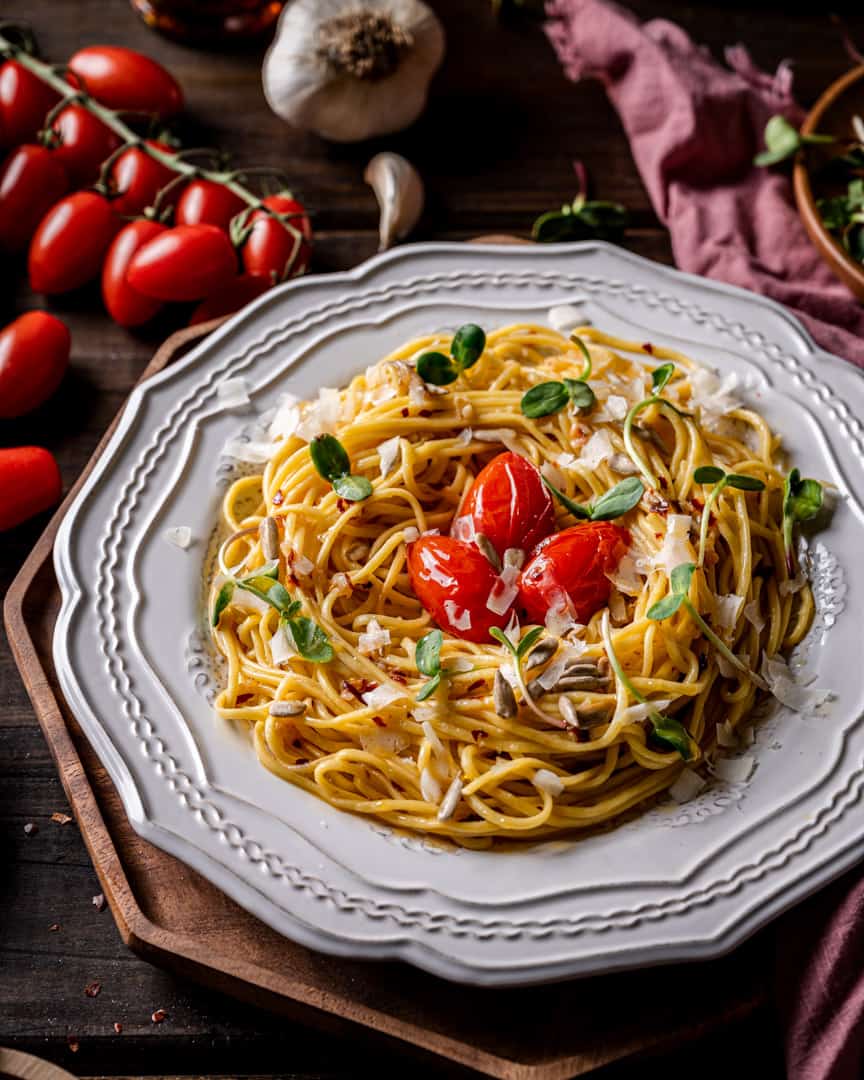
Step-by-Step Instructions
Start Your Pasta Water
- Over high heat, bring a large pot of salted water to a boil for the pasta. Once boiling add your dry spaghetti to the pot and cook the pasta following the package directions for timing.
Make the Aglio e Olio
- Once your pasta is about 70% cooked, place a large pan on the stove over low heat. Next, add the olive oil for 30 seconds, then add the tomatoes to the pan. After about two minutes, add the garlic and red pepper flakes and cook for 1 more minute. The garlic should gently sizzle if the heat is at the correct temperature - turn the heat up or down slightly if necessary.
- Remove the pan of garlic and tomatoes from the heat. Next, remove the cooked spaghetti from the pot to a strainer and drain, reserving a little (half cup or so) pasta water. Once drained, immediately add the spaghetti to the pan with the garlic and tomatoes. Toss to combine thoroughly and add some pasta water if it looks too dry. Taste and add a pinch of salt to taste if desired.
Garnish and Serve
- Drizzle additional extra virgin olive oil and, if desired, add grated Parmesan as well. You can also garnish with sunflower microgreens and roasted sunflower seeds (optional).

How to Know When It's Done
Timing matters, but your senses are the real guide. Here's what to look for at each stage so you know you're on track.
- Pasta: Taste a strand a minute before the package time is up. It should have a slight bite in the center, firm but not crunchy. If it's soft all the way through, it may be overdone. Al dente pasta will continue cooking slightly when you toss it in the hot skillet, so pull it just before it's fully tender.
- Tomatoes: The skins should be blistered and starting to split. If they're still firm and smooth, give them another minute. You want them on the edge of breaking down but still holding their shape.
- Garlic: This is the easiest part to mess up. The garlic should be pale gold, fragrant, and sizzling gently. If it's still white and raw-smelling, keep going. If it's brown or smells sharp and acrid, you've burned it. Pull the pan off the heat immediately if you see it darkening too fast. Burned garlic ruins the dish, and there's no saving it.
- Finished dish: The pasta should be glossy, not dry or oily. Every strand should be lightly coated in the garlic oil and tomato juices. You should smell sweet garlic, fruity olive oil, and a hint of red pepper. If it looks greasy or pooling with oil, you added too much or didn't toss it enough. If it looks dry, you need more oil or a splash of pasta water to loosen it up.
Variations and Substitutions
Aglio e olio is flexible, so many additions work well.
- Add anchovies: Melt 3 or 4 anchovy fillets into the olive oil along with the garlic. They dissolve completely and add a deep, savory umami that doesn't taste fishy. This is a classic Roman variation.
- Swap in shrimp: Toss in a handful of peeled shrimp when you add the garlic. They'll cook in about 2 minutes and turn the dish into a protein-forward meal. Season them with a little extra salt and lemon juice.
- Use different greens: Instead of microgreens, toss in a handful of arugula, baby spinach, or torn basil right before serving. The residual heat will wilt them slightly and add a fresh, peppery or herbaceous note.
- Try lemon zest: Add the zest of one lemon to the pan when you toss the pasta. The citrus brightens the dish and cuts through the richness of the oil without adding liquid.
You can also skip the tomatoes entirely and go back to the original garlic and oil version. Some people prefer it that way. Others love the sweetness and color the tomatoes bring.
Storage
Aglio e olio is best eaten immediately, but leftovers can be stored and reheated if you know what you're doing.
How to store leftover aglio e olio:
- Transfer leftover pasta to an airtight container and refrigerate for up to 3 days. The pasta will absorb some of the oil and dry out slightly, but you can fix that when you reheat.
How to reheat leftover aglio e olio:
- Reheat in a skillet over medium-low heat. Add a splash of water or olive oil to loosen the pasta and help it steam back to life. Toss frequently until warmed through, about 3 to 4 minutes. If it looks dry, add a little more oil and a pinch of salt.
- The texture won't be quite as good as fresh, but it'll still be satisfying. The tomatoes will be softer and the garlic more mellow, which some people actually prefer.
Can you freeze leftover spaghetti aglio e olio?
- We don't recommend freezing this pasta dish.
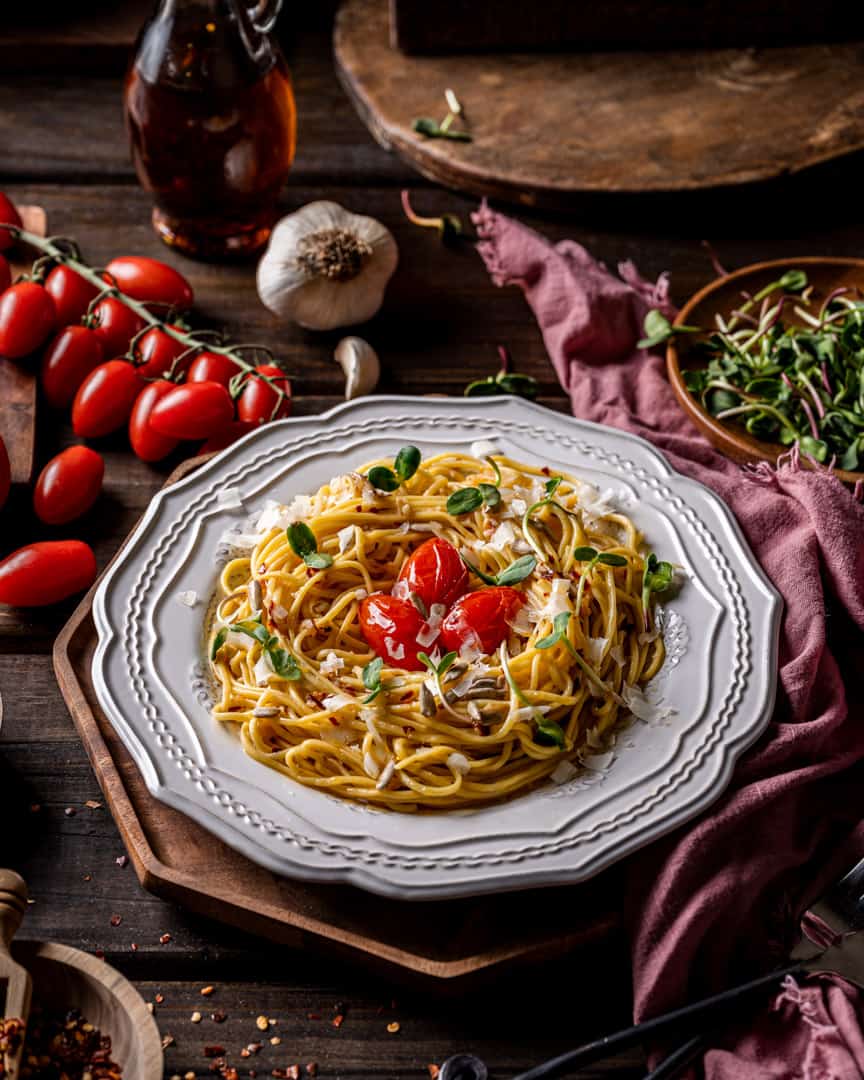
How to Turn Leftovers Into Something New
Leftover aglio e olio has more potential than you'd think. With a few additions, it transforms into a completely different meal.
Grain bowl base: Use the pasta as the base for a grain bowl. Top with roasted vegetables, a fried egg, and a drizzle of tahini or yogurt sauce. The garlicky pasta adds a savory foundation that ties everything together.
Pasta salad: Let the pasta come to room temperature, then toss it with fresh arugula, halved cherry tomatoes, mozzarella balls, and a squeeze of lemon. The garlicky oil becomes the dressing. Add more olive oil if needed and adjust the seasoning.
Baked pasta: Transfer the leftovers to a baking dish, top with shredded mozzarella and breadcrumbs, and bake at 400°F for 15 minutes until the top is golden and crispy. It's like a deconstructed pasta bake with way more flavor.
Top Tips from the Pros
Professional cooks make this dish look effortless because they've internalized a few habits that home cooks often skip.
- They taste the pasta water: Before adding the pasta, pros taste the water to make sure it's salty enough. If it doesn't taste like the ocean, they add more salt. Properly salted pasta water is the foundation of flavor.
- They keep pasta water on standby: Before draining the pasta, they reserve a cup of the starchy pasta water. If the finished dish looks dry or the sauce isn't clinging, they add a splash of hot pasta water and toss again. The starch acts as a binder and creates a silky consistency which makes a huge difference in the finished dish.
- They pull the pan off the heat early: Garlic continues cooking in the residual heat of the pan even after you turn off the burner. Pros pull the skillet off the heat the moment the garlic hits pale gold. This prevents carryover browning and keeps the flavor sweet, not bitter.
What to serve with Spaghetti Aglio e Olio
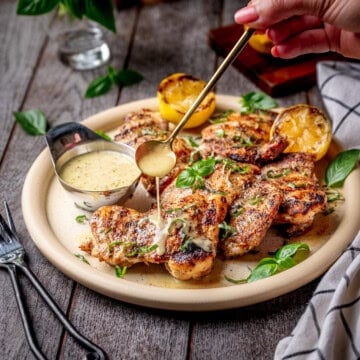
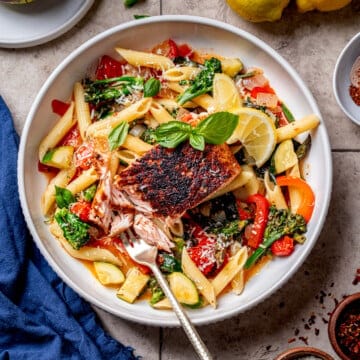
This is a great dish all on its own, but if you want to serve something along with it to make it a bit more substantial, you can add a protein such as Italian Herb Grilled Chicken Thighs or Crispy Parmesan Crusted Baked Cod.
For sides, keep it simple. A bitter green salad with lemon vinaigrette balances the richness of the pasta. Roasted broccolini or sautéed greens are also nice without overshadowing the pasta dish. Crusty bread for mopping up the garlicky oil is always welcomed!
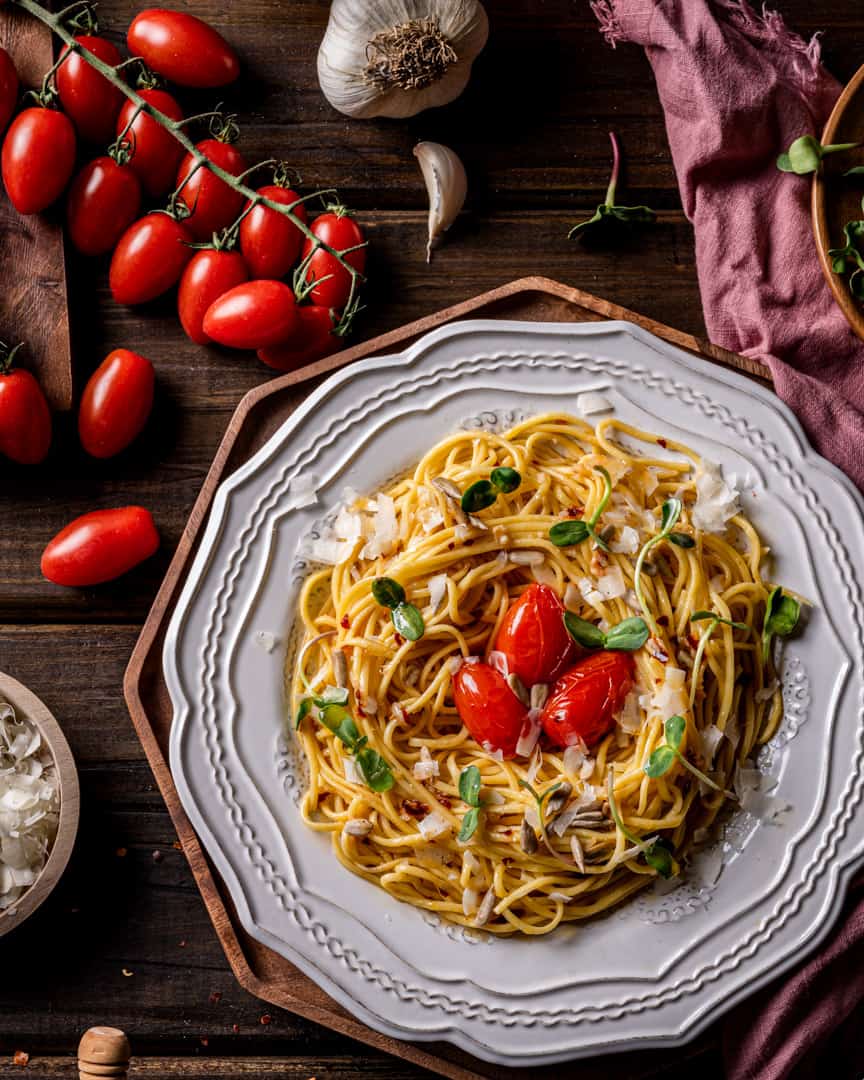
What Wines To Drink with Spaghetti Aglio e Olio
This pasta is light, garlicky, and slightly spicy, which means it pairs beautifully with wines that have acidity and brightness.
White wine: Go for a crisp Italian white like Vermentino or a dry Verdicchio. These wines have citrus and mineral notes that cut through the olive oil and echo the peppery garlic. White wines from Mt. Etna in Sicily are fantastic with this dish as well.
Light red: If you prefer red, choose something with low tannins and high acidity. A slightly chilled Valpolicella or a young Chianti works perfectly. The fruitiness complements the blistered tomatoes, and the acidity keeps your palate fresh between bites.
Sparkling: Prosecco or a dry sparkling rosé adds a celebratory touch and cleanses the palate. The bubbles lift the richness of the olive oil and make every bite feel lighter.
FAQ
This traditional Italian pasta dish is simply garlic and oil. There might be a bit of pasta water added, but those two ingredients are it!
This Italian dish is extremely simple and originated from Southern Italy. Most likely, Campania (in and around Naples) and Southern Abruzzo were the original areas that made this dish. However, today it is associated with Rome as much as it is anywhere else in Italy.
You will gently heat the olive oil, so it will lose a bit of its beauty, but it is still good to use a decent extra virgin olive oil for flavor. And when adding extra at the end, that is where you'll use the good stuff.
Related
Looking for more quick and easy recipes like this? Try these:

📖 Recipe

20-Minute Spaghetti Aglio e Olio with Blistered Tomatoes
Equipment
- Large pot to cook the pasta
- large skillet to make the aglio e olio sauce
- garlic press to mince the garlic
- Colander to drain the pasta
Ingredients
- 12 oz spaghetti dry
- 6 tablespoon extra virgin olive oil
- 20 grape tomatoes (whole)
- 5 large cloves garlic, minced
- 1 ½ teaspoon red pepper flakes
- Salt to taste
Optional Garnish
- Sunflower Microgreens (for garnish)
- Roasted Sunflower Seeds (for garnish)
- Grated Parmigiano Reggiano (for garnish)
- Extra Virgin Olive Oil (for garnish)

Instructions
Start Your Pasta Water
- Over high heat, bring a large pot of salted water to a boil for the pasta. Once boiling add your dry spaghetti to the pot and cook the pasta following the package directions for timing.12 oz spaghetti
Make the Aglio e Olio
- Once your pasta is about 70% cooked, place a large pan on the stove over low heat. Next, add the olive oil for 30 seconds, then add the tomatoes to the pan. After about two minutes, add the garlic and red pepper flakes and cook for 1 more minute. The garlic should gently sizzle if the heat is at the correct temperature - turn the heat up or down slightly if necessary.6 Tbsp extra virgin olive oil, 20 grape tomatoes (whole), 5 large cloves garlic, minced, 1 ½ teaspoon red pepper flakes
- Remove the pan of garlic and tomatoes from the heat. Next, remove the cooked spaghetti from the pot to a strainer and drain, reserving a little (half cup or so) pasta water. Once drained, immediately add the spaghetti to the pan with the garlic and tomatoes. Toss to combine thoroughly and add some pasta water if it looks too dry.
Garnish (optional) and Serve
Drizzle additional extra virgin olive oil and, if desired, add grated Parmesan as well. You can also garnish with sunflower microgreens and roasted sunflower seeds (optional).
Sunflower Microgreens (for garnish), Roasted Sunflower Seeds (for garnish), Grated Parmigiano Reggiano (for garnish), Extra Virgin Olive Oil (for garnish)
Notes
- Add anchovies: Melt 3 or 4 anchovy fillets into the olive oil along with the garlic. They dissolve completely and add a deep, savory umami that doesn't taste fishy. This is a classic Roman variation.
- Swap in shrimp: Toss in a handful of peeled shrimp when you add the garlic. They'll cook in about 2 minutes and turn the dish into a protein-forward meal. Season them with a little extra salt and lemon juice.
- Use different greens: Instead of microgreens, toss in a handful of arugula, baby spinach, or torn basil right before serving. The residual heat will wilt them slightly and add a fresh, peppery or herbaceous note.
- Try lemon zest: Add the zest of one lemon to the pan when you toss the pasta. The citrus brightens the dish and cuts through the richness of the oil without adding liquid.
- You can also skip the tomatoes entirely and go back to the original garlic and oil version. Some people prefer it that way. Others love the sweetness and color the tomatoes bring.
- How to store leftover aglio e olio:
- Transfer leftover pasta to an airtight container and refrigerate for up to 3 days. The pasta will absorb some of the oil and dry out slightly, but you can fix that when you reheat.
- How to reheat leftover aglio e olio:
- Reheat in a skillet over medium-low heat. Add a splash of water or olive oil to loosen the pasta and help it steam back to life. Toss frequently until warmed through, about 3 to 4 minutes. If it looks dry, add a little more oil and a pinch of salt.
- The texture won't be quite as good as fresh, but it'll still be satisfying. The tomatoes will be softer and the garlic more mellow, which some people actually prefer.
- Can you freeze leftover spaghetti aglio e olio?
- We don't recommend freezing this pasta dish.
- They taste the pasta water: Before adding the pasta, pros taste the water to make sure it's salty enough. If it doesn't taste like the ocean, they add more salt. Properly salted pasta water is the foundation of flavor.
- They keep pasta water on standby: Before draining the pasta, they reserve a cup of the starchy pasta water. If the finished dish looks dry or the sauce isn't clinging, they add a splash of hot pasta water and toss again. The starch acts as a binder and creates a silky consistency which makes a huge difference in the finished dish.
- They pull the pan off the heat early: Garlic continues cooking in the residual heat of the pan even after you turn off the burner. Pros pull the skillet off the heat the moment the garlic hits pale gold. This prevents carryover browning and keeps the flavor sweet, not bitter.


Leave a Reply