
Steak Frites is a classic French bistro dish that is absolutely delicious. Although we love the classic version, we really wanted to do a bit extra with this dish and change up the sauce slightly. We love our sauces, so this version of Steak Frites has an easy red wine pan sauce that is perfect served over the tender and juicy pan-seared steak.

Although this dish is quite easy to make, it can seem elevated and fancy and is the perfect dish to impress your dinner date, especially if they like French food. Make this for a special occasion, date night, anniversary, Valentine's day or just because to show off your French cooking chops!
For more delicious pan seared steak recipes, check out our Peppercorn Crusted Steak with Brandy Cream Sauce (steak au poivre) or One Pan Ribeye Mushroom and Onion Skillet.
If you are looking for a holiday roast, then this Garlic Thyme Studded Beef Tenderloin Roast with Red Wine Sauce is what you need!
Jump to:
What is Steak Frites?
Traditional French steak frites is a pan-cooked entrecôte steak (a style of ribeye) served without a "sauce," but just with a compound butter with lemon juice and, most likely, shallots and some other herbs. This French bistro classic is simple but amazing and packed with flavor. Of course the steak is the star, but the pommes frites (fries) are also important. They should be crispy but fluffy on the inside and seasoned to perfection.

How to make Steak Frites with Red Wine Pan Sauce
This is really quite an easy dish to make as long as you cook the steaks to the proper temperature. While the steak rests, it is the perfect amount of time to make the red wine pan sauce!
Ingredients
This Steak Frites with Red Wine Pan Sauce is made with the following ingredients:
- Steak: We use New York strip steak in this recipe and the flavor is amazing. You can definitely use a filet mignon or ribeye instead if you prefer - we have used all three with equally great results.
- Black Pepper
- Kosher Salt
- Dried Thyme: To season the steaks along with the salt and pepper.
- Clarified Butter: This is what we like to cook the steak in as it adds a buttery flavor to the meat, but because the milk solids have been removed, you won't have to worry about burned bits that can taste bitter when you make your pan sauce.
- Shallot: This is another foundation of the sauce
- Dry Red Wine: This is the basis of the sauce, so pick something that is dry and drinkable - you can enjoy the remaining wine along with your dinner. We prefer a California cabernet sauvignon or French Bordeaux for this recipe.
- Red Wine Vinegar: Just a little really red wine vinegar wakes the sauce up giving it another level of flavor.
- Unsalted Butter: This makes the pan sauce rich and decadent
- Fries: We make these Homemade Garlic Fries for this Steak Frites recipe for crispy French fries. But if you have a favorite homemade French fry recipe you love, that works too. Or make this recipe even easier with frozen fries you bake in the oven or air fryer. But we do love this steak and pan sauce with our homemade french fries recipe best for the perfect steak frites!
See recipe card below for quantities.
Substitutions
Here are a few common substitutions for the ingredients in this recipe:
- Steak: A New York strip is our choice but we also love to do this with a rib-eye steak or filet mignon. A hanger steak or even flank steak would also be a great substitution, as would a quality sirloin steak.
- Shallots: You can always substitute yellow onion for shallots in this recipe. The flavor is different but similar enough that the sauce will be great.
- Clarified Butter: You can use ghee, olive oil or a neutral cooking oil or vegetable oil of your choice (like grapeseed oil or avocado oil) here, but we do like the flavor of clarified butter. We find that using straight butter in place of clarified butter can result in burning the milk solids and leaving a bitter taste in the sauce at the end. Since this is a pan sauce, we use the steak drippings from the pan for the sauce as well, so having burned milk solids isn't ideal here.
Equipment
- Large Stainless Steel pan: You will make the steaks and sauce in this pan so be sure it is large enough to handle the steaks (10 inch or 12 inch fry pans work).
- Wooden Spoon: This will come in handy to scrape the bottom of the pan when you add the wine
- Large dutch oven or deep fryer.
- Instant-Read Thermometer : We temp our steaks so that they end up cooked to the perfect temp without the guesswork.
- Wire whisk: This will help incorporate the butter into the sauce in the best way.
Step-by-Step Instructions
Season the Steak
- Liberally season each steak on all sides with kosher salt, black pepper and dried thyme. Let the steaks sit at room temp while you start the fries.
- (Optional dry aging) If you have the time, place the steaks on a wire rack over a sheet tray and place in the refrigerator for at least an hour or up to 3 hours. The cold dry aging step is optional but it's very much worth it and enhances the flavor of the steak and allows it to get a better crust. Remove the steaks from the refrigerator 30 minutes before you cook them and let them sit at room temperature to allow them to lose their chill.
Start the Frites (fries)
- Heat oil to 320-325° F in a deep fryer or a large dutch oven (cast iron preferred if this is the method). The oil should be no more than halfway up the sides of the pot as you don't want to overflow oil onto your stovetop!
- Carefully add about two handfuls of cut potatoes sticks to the hot oil. You will make about 2-3 batches. Allow to fry for 5-7 minutes. The fries should have the slightest bit of golden color on them, but not too brown and not the same color as they were raw.
- Once you see some color, remove from the oil using a spider spatula, tongs, or a slotted spoon. Place fries on paper towels or a cooling rack with a sheet pan beneath to drain. Repeat with the remaining raw potato sticks. Remember to continue to monitor the temp to keep it between 320°-325° F. The potatoes can sit while you cook the steak and make the pan sauce before you do the second fry.
Cook and Rest the Steaks
- Melt the clarified butter over medium heat and cook the steaks, basting from time to time with the clarified butter. Cook for about 3-4 minutes per side. This part requires attention since each pan and size of steak is different, but take your steak off the heat about 10-15 degrees below where you like your steak to account for carryover cooking (see doneness guidelines in notes below).
- Once done, remove to a cutting board and let the steak rest loosely covered with aluminum foil while you make the sauce (10-15 minutes).
Make the Sauce
- If there is excess oil in the pan, dab some out with a paper towel, then add the shallots on medium to medium-low heat, cooking until they are translucent. Turn the heat up and immediately add the wine to deglaze, scraping any bits up from the pan. Add the red wine vinegar and cook until the sauce has reduced by at least half and there is about 2-3 tablespoons or so of liquid left in the pan then turn off the heat. Finish the fries while your sauce reduces.
Finish the Frites (fries)
- For the final fry, heat the oil up to 370-375° F. Once up to heat, carefully add the fries to the oil in small batches just like the first fry, while you monitor the heat and keep it steady between 370°-375°. The second fry will probably take around 2-3 minutes, but your eyes should tell you when they're done. You want a nice brown and crisp exterior.
- Once your fries are done, remove carefully from oil and place briefly on a towel or cooling rack to drain (no more than 30 seconds). Carefully transfer hot fries to a large bowl, add seasoning, and toss to combine.
Finish the Sauce and Serve
- Once the sauce is reduced to 2-3 tablespoon of liquid, remove it from the heat if you haven't already and let the pan cool slightly for a minute or so. Next whisk in the butter one tablespoon at a time until all the butter has been incorporated. If the butter isn't melting, you can place the pan back on low heat for about 30 seconds or so then remove and continue melting the butter. Once all the butter is incorporated, taste for seasoning and add more salt if desired.
- Slice the steak and serve with the sauce drizzled over the top and the fries on the side.
HINT: As a reminder, pan-seared steak will have about 10-15°F of carryover, meaning the internal temperature will continue to increase after it is removed from the heat. So make sure you account for this when determining your preferred streak doneness. For example, we generally will remove the steak from the pan once the internal temp reaches 115°F for our preferred Medium Rare steak.
Steak Doneness Temps
Although we feel pretty strongly that the low end of medium rare is the perfect doneness for this steak frites preparation, here are the temps you should use depending on how you prefer your steak cooked.
- Rare: 120-130°F
- Medium Rare: 130-135°F
- Medium: 135-145°F
- For Medium Well and beyond…. just don't do it, or at least don't tell us that you did. Ha!
We could go on, but honestly anything above medium is not desirable for us, and quite frankly ruins a steak like this, so we don't recommend cooking a steak that long. Sorry!

Variations
- Change the wine! You could make the same sauce with a port, marsala, or madeira instead of red wine. It will have a more assertive flavor, but it is wonderful as well!
- Use a different cut of meat. Several types of steak can be used with success. Certainly a filet mignon, ribeye or hanger steak will work very well but you could even go with a flat iron, sirloin or flank steak also.
- Add additional fresh herbs and garlic to the pan with the steak. Adding fresh thyme or rosemary and even garlic cloves to the pan while the steak cooks will add more flavor to the steak!
Storage
How to store leftovers in the fridge:
Well, we find it hard to believe that there actually would be leftovers, but if you must, store covered in the refrigerator for up to 3 days.
How to reheat:
This is definitely a difficult one as you can't reheat the steak without further cooking it. So leftover medium rare steak is not going to be medium rare after reheating! But the best way is in a pan over low heat with just a touch of olive oil or clarified butter until it is just warmed through. You can add the leftover sauce to the pan as it cooks to reheat along with the steak.
Top tips
- Let the pan cool for a couple of minutes before adding the butter or it will break and you won't have a smooth cohesive sauce. Always use cold butter straight from the refrigerator and definitely add it one tablespoon at a time.
- Let the steak rest! If you make a pan sauce like this you really have to let it rest. The steak will continue to cook after taking it out of the pan, so plan for 10-15°F of carryover. The resting period allows the juices to stay in the meat when cut for a nice juicy steak!
Troubleshooting
Sauce too thin? If the sauce isn't as thick as you desire, you can whisk in 1 or 2 more tablespoons of butter, which will help thicken the sauce.
Steak underdone? Simply add it back into the pan to cook longer. But if your steak is overdone, there really isn't any going back.
What to make with Steak Frites
The wonderful thing about this dish is that it is already a lovely pairing of steak with fries as a side. But we love to round out this pairing with a vegetable, side salad or something green for a more balanced meal. Here are some options for vegetable pairings:
- Serve Steak Frites with Parmesan Herb Asparagus or Roasted Maple Bourbon Bacon Brussels Sprouts
- Salads are always a great option with Steak Frites as well. Try out our Grilled Romaine and Pear Steakhouse Salad, or use our Fresh Basil Balsamic Vinaigrette (5-minute Salad Dressing) for a nice and easy mixed green salad.
What wines pair with this Steak Frites recipe?
This is not a difficult pairing! Obviously a red wine will be the choice for a flavorful steak with a rich sauce. So think California Cabernet Sauvignon, French Bordeaux blend, Malbec, Syrah, or any bold wine that can stand up to the flavors.

FAQ
We used NY strip, but as mentioned above, ribeye, filet mignon, or hanger steaks are the best substitutions.
The classic version is served simply with just a compound butter with some herbs and lemon, but we love it with an easy red wine pan sauce like the one in this recipe.
Steak frites is a quintessential French bistro dish. However, the Belgians perfected frites (fries) and cooking them in the Belgian way is the best!
Related
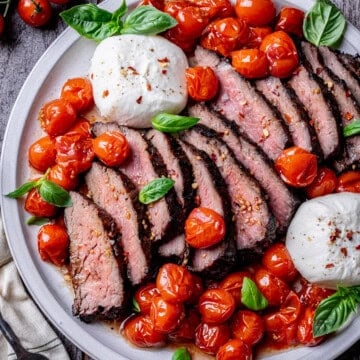
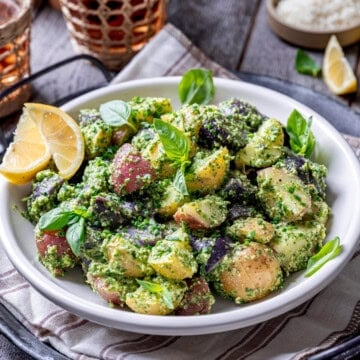
Looking for other recipes like this? Try these:


Pairing
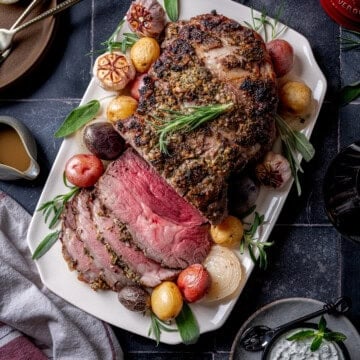
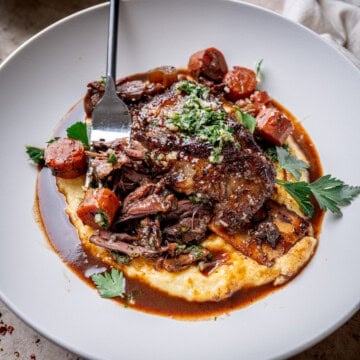
These are my favorite dishes to serve with [this recipe]:


📖 Recipe

Steak Frites with Red Wine Pan Sauce (French Bistro Style)
Equipment
- Large stainless steel pan for the steak and pan sauce
- large Dutch oven or deep fryer
- Instant read thermometer to temp the oil and check the steak doneness
- Spider spatula or slotted spoon
Ingredients
- 2 small New York Strip steaks 6-8oz each
- 1 Tablespoon kosher salt
- 1 teaspoon black pepper
- 1 teaspoon dried thyme leaves
- 4 Tablespoons clarified butter
- 1 small shallot minced
- ½ cup dry red wine
- ½ teaspoon red wine vinegar
- 6 Tablespoons unsalted butter cold
For the Frites (fries)
- 1 quart Grapeseed oil
- 2 large russet potatoes peeled and sliced into ¼ inch sticks
- Fine grain sea salt and pepper (to taste)

Instructions
Season the Steaks
- Liberally season each steak on all sides with kosher salt, black pepper and dried thyme. Let the steaks sit at room temp while you start the fries.1 Tablespoon kosher salt, 1 teaspoon black pepper, 1 teaspoon dried thyme leaves
- (Optional dry aging) If you have the time, place the steaks on a wire rack over a sheet tray and place in the refrigerator for at least an hour or up to 3 hours. The cold dry aging step is optional but it's very much worth it and enhances the flavor of the steak and allows it to get a better crust. Remove the steaks from the refrigerator 30 minutes before you cook them and let them sit at room temperature to allow them to lose their chill.
Start the Frites (fries)
- Heat oil to 320-325° F in a deep fryer or a large dutch oven (cast iron preferred if this is the method). The oil should be no more than halfway up the sides of the pot as you don't want to overflow oil onto your stovetop!1 quart Grapeseed oil
- Carefully add about two handfuls of cut potatoes sticks to the hot oil. You will make about 2-3 batches. Allow to fry for 5-7 minutes. The fries should have the slightest bit of golden color on them, but not too brown and not the same color as they were raw.2 large russet potatoes
- Once you see some color, remove from the oil using a spider spatula, tongs, or a slotted spoon. Place fries on paper towels or a cooling rack with a sheet pan beneath to drain. Repeat with the remaining raw potato sticks. Remember to continue to monitor the temp to keep it between 320°-325° F. The potatoes can sit while you cook the steak and make the pan sauce before you do the second fry.
Cook and Rest the Steaks
- Melt the clarified butter over medium heat and cook the steaks, basting from time to time with the clarified butter. Cook for about 3-4 minutes per side. This part requires attention since each pan and size of steak is different, but take your steak off the heat about 10-15 degrees below where you like your steak to account for carryover cooking (see doneness guidelines in notes below).4 Tablespoons clarified butter, 2 small New York Strip steaks
- Once done, remove to a cutting board and let the steak rest loosely covered with aluminum foil while you make the sauce (10-15 minutes).
Make the Sauce
- If there is excess oil in the pan, dab some out with a paper towel, then add the shallots on medium to medium-low heat, cooking until they are translucent. Turn the heat up and immediately add the wine to deglaze, scraping any bits up from the pan. Add the red wine vinegar and cook until the sauce has reduced by at least half and there is about 2-3 tablespoons or so of liquid left in the pan then turn off the heat. Finish the fries while your sauce reduces.1 small shallot, ½ cup dry red wine, ½ tsp red wine vinegar
Finish the Frites (fries)
- For the final fry, heat the oil up to 370-375° F. Once up to heat, carefully add the fries to the oil in small batches just like the first fry, while you monitor the heat and keep it steady between 370°-375°. The second fry will probably take around 2-3 minutes, but your eyes should tell you when they're done. You want a nice brown and crisp exterior.
- Once your fries are done, remove carefully from oil and place briefly on a towel or cooling rack to drain (no more than 30 seconds). Carefully transfer hot fries to a large bowl, add seasoning, and toss to combine.Fine grain sea salt and pepper (to taste)
Finish the Sauce and Serve
- Once the sauce is reduced to 2-3 tablespoon of liquid, remove it from the heat if you haven't already and let the pan cool slightly for a minute or so. Next whisk in the butter one tablespoon at a time until all the butter has been incorporated. If the butter isn't melting, you can place the pan back on low heat for about 30 seconds or so then remove and continue melting the butter. Once all the butter is incorporated, taste for seasoning and add more salt if desired.6 Tablespoons unsalted butter
- Slice the steak and serve with the sauce drizzled over the top and the fries on the side.
Notes
- Rare: 120-130°F
- Medium Rare: 130-135°F
- Medium: 135-145°F
Make Ahead Option: You can slice your potatoes then place the raw fries in a bowl of cold water and in the fridge for up to 3 days before cooking if needed. You can also do the first fry and let the potatoes sit on paper towels for up to an hour before doing the final fry. Always do the second final fry for the potatoes right before serving.
Nutrition
Food safety
- Do not use the same utensils on cooked food that previously touched raw meat.
- Wash hands after touching raw meat
- Always use separate cutting boards for raw meat or thoroughly clean and sanitize the cutting board before using again
- Don't leave food sitting out at room temperature for extended periods
- Never leave cooking food unattended
- Use oils with high smoking point to avoid harmful compounds
- Always have good ventilation when using a gas stove


Leave a Reply