
Carbonara is one of those dishes people think they know until they actually taste it when it is done right. Here's how to make carbonara that actually works.

A classic carbonara pasta has no cream, no garlic, no peas, and no bacon. Just eggs, cheese, cured pork, and black pepper that creates a sauce that is so silky. It's technique-driven and simple, but does require some attention.
This version adds asparagus because we love spring and summer veggies with pasta and the slight bitterness and crunch play against the rich, salty guanciale and creamy egg sauce. It's not traditional in the strictest sense, but it's absolutely in the spirit of Italian cooking of taking what's in season and cooking it simply.
Looking for more dishes like this? Try out our Summer Pasta (Pasta D'Estate) or Creamy Cacio e Pepe Pasta.
Jump to:
- Why You'll Love this Recipe
- Where Carbonara Really Comes From (And Why It Matters)
- Why This Recipe Works (And Why Most Don't)
- How to Make Carbonara with Asparagus
- Ingredients
- Equipment
- Step-by-Step Instructions
- How to Know When It's Done
- Variations and Substitutions
- Storage
- Top Tips from the Pros
- What to serve with Carbonara with Asparagus
- What Wines To Drink with Carbonara
- Related
- 📖 Recipe
Why You'll Love this Recipe
- It's simple to make!
- It's a classic Roman dish.
- A delicious alternative to all the regular pastas in your rotation
- Carbonara is rich and satisfying but works any time of year!
- It is a versatile recipe with many options for ingredient swaps

Where Carbonara Really Comes From (And Why It Matters)
Carbonara's origin is not so clear, and Romans will argue about it for sure. Most food historians point to post-World War II Rome, when American GIs brought bacon and powdered eggs, and Italian cooks turned them into something better. Others insist it goes back further, tied to carbonari (charcoal workers) who needed cheap, calorie-dense food they could make over a fire. The name likely comes from carbonaro or from the heavy dose of black pepper that looks like coal dust.
What's clear is the ingredient list. Real carbonara is made with guanciale (cured pork jowl), eggs, Pecorino Romano, and black pepper. That's it. No cream, no butter, no Parmigiano Reggiano unless you're mixing cheeses intentionally. The sauce comes entirely from the starchy pasta water emulsifying with raw egg yolks and pecorino cheese.
Adding asparagus isn't traditional, but seasonal improvisation is very common in Italian cooking. Italian home cooks have always shifted ingredients based on what's available and what's in season right now. Asparagus in spring makes sense for the same reason tomatoes make sense during summer months. Using asparagus makes the dish non-classical, but the respect of the original is still there. And texturally, asparagus brings a little snap and vegetal freshness that cuts through the fat in a great and flavorful way.
Why This Recipe Works (And Why Most Don't)
The number one reason carbonara fails for most people is heat management. Too much heat when you add the eggs and you get scrambled eggs with pasta. No one wants that! Not enough residual heat and the sauce stays thin and raw-tasting. This recipe works because it builds in a buffer where you pull the pasta off the heat, then toss it with the egg mixture in a large bowl. The residual heat from the pasta and the reserved pasta water create just enough warmth to thicken the eggs into a glossy, custard-like sauce without curdling them.
The second reason this works is the way the asparagus is prepped. Blanching and shocking creates the beautiful bright green color and gives you control over the texture. Handling it separately means it stays crisp yet tender and doesn't turn mushy or drab. Then the asparagus goes into the egg mixture so every piece gets coated in sauce.
The pasta water is the third secret. You use less water than normal (about 3 quarts instead of 4 or 5), which makes the water starchier. Starchy water is what turns the egg and cheese mixture into a silky sauce instead of a runny mess. That starch acts as an emulsifier, binding the fat from the guanciale to the eggs and creating that creamy texture everyone thinks comes from cream. If your carbonara is ever watery or broken, it's because the pasta water wasn't starchy enough or you added too much at once.
Finally, this recipe keeps the egg yolks separate from the whites. Yolks are rich, creamy, and emulsify beautifully. Whites add water and make the sauce thinner and less luxurious. Four yolks for half a pound of pasta creates the perfect richness and texture.

How to Make Carbonara with Asparagus
Here's what you need to make a perfect asparagus carbonara recipe:
Ingredients
- Asparagus: Adds a slight bitterness, a pop of color, and textural contrast. The tips are tender and almost sweet.
- Olive Oil: This is used in the pan with the guanciale to get the fat to start rendering.
- Guanciale: This is the heart of carbonara. Guanciale is cured pork jowl, fattier and more flavorful than pancetta, very different from bacon.
- Egg Yolks: These create the sauce. Yolks emulsify with the starchy pasta water and guanciale fat to create a creamy, glossy coating. Use fresh eggs for best result, the freshest you can find.
- Pecorino Romano: This is the other half of the sauce. Pecorino is an aged sheep's milk cheese and it is sharp, salty, and funky in the best way. It melts into the hot pasta and adds a punch of umami and saltiness that balances the richness of the egg and pork fat. Finely grate it fresh for best results.
- Black Pepper: Not just seasoning, this is a major component of flavor. Carbonara should be quite peppery, so it is best to use freshly cracked black pepper.
- Spaghetti: Long pasta is traditional because the sauce clings to every strand. Spaghetti, linguini, bucatini, or tonnarelli all work well.
- Kosher Salt (for asparagus and pasta water): About 2 tablespoons for 6 quarts of water to cook the pasta. The water should taste like seawater. If it doesn't, add more.
Equipment
Here's what you'll need:
- Large mixing bowl: You need enough room to toss the pasta vigorously. A wide, shallow metal bowl works better than a deep one because it gives you leverage and cools the pasta slightly faster, which helps avoid scrambling the egg yolks.
- Medium sauce pot and a bowl of ice water: For blanching the asparagus. The ice bath stops the cooking instantly so the asparagus doesn't go soft and dull.
- Large pot for pasta: You want a pot that holds at least 5 quarts of water comfortably.
- Medium skillet: A regular nonstick or stainless steel skillet works here for the guanciale.
- Pasta spoon: For moving pasta from the pot to the bowl without draining away all the precious starchy water.
- Microplane or fine grater: Pecorino needs to be grated finely so it melts into the sauce instead of clumping.
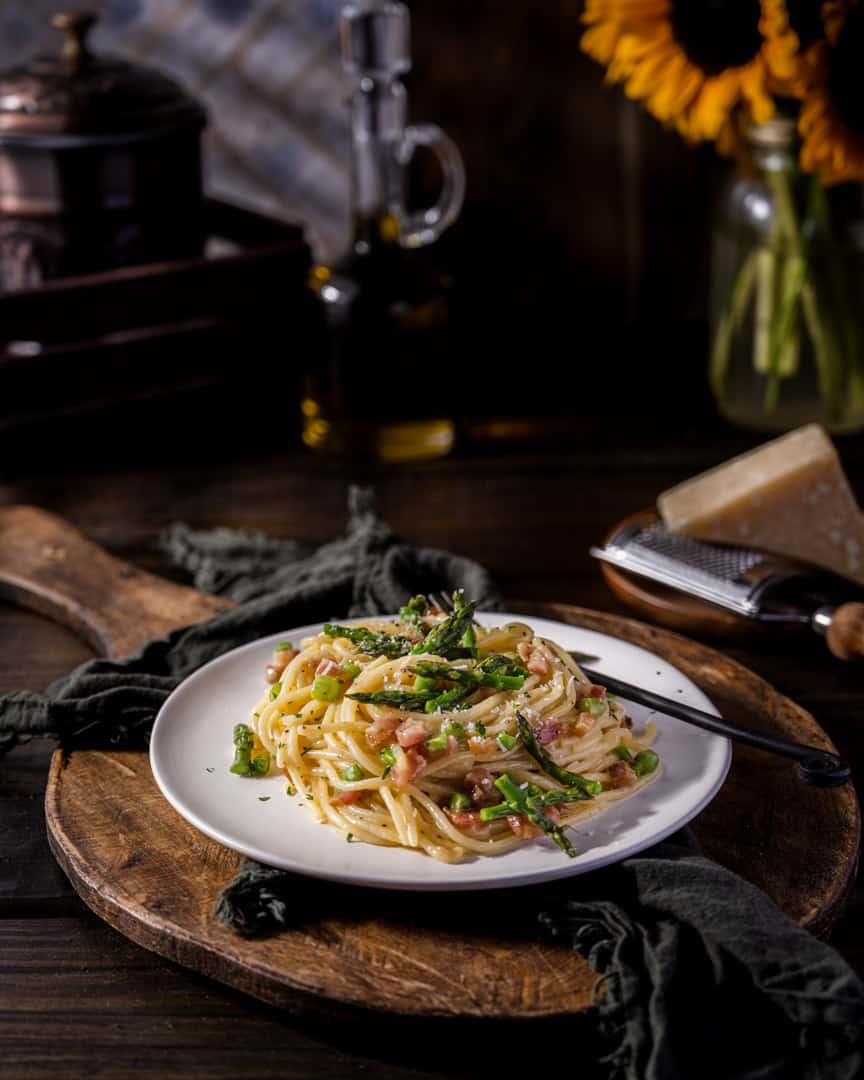
Step-by-Step Instructions
Prep and Blanch the Asparagus
- First, prepare the fresh asparagus. Cut the tips off and reserve. The remainder of the asparagus spear should be cut into thin rounds (¼ inch or even less).
- Fill a medium sauce pot with water and bring to a boil. Have a medium bowl of ice water ready to shock the asparagus. When the water boils, add a tablespoon of salt, and stir.
- Add the asparagus tips to the boiling water for about 10 seconds then add the rest of the asparagus pieces for another 30 seconds. Remove all of the crisp asparagus pieces with a slotted spoon or strain through a colander and immediately put them into the ice bath. Once they have cooled down, remove the asparagus from the ice bath and dry on paper towels. Set aside.
Crisp the Guanciale
- In a skillet over medium heat, add the olive oil and cook the guanciale until it becomes somewhat crispy (5-10 minutes). Remove with a slotted spoon to paper towels to drain excess fat.
Boil the Pasta Water
- While your guanciale browns, fill a large pot with water and bring to a boil. Use less water than you normally would to make a pound of pasta (about 3 quarts). Salt the water with about 2 tablespoon of kosher salt.
Make Your Carbonara Sauce
- In a large mixing bowl, add the crisped guanciale, egg yolks, cheese and pepper and mix thoroughly. Add the asparagus to this mixture. Set aside.
Cook the Pasta and Finish the Dish
- Add the spaghetti to the large pot of boiling salted water and follow the package directions to cook until al dente.
- Once done, move the spaghetti directly from the pot to the large mixing bowl and toss or mix with a spatula for about 20-30 seconds until the spaghetti is completely coated. Reserve a cup of the pasta water. Add a little bit of reserved starchy pasta water to the bowl as desired to create a creamier and saucier dish. A little pasta water goes a long way so add 1 tablespoon at a time until you reach the consistency you want. Serve immediately with extra grated cheese on top.
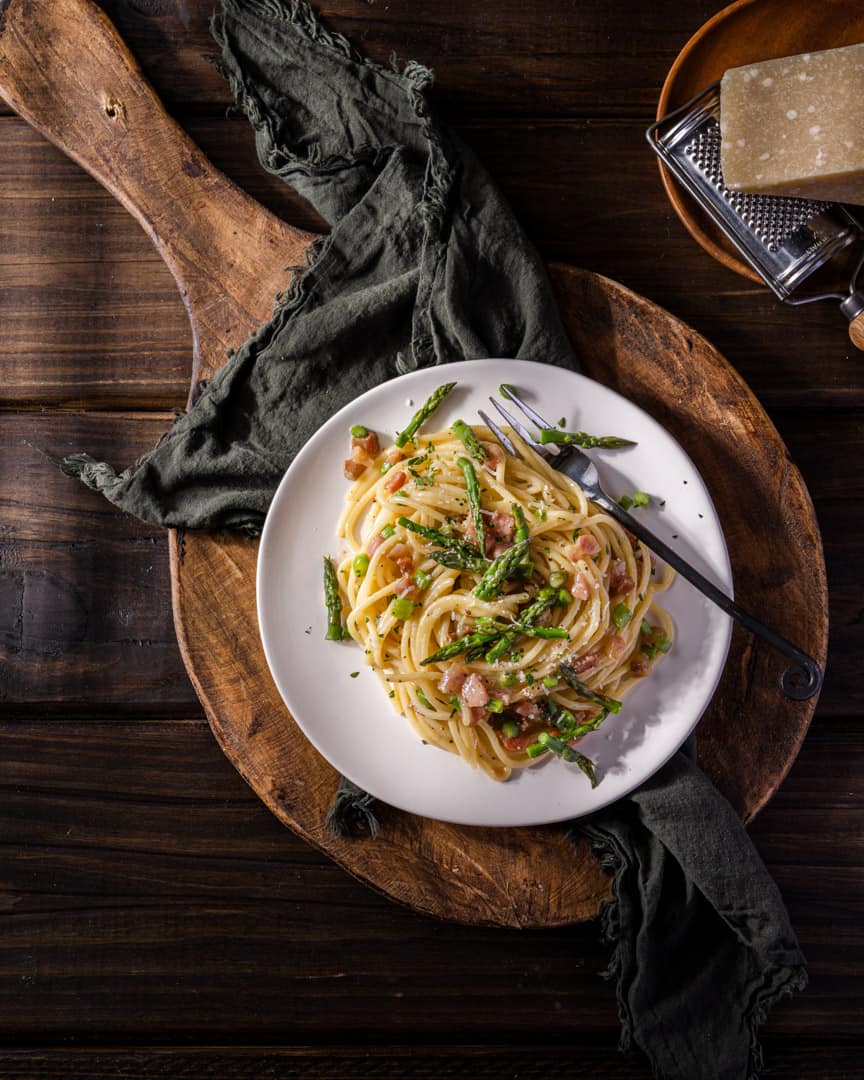
How to Know When It's Done
Carbonara is done when the sauce is glossy, creamy, and clings to each strand of pasta without pooling in the bottom of the bowl. Here's what to look for at each stage.
When you're tossing the pasta with the egg mixture, the sauce will look wet and loose at first. Keep tossing. After about 10 seconds, you'll feel the resistance change. The pasta will start to drag slightly as the eggs thicken. That's when you know the emulsion is forming. If you stop tossing too early, the sauce stays runny. If you keep going, it tightens into a velvety coating of creamy sauce.
The color is another tell. Raw egg yolk is bright yellow and opaque. As it cooks gently with the pasta water and heat, it turns paler, creamier, and slightly translucent. If you see little bits of cooked egg that look scrambled, you added the pasta too hot or didn't toss fast enough. It's still edible, just not as elegant.
Taste a strand. The pasta should be tender with a slight chew, not soft or mushy. The sauce should coat your mouth, rich and creamy, with a sharp, salty punch from the Pecorino and a floral heat from the black pepper. The asparagus should still have a little snap.
Variations and Substitutions
- Swap the asparagus for peas or zucchini. Peas are actually more traditional if you're going the vegetable route. Zucchini works if you slice it thin and sauté it with the guanciale.
- Use pancetta if you can't find guanciale. Pancetta is pork belly, not jowl, so it's leaner and less funky. It still works and it's much easier to find. Cook it the same way. Bacon is a last resort. If you use it, go for thick-cut, unsmoked if possible, and know the final dish will taste smokier and less traditionally Roman.
- Mix Pecorino and Parmigiano-reggiano (parmesan cheese). Some cooks do a 50/50 blend to mellow out the sharpness of Pecorino. It's less traditional but it's delicious and a little more approachable if you're not a fan of funky sheep's milk cheese.
- Add a pinch of red pepper flakes. This isn't Roman, but if you like heat, a small pinch tossed in with the black pepper adds a different kind of warmth that works surprisingly well.
- Make it without asparagus. Just skip it and follow the recipe as written. You'll have classic carbonara. It's timeless for a reason.
Storage
Carbonara doesn't store or reheat well. The egg sauce breaks when it cools and reheating almost always scrambles the eggs or turns the pasta gummy. Honestly, carbonara is best made in small batches and eaten immediately.
How to store leftover carbonara:
- If you have leftovers, store them in an airtight container in the fridge for up to two days.
How to reheat leftover carbonara:
- When you reheat, do it gently. Add a splash of water or milk to the pan, heat over low, and stir constantly. It won't be as silky as it was fresh, but it's still edible.
Can you freeze leftover carbonara?
- Absolutely not a good idea.
Top Tips from the Pros
Professional cooks who make carbonara on repeat have a few tricks that take it from good to foolproof.
- Grate the cheese as fine as possible. Big shreds don't melt evenly and you'll end up with clumps in your cheese sauce. A Microplane or the smallest holes on a box grater create a fine, powdery texture that melts instantly when it hits the hot pasta. If you own a food processor, pulse it until it's almost powdered for best results.
- Use a big bowl. You need room to toss aggressively. Tossing is what emulsifies the sauce and distributes the heat evenly. If your bowl is too small, you'll either spill pasta everywhere or you won't toss enough, and the sauce won't come together properly.
- Reserve more pasta water than you think you'll need. Scoop out at least a cup before you drain or transfer the pasta. You probably won't use it all, but it's a problem if you need more and don't have it!
- Add the pasta water in small increments. A tablespoon at a time. Pasta water is starchy and salty. Too much and your sauce goes from creamy to soupy in seconds.
- To save time, some stores carry already diced guanciale. This way you can use exactly what you need and you don't have to dice it.
What to serve with Carbonara with Asparagus
Sides: Keep it simple. A crisp simple green salad with lemon and olive oil is perfect. Bitter greens like arugula or radicchio balance the richness. Grilled vegetables work too, just keep them light.
Bread: A crusty baguette or ciabatta for mopping up sauce is never wrong.
A good carbonara is a complete dish on its own, so don't overthink it.
What Wines To Drink with Carbonara
Carbonara is rich, salty, and creamy with a good hit of black pepper heat. You want something that cuts through the fat without overwhelming the delicate egg sauce.
A crisp, dry white is the classic move. Frascati, Verdicchio or Pinot Grigio all work beautifully. If you want red, go for something light and fruity like a chilled Lambrusco or a young Chianti.
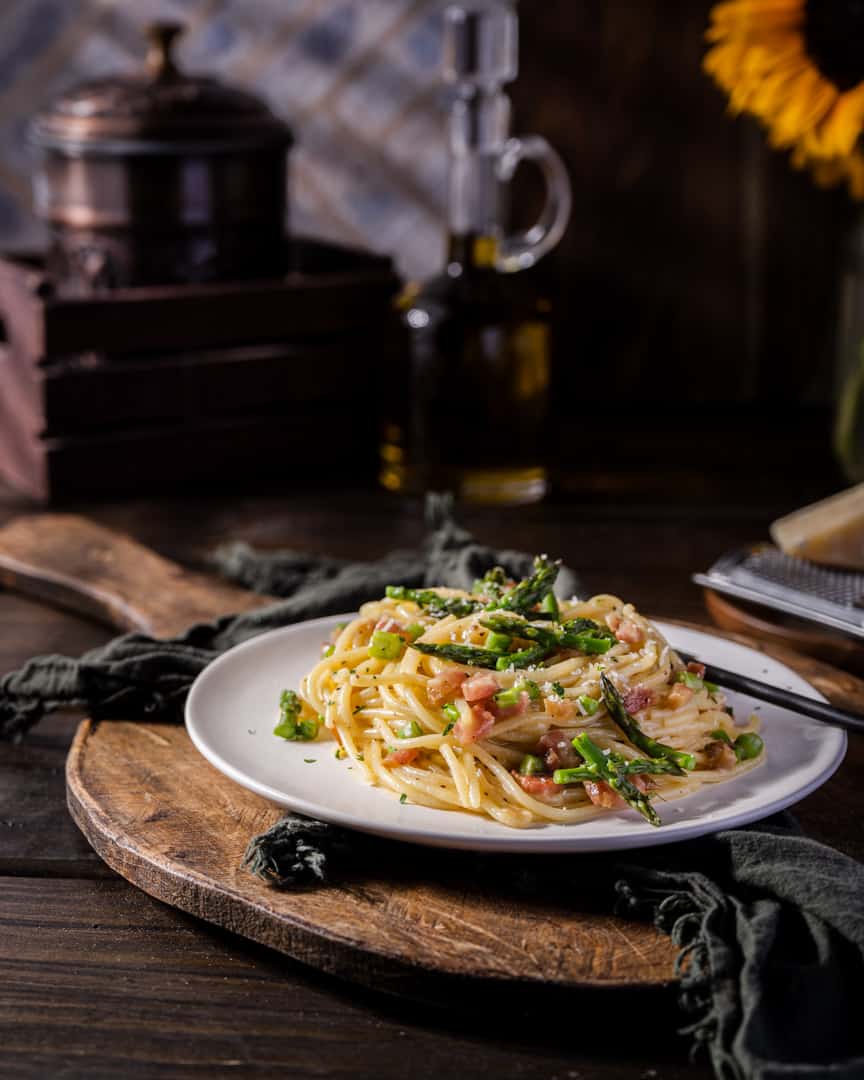
Traditional carbonara is only spaghetti, egg yolks, guanciale, black pepper, and Pecorino Romano.
Using cream is the biggest mistake. This cheat code is obvious and very untraditional. Another mistake that is often made is adding too much pasta water too fast. This is the crucial part of making the sauce and adding the water slowly makes things so much easier.
The eggs actually do cook from the residual heat put off by the pasta as well as the pasta water.
Related
Looking for other recipes like this? Try these:



📖 Recipe

Spaghetti Carbonara with Asparagus
Equipment
- medium pot to blanch the asparagus
- medium bowl of ice water to shock the asparagus and stop the cooking
- Large bowl to mix the egg and cheese sauce with the pasta
- Medium skillet to crisp the guanciale
- Large pot of water to cook the pasta
- Pasta spoon to transfer the pasta to the bowl of egg and cheese mixture
- Microplane to finely grate the pecorino cheese
Ingredients
Ingredients
- 8 oz asparagus
- 1 teaspoon olive oil
- 5 ounces guanciale small dice
- 4 egg yolks
- ½ cup Pecorino Romano cheese finely grated
- 1 -2 teaspoon black pepper freshly ground
- 8 oz dry Spaghetti

Instructions
Prep and Blanch the Asparagus
- First, prepare the fresh asparagus. Cut the tips off and reserve. The remainder of the asparagus spear should be cut into thin rounds (¼ inch or even less).8 oz asparagus
- Fill a medium sauce pot with water and bring to a boil. Have a medium bowl of ice water ready to shock the asparagus. When the water boils, add a tablespoon of salt, and stir.
- Add the asparagus tips to the boiling water for about 10 seconds then add the rest of the asparagus pieces for another 30 seconds. Remove all of the crisp asparagus pieces with a slotted spoon or strain through a colander and immediately put them into the ice bath. Once they have cooled down, remove the asparagus from the ice bath and dry on paper towels. Set aside.
Crisp the Guanciale
- In a skillet over medium heat, add the olive oil and cook the guanciale until it becomes somewhat crispy (5-10 minutes). Remove with a slotted spoon to paper towels to drain excess fat.1 tsp olive oil, 5 ounces guanciale
Boil the Pasta Water
- While your guanciale browns, fill a large pot with water and bring to a boil. Use less water than you normally would to make a pound of pasta (about 3 quarts). Salt the water with about 2 tablespoon of kosher salt.
Make Your Carbonara Sauce
- In a large mixing bowl, add the crisped guanciale, egg yolks, cheese and pepper and mix thoroughly. Add the asparagus to this mixture. Set aside.4 egg yolks, ½ cup Pecorino Romano cheese, 1 -2 teaspoon black pepper
Cook the Pasta and Finish the Dish
- Add the spaghetti to the large pot of boiling salted water and follow the package directions to cook until al dente.8 oz dry Spaghetti
- Once done, move the spaghetti directly from the pot to the large mixing bowl and toss or mix with a spatula for about 20-30 seconds until the spaghetti is completely coated. Reserve a cup of the pasta water. Add a little bit of reserved starchy pasta water to the bowl as desired to create a creamier and saucier dish. A little pasta water goes a long way so add 1 tablespoon at a time until you reach the consistency you want. Serve immediately with extra grated cheese on top.
Notes
- Swap the asparagus for peas or zucchini. Peas are actually more traditional if you're going the vegetable route. Zucchini works if you slice it thin and sauté it with the guanciale.
- Use pancetta if you can't find guanciale. Pancetta is pork belly, not jowl, so it's leaner and less funky. It still works and it's much easier to find. Cook it the same way. Bacon is a last resort. If you use it, go for thick-cut, unsmoked if possible, and know the final dish will taste smokier and less traditionally Roman.
- Mix Pecorino and Parmigiano-reggiano (parmesan cheese). Some cooks do a 50/50 blend to mellow out the sharpness of Pecorino. It's less traditional but it's delicious and a little more approachable if you're not a fan of funky sheep's milk cheese.
- Add a pinch of red pepper flakes. This isn't Roman, but if you like heat, a small pinch tossed in with the black pepper adds a different kind of warmth that works surprisingly well.
- Make it without asparagus. Just skip it and follow the recipe as written. You'll have classic carbonara. It's timeless for a reason.
- How to store leftover carbonara: If you have leftovers, store them in an airtight container in the fridge for up to two days.
- How to reheat leftover carbonara:When you reheat, do it gently. Add a splash of water or milk to the pan, heat over low, and stir constantly. It won't be as silky as it was fresh, but it's still edible.
- Grate the cheese as fine as possible. Big shreds don't melt evenly and you'll end up with clumps in your cheese sauce. A Microplane or the smallest holes on a box grater create a fine, powdery texture that melts instantly when it hits the hot pasta. If you own a food processor, pulse it until it's almost powdered for best results.
- Use a big bowl. You need room to toss aggressively. Tossing is what emulsifies the sauce and distributes the heat evenly. If your bowl is too small, you'll either spill pasta everywhere or you won't toss enough, and the sauce won't come together properly.
- Reserve more pasta water than you think you'll need. Scoop out at least a cup before you drain or transfer the pasta. You probably won't use it all, but it's a problem if you need more and don't have it!
- Add the pasta water in small increments. A tablespoon at a time. Pasta water is starchy and salty. Too much and your sauce goes from creamy to soupy in seconds.
- To save time, some stores carry already diced guanciale. This way you can use exactly what you need and you don't have to dice it.
Nutrition




Leave a Reply